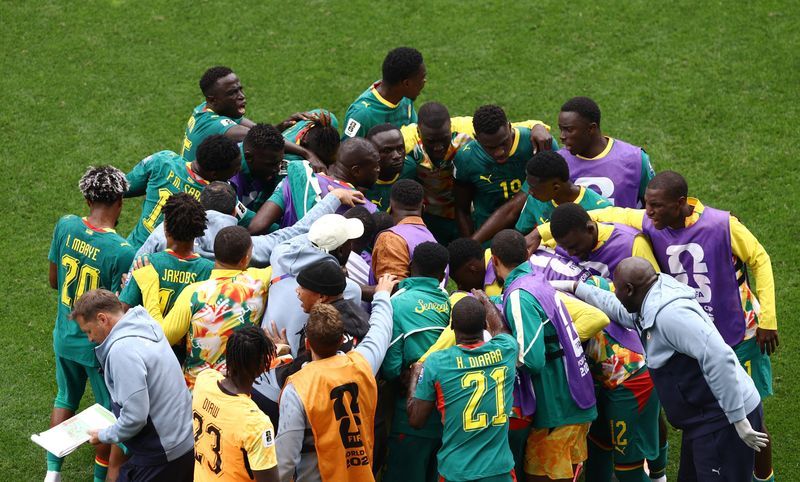
Following a disastrous World Cup campaign in North America, Senegal's football federation has turned its scrutiny inward, with federation president Abdoulaye Fall levelling serious questions about the medical support provided to the national squad. In a Monday press conference as the governing body reviewed the tournament's poor results, Fall disclosed that the team doctor's professional background raised significant concerns, suggesting the physician lacked the specialist expertise necessary to handle the demands of international competition at the highest level.
Fall's public critique centred on what he characterised as a fundamental mismatch between the doctor's training and the role he held. The federation chief stated that the team doctor possessed qualifications in gynaecology rather than sports medicine, a distinction Fall implied was discovered belatedly and had already begun undermining player confidence in the medical provisions available to them. This revelation, Fall suggested, created an atmosphere of unease within the squad regarding their clinical support during matches and training sessions.
The federation's response involved seeking supplementary medical expertise to restore player confidence in their healthcare arrangements. Fall explained the reasoning behind this decision with apparent candour, emphasising that securing qualified personnel capable of commanding the players' trust was not merely administrative preference but a matter of fundamental welfare. His language reflected a view that physical wellbeing transcended all other operational considerations, justifying the federation's intervention to source additional qualified medical professionals.
However, the narrative shifted sharply when the Senegalese Association of Sports Medicine issued a forceful rebuttal on Monday evening, categorically rejecting the federation's claims as unfounded and defamatory. Rather than accepting Fall's allegations, the medical association mounted a vigorous defence of the team doctor's credentials and professional standing. The association pointed to formal qualifications that directly contradicted the federation's characterisation, specifically highlighting that the doctor possessed a specialist diploma in both sports medicine and sports biology, credentials awarded by the faculty of medicine at the prestigious Cheikh Anta Diop University.
The disputed doctor, Abderahmane Fediore, brings substantial institutional experience to his role. According to the association's statement, Fediore previously directed the physiotherapy department at Fann Hospital, one of Senegal's leading medical institutions, demonstrating significant responsibility within the healthcare sector. More crucially for the current dispute, his tenure as Senegal's team doctor extends back to 2017, a span during which he has provided medical services across multiple major tournaments, including attendance at three FIFA World Cups and five Africa Cup of Nations competitions. This track record suggests established acceptance of his qualifications among the federation's leadership across several years and multiple campaigns.
The timing of the federation's public criticism raises questions about institutional accountability and decision-making processes within Senegalese football administration. If concerns about medical qualifications existed, the extended tenure of the doctor in question suggests either that previous federation leadership deemed his credentials acceptable, or that the concerns emerged only recently despite his longstanding presence. The apparent late discovery of the qualification issue, as Fall himself acknowledged, implies potential governance failures in initial vetting or onboarding procedures.
Senegal's tournament performance provides the backdrop for this internal dispute, though the two issues warrant separate examination. The team's World Cup campaign fell markedly short of expectations and pre-tournament optimism. Riding the momentum of a triumphant Africa Cup of Nations victory against Morocco in January, Senegalese supporters anticipated a competitive showing in North America. Instead, the squad suffered defeat in their opening two group stage matches against France and Norway, immediately placing themselves in a precarious position.
The campaign's final disappointment came in the round-of-32 encounter against Belgium, where Senegal demonstrated resilience before ultimately faltering. After establishing a commanding two-goal advantage, Senegal conceded three times to lose 3-2 in extra time—a collapse that epitomised the tournament's broader narrative of underperformance. This dramatic loss effectively ended realistic qualification hopes and cemented what observers viewed as a failed campaign given pre-tournament expectations.
The federation's response included managerial change, with Pape Bouna Thiaw dismissed on Saturday in the immediate aftermath of the Belgian defeat. This decision signalled the federation's intent to address performance deficiencies through leadership restructuring, though whether this addressed all relevant factors remained contested. The emergence of the doctor qualifications dispute suggests the federation may be attributing part of the poor performance to medical support inadequacies, though no explicit connection was articulated.
For Malaysian and Southeast Asian football observers, the Senegal situation illuminates persistent institutional challenges within African football governance. Questions regarding due diligence, personnel vetting, and transparent communication between federation bodies and their professional counterparts reflect patterns visible across multiple football associations globally. The dispute also underscores how post-tournament recriminations can extend beyond coaching and tactics to encompass medical and support structures, areas frequently overlooked in initial post-mortem discussions.
The credibility gap between the federation and the medical association requires institutional resolution. The medical association's emphasis on Fediore's institutional credentials and multiple tournament experiences provides a substantial rebuttal to accusations of inadequate qualification. Whether the federation's concerns centre on technical competence or broader support capacity remains unclear, but the public nature of the dispute risks damaging professional relationships and institutional trust during a period when coherence and unity would better serve Senegalese football's recovery and preparation for future competitions.

