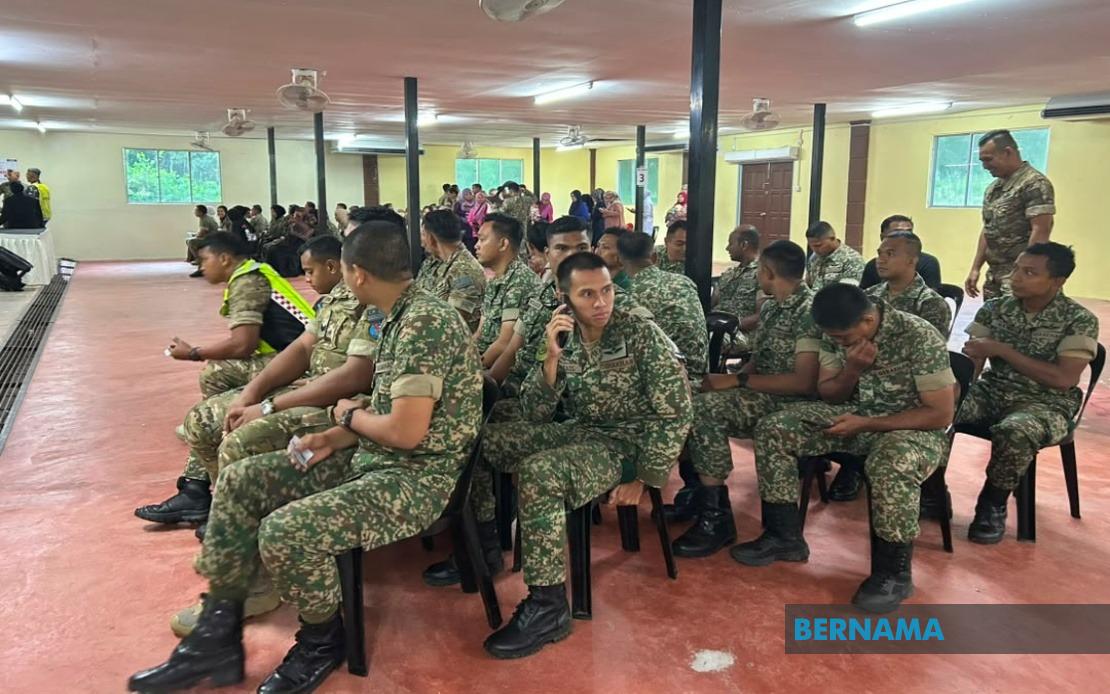
The 16th Johor State Election entered its early voting phase on 7 July with appeals from senior government figures for participating security personnel to uphold democratic principles and civic responsibility. Home Minister Datuk Seri Saifuddin Nasution Ismail and Defence Minister Datuk Seri Mohamed Khaled Nordin both issued separate messages through social media encouraging the 24,751 eligible early voters to approach the ballot with seriousness and dedication to democratic values.
Saifuddin Nasution, who simultaneously holds the position of Pakatan Harapan secretary-general, framed early voting as a fundamental opportunity for citizens to exercise their constitutional rights within the broader framework of Malaysia's democratic system. His statement emphasised the importance of conducting the exercise with "full responsibility" and maintained that the voting process should reflect genuine democratic principles. The dual messaging from a cabinet minister and opposition coalition leader underscores how state elections in Malaysia generate cross-partisan appeals around procedural integrity and orderly conduct.
The composition of early voters reveals the institutional basis for this constituency. Altogether, 12,041 personnel from the Malaysian Armed Forces and their spouses participated alongside 12,710 police officers and their family members. This arrangement accommodates the operational demands placed on security services, which often maintain reduced availability during major national or regional events. Early voting mechanisms have become standard practice across Malaysian electoral cycles, recognising that military and police personnel frequently cannot cast ballots on standard election days due to operational commitments and security deployments.
Mohammed Khaled directed his appeal specifically at ensuring security personnel understood their voting decision as interconnected with Johor's developmental trajectory. He positioned the early voting exercise within a broader narrative concerning state stability and continued progress, implicitly linking electoral choice to future governance outcomes. This framing reflects how state elections in Malaysia are frequently contested around competing visions of administrative competence and economic management rather than purely ideological divisions.
Menteri Besar Datuk Onn Hafiz Ghazi, representing the incumbent Barisan Nasional coalition, appealed to early voters to place confidence in BN candidates through the lens of continuity. His message centred on themes of stability, development and public welfare, positioning a vote for BN candidates as endorsement for maintaining the existing governance trajectory. The contrast between BN's emphasis on stability and continuity and opposition messaging around fresh governance approaches has characterised Johor electoral contests in recent cycles.
The logistical scale of early voting reflected the election's significance within Malaysia's federal structure. Sixty-four voting centres opened from 8 am, with staged closures between noon and 6 pm adjusted according to local voter volumes and geographic distribution. This phased approach manages administrative capacity while maintaining accessibility across dispersed security personnel. The operational coordination required to facilitate this process demonstrates how state elections have become administratively sophisticated undertakings involving multiple agencies and detailed planning.
The 16th Johor State Election itself involves 56 contested seats, with both major coalitions—Pakatan Harapan and Barisan Nasional—presenting full candidate slates across all positions. Altogether, 172 candidates registered to compete, establishing a competitive environment where contested seats mean significant organisational resources deployed across parties and candidates. The election scheduled for the following Saturday represented the culmination of campaign activities initiated weeks earlier.
Saifuddin Nasution's parallel appeal to PH campaign machinery to maintain engagement intensity through the campaign period indicates awareness among opposition leadership that state contests require sustained grassroots mobilisation. His emphasis on "mature campaign" conduct suggests acknowledgment of reputational considerations affecting political parties during electoral periods, particularly regarding how campaign conduct is perceived by voters evaluating party suitability for governance.
The messaging from all three leaders—centring on integrity, responsibility, and democratic principle—reflects how Malaysian political leaders conventionally frame electoral periods as moments requiring elevated civic consciousness. These statements establish a shared commitment to procedurally orderly elections even where substantive political disagreement remains acute. Such cross-partisan appeals around procedural norms constitute an important stabilising element within Malaysia's competitive democratic system.
For Malaysian voters observing state electoral dynamics, the Johor election provided an indicator of broader political trajectories affecting federal calculations. State elections frequently function as mid-term assessments of coalition performance and emerging voter preferences, with implications extending beyond the specific state context. The presence of security personnel as early voters—comprising roughly 14 percent of total early voting across Malaysia typically—underscores how institutional constituencies maintain distinct electoral patterns within the broader electorate.
The 16th Johor State Election represented a significant political contest within Malaysia's federal structure, carrying implications for coalition positioning ahead of any potential federal electoral cycle. Early voting processes facilitate security personnel participation while establishing precedent for future elections, gradually normalising institutional voting arrangements that accommodate civil service operational requirements.

