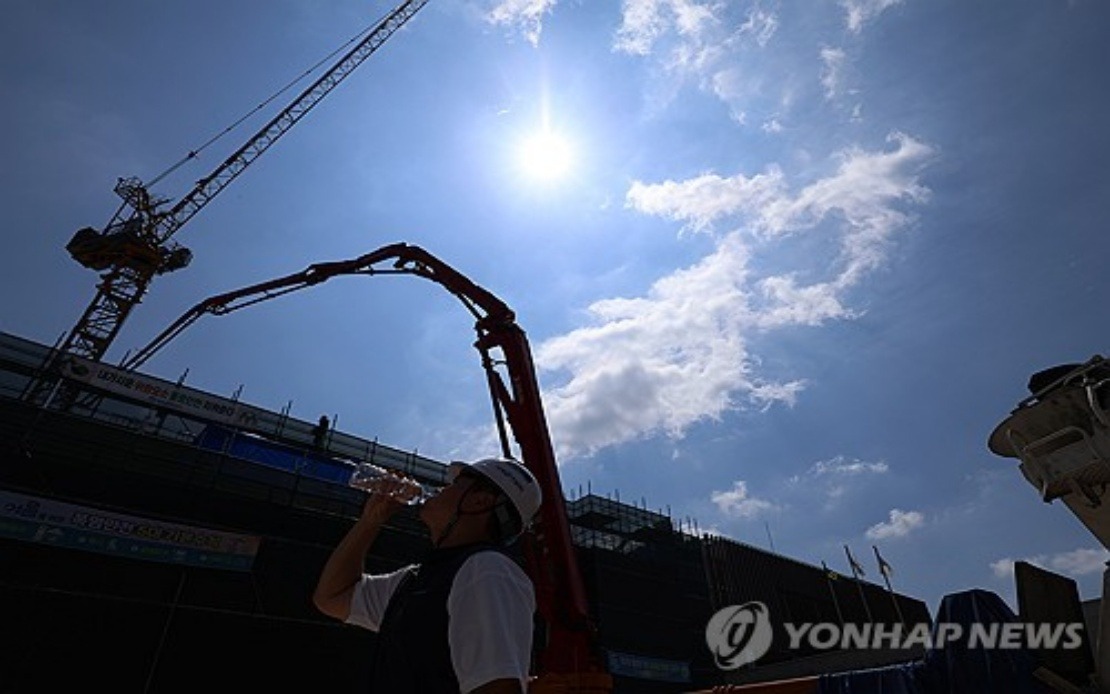
South Korea's meteorological authorities have intensified their response to an escalating heat crisis, placing roughly 43 per cent of the greater Seoul metropolitan region under the nation's most severe heat wave alert as of Wednesday. The Korea Meteorological Administration expanded the top-tier warnings to encompass 20 of 46 designated weather advisory zones in the capital region, a significant expansion that underscores the breadth and intensity of the phenomenon gripping the country.
The fresh warnings took effect at 11 am, affecting southern Incheon along with nine municipalities and districts throughout Gyeonggi Province, notably Gwangmyeong, Yeoncheon, and Hwaseong. This expansion followed the unprecedented step on Tuesday of placing all of Seoul itself under the highest alert level for the first time since such warnings were introduced into the heat alert framework on June 1. The cascading nature of these alerts, expanding from the capital city proper to now encompassing the surrounding metropolitan zones, reflects a heat event of unusual magnitude and persistence.
A particularly notable development came with the issuance of warnings in Cheongyang within South Chungcheong Province, marking the inaugural application of these serious heat alerts to the central Chungcheong provinces. This geographic expansion eastward suggests that the extreme conditions are not confined to Seoul's immediate environs but are affecting broader swathes of the Korean peninsula, indicating a heat system of continental proportions rather than a localized phenomenon.
The Korea Meteorological Administration's criteria for implementing serious heat wave warnings are stringent, designed to trigger only when conditions pose genuine public health emergencies. Authorities activate these top-tier alerts when apparent temperatures—a measure combining actual temperature with humidity and wind chill to reflect how heat is physically experienced by the human body—are projected to reach 38 degrees Celsius or above. Alternatively, warnings can be issued when daily maximum temperatures are forecast to exceed 39 degrees Celsius in regions that have already registered apparent temperatures of 35 degrees Celsius or higher for two consecutive days or more.
The severity of current conditions becomes apparent when examining actual recorded temperatures across the peninsula. The southeastern city of Yangsan has experienced temperatures reaching 42.5 degrees Celsius, a reading that represents the highest temperature documented since modern weather observation systems were established in 1904—a span of 120 years of meteorological records. This milestone achievement underscores that South Korea is not merely experiencing warm weather but confronting conditions that exceed anything in the nation's recorded climatic history.
For Malaysian and broader Southeast Asian readers, such extremes carry particular significance. While tropical regions routinely experience high temperatures, the vulnerability of temperate zone populations to extreme heat differs markedly. South Korea's infrastructure, urban planning, and population health systems were developed for considerably cooler conditions. The shock of such unprecedented temperatures in a nation accustomed to cooler summers creates cascading vulnerabilities—power grid failures as air conditioning demand surges, transportation system malfunctions, and acute health crises among populations lacking lifelong adaptation to such conditions.
The human toll of this heat event has already become starkly visible in health statistics. The Korea Disease Control and Prevention Agency has documented 2,221 hospitalizations attributable to heat-related illness between May 15 and the preceding Monday, representing a substantial public health burden. More grimly, 19 deaths have been officially attributed to heat exposure during the same period. These figures suggest that despite modern medical infrastructure and widespread access to cooling facilities, the heat event is overwhelming institutional capacity to manage the consequences.
The timing of this heat crisis during summer vacation periods means that vulnerable populations—the elderly, young children, and those without reliable air conditioning—face particular exposure risk. Unlike workplace environments where air conditioning is more consistently available, residential spaces and outdoor settings lack such protections. The pattern of heat-related hospitalizations typically reflects the lag between initial exposure and medical intervention, suggesting that current casualty figures may represent only the initial phase of health impacts, with additional cases potentially emerging as the heat wave persists.
From a regional perspective, this heat event in South Korea resonates with broader climatic patterns affecting East and Southeast Asia. The atmospheric conditions generating record heat in Korea often connect to the same systems influencing monsoon patterns and heat distribution across the wider region. Understanding Korea's heat crisis provides insights into the climate resilience challenges facing nearby nations, including implications for agricultural output, water resource management, and energy security across the region.
For policymakers across Southeast Asia, the South Korean experience offers cautionary lessons regarding infrastructure adaptation and public health preparedness. Nations throughout the region, while more accustomed to high temperatures, nonetheless face unprecedented challenges as climate change continues shifting historical temperature baselines. The question of how quickly cooling infrastructure can be expanded, how power systems can manage simultaneous peak demands across multiple nations, and how health services can coordinate responses to mass heat casualties requires urgent attention.
The broader pattern of climate-related extreme weather events—from unprecedented European heat waves to intensified monsoons in South Asia—suggests that the Korean situation represents not an anomaly but rather an emerging pattern of climatic disruption. The expansion from Seoul proper to encompassing nearly half the greater metropolitan region within a single week indicates the rapid intensification capability of such systems. For a densely populated, highly developed nation like South Korea, managing such conditions requires unprecedented coordination between meteorological services, utility companies, health authorities, and emergency management agencies.
Looking forward, this heat event will likely prompt significant reassessment of Korean climate adaptation policies, building codes, and public health protocols. International collaboration on understanding such extreme events and sharing adaptation strategies becomes increasingly valuable, particularly for nations in similar climatic zones or facing analogous development challenges. The experience of reaching record temperatures despite sophisticated monitoring and response systems suggests that even advanced economies must fundamentally rethink assumptions about the range of conditions their infrastructure must accommodate in coming decades.

