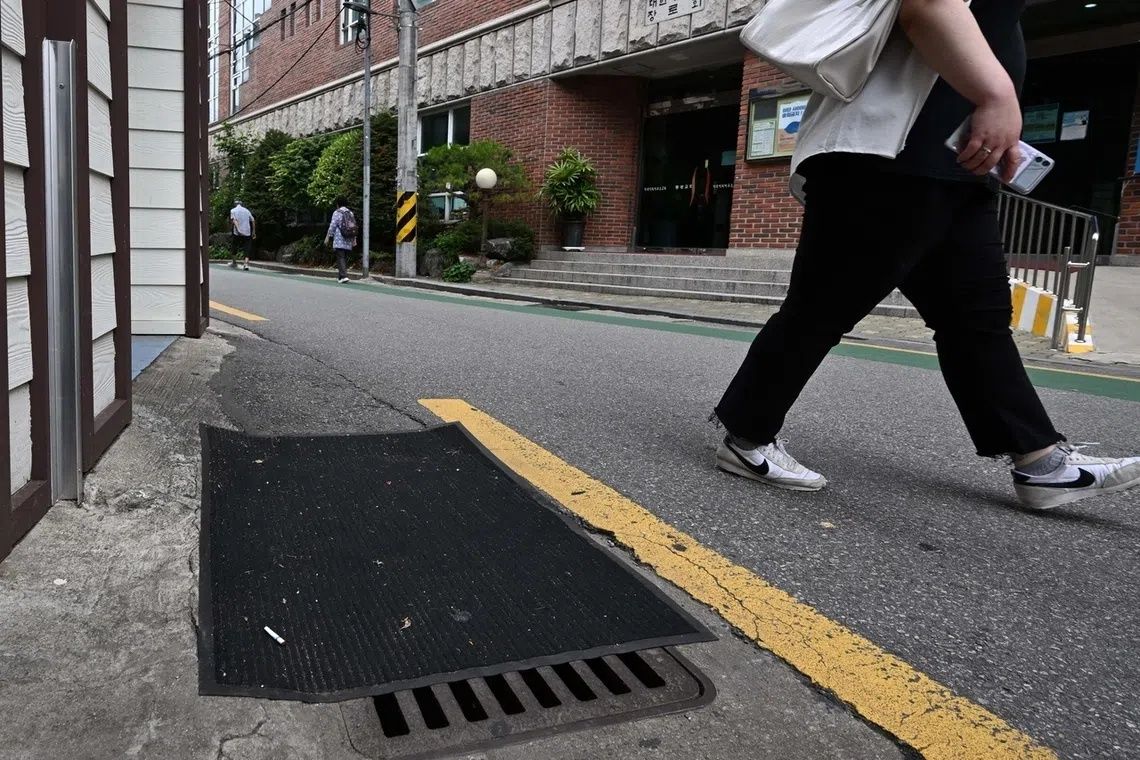
Pedestrians in Seoul frequently find themselves engulfed in sharp, unpleasant smells while navigating the city's sidewalks or waiting for buses, a phenomenon that has become sufficiently common that residents routinely document and discuss such incidents across Korean and international online forums. Although these odorous episodes typically dissipate within seconds, their frequency and consistency have elevated the issue from minor inconvenience to measurable quality-of-life concern for both permanent inhabitants and international visitors to South Korea's capital.
A comprehensive 2025 report from the Seoul Institute has quantified the extent of the problem, establishing that sewer-related odours generate approximately half of all civil complaints the city receives concerning poor air quality. This finding underscores that the challenge is not merely anecdotal or exaggerated, but rather a documented phenomenon affecting enough residents to constitute a significant municipal concern. The situation presents a particular irony for Seoul, a global city recognised for technological advancement and urban planning sophistication, yet unable to eliminate what many would consider a basic environmental quality issue.
The trajectory of complaints reveals a pattern of temporary improvement followed by regression. When Seoul implemented odour reduction initiatives in 2015, the number of sewer-related complaints declined from 3,095 that year to 1,660 by 2020, suggesting that targeted interventions could produce measurable results. However, this progress proved unsustainable, with complaints rebounding to 2,302 by 2024, indicating that the underlying infrastructure challenges remain fundamentally unresolved despite over a decade of municipal attention and resource allocation.
The primary culprit behind Seoul's sewer odour is hydrogen sulfide, a gas with a distinctive rotten egg aroma that emerges when organic matter decomposes in oxygen-starved environments. The conditions that produce this gas are virtually inevitable within Seoul's sewer infrastructure, particularly given that the city's explosive modernisation has outpaced systematic upgrades to underground sewage networks. Many buildings throughout Seoul depend on interim septic tanks that remove solid waste but allow dissolved organic compounds to persist in wastewater, which subsequently flows into underground sewers where decomposition and hydrogen sulfide generation occur naturally.
Weather patterns significantly influence the intensity and frequency of odour complaints, creating a seasonal dimension to Seoul's sewer problem. During periods of substantial rainfall, the increased volume of water flowing through the system flushes decomposing matter and prevents hazardous gas accumulation. Conversely, during hot and dry seasons characterised by minimal precipitation, hydrogen sulfide becomes trapped within sewers and escapes through openings including storm drains and maintenance access points. This meteorological dependency means Seoul residents experience worse odour problems during summer months and drought periods, when outdoor temperatures exacerbate decomposition rates while simultaneously reducing the water flow necessary to disperse accumulated gases.
At the architectural level, Seoul's combined sewer system—in which both household wastewater and stormwater drain through identical underground pipes—creates inherent structural limitations that contribute substantially to persistent odour generation. Since the early 1990s, Seoul planners have contemplated transitioning to a separated system in which wastewater and stormwater utilise distinct pipe networks, a configuration that would significantly reduce conditions conducive to hydrogen sulfide formation. However, this conversion effort has stalled due to the enormous logistical complexity and prohibitive expense of systematically replacing underground sewer infrastructure beneath a densely developed metropolitan area. As of 2025, only 20.4 percent of Seoul's total sewer network had undergone conversion to a separate system, indicating that progress has occurred at a glacial pace relative to the scope of the challenge.
City officials acknowledge that addressing Seoul's sewer odour requires sophisticated, case-by-case analysis rather than standardised solutions. Factors including significant reductions in wastewater flow and sediment deposition within sewer pipes contribute to odour problems, prompting consideration of remedial approaches such as restructuring sewer configurations and dredging accumulated deposits. Seoul's municipal government has formally designated sewer odour reduction as a priority within its environmental policy framework and established dedicated teams responsible for implementing odour mitigation projects. Nevertheless, the current legal environment in Seoul primarily addresses odours that surpass established permissible thresholds, thereby failing to mandate that local authorities proactively prevent or minimise sewer odours before they become problematic.
This reactive rather than proactive regulatory approach has created systematic obstacles to developing lasting solutions. Ki Dong-won, a researcher specialising in urban environmental issues at the Seoul Institute, identifies the complaint-driven methodology as fundamentally incompatible with establishing standardised, long-term odour management protocols. South Korea has not yet developed sophisticated modelling systems capable of predicting how sewer odours disperse into the above-ground environment or tracing their diffusion patterns, making it extraordinarily difficult to identify neighbourhoods likely to experience complaints before they actually occur. While Seoul has initiated efforts to create detailed sewer odour maps, these documents currently lack integration with performance indicators or evaluation criteria that would enable rigorous assessment of whether odour reduction facilities are functioning effectively.
Environmental engineering specialists propose alternative strategies that sidestep the enormous expense of replacing Seoul's combined sewer infrastructure. Park Seok-soon, an environmental engineering professor emeritus at Ewha Womans University, advocates for artificial circulation of water through sewer pipes to prevent prolonged stagnation and consequent decomposition of organic matter. This approach mirrors techniques employed in numerous Japanese and other developed-nation cities that similarly maintain combined sewer systems but manage them through rigorous operational protocols rather than capital-intensive infrastructure replacement. Installing hydrant-fed circulation systems would require considerably less expenditure than excavating and replacing underground pipes while potentially delivering significant odour reduction benefits.
The Seoul situation carries broader implications for rapidly developing Southeast Asian cities confronting similar challenges. As regional metropolises including Bangkok, Jakarta, and Manila expand infrastructure to accommodate explosive population growth, they risk replicating Seoul's trajectory of infrastructure lagging behind urbanisation. Seoul's experience demonstrates that technological sophistication and economic resources alone are insufficient to overcome embedded infrastructure limitations, and that decisions made during initial urban development phases regarding combined versus separated sewer systems create consequences affecting quality of life for decades. For Malaysian cities managing their own infrastructure expansion, Seoul's example underscores the critical importance of establishing modern sewer infrastructure during growth phases rather than attempting expensive retrofits afterward.
Moving forward, Seoul faces a choice between investing enormous sums in replacing its combined sewer system—a project of incalculable complexity in a fully developed urban environment—or implementing more rigorous operational management and creative technological solutions to address persistent decomposition within existing infrastructure. International best practices suggest that alternative approaches including water circulation, sediment removal, chemical treatments, and enhanced ventilation deserve systematic investigation and investment. The underlying reality, however, is that Seoul's sewer odour problem reflects fundamental tensions inherent in rapid urbanisation where infrastructure development fails to anticipate demand, and subsequent decades are spent managing consequences rather than implementing optimal solutions.

