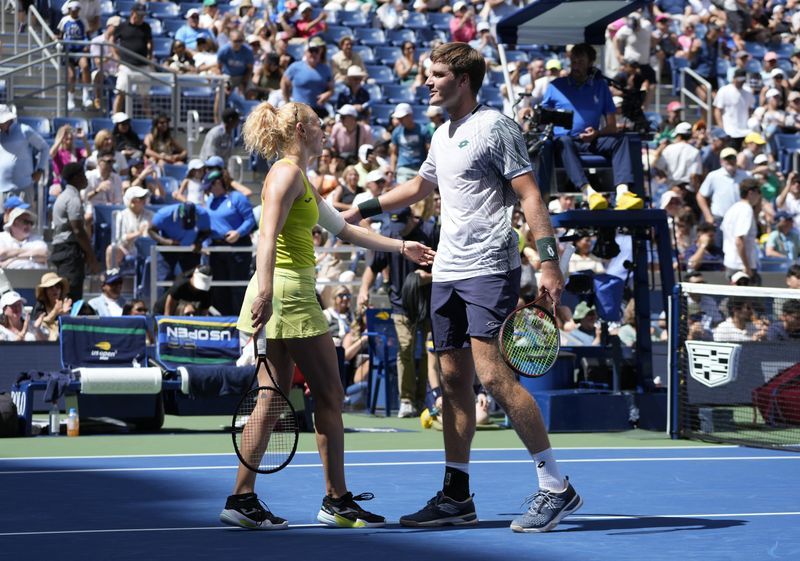
Serena Williams reclaimed her place at Arthur Ashe Stadium on Tuesday with a commanding performance in mixed doubles, securing a straight-sets victory alongside 21-year-old Carlos Alcaraz against New Zealand's Erin Routliffe and Britain's Lloyd Glasspool. The scoreline of 5-3, 4-1 understated the dominance displayed by the partnership, which will advance to face Swiss player Belinda Bencic and Italy's Flavio Cobolli in the quarter-finals. For the 44-year-old Williams, competing in her first match at the iconic New York venue since her emotional 2022 farewell, the reception from a packed stadium provided vindication for her decision to emerge from retirement.
Williams' return to the court represented far more than a sporting curiosity; it symbolised a significant moment in tennis history that captured global attention. The 23-time Grand Slam champion had stepped away from competitive play just over two months prior to this week's event, yet her comeback generated immediate momentum. Her opening shot—a backhand winner that drew the crowd to its feet—set the tone for an afternoon infused with chemistry between the experienced legend and her youthful partner. The atmosphere intensified when Williams unleashed a 120 mph ace during the seventh game of the first set, a display of power that belied concerns about rustiness.
Alcaraz, sidelined since April with injury concerns, adapted swiftly to the unique demands of mixed doubles partnership. The seven-time major winner demonstrated the adaptability expected of his calibre, following Williams' tactical guidance and closing out the opening set with a composed forehand winner. Their matching royal purple outfits became symbolic of their unified approach, and their embrace following the victory reflected genuine enjoyment in the partnership. Alcaraz later credited the experience of playing alongside Williams, noting the invaluable lessons gleaned from a player whose career trajectory has few parallels in modern tennis.
The mixed doubles format itself has undergone substantial transformation in recent years, designed to elevate the status of doubles competition within the Grand Slam calendar. Introduced two years ago, the restructured format prioritises singles stars and provides a dedicated standalone week preceding the main singles championship. This strategic repositioning aimed to generate spectator interest and commercial viability for doubles, a category that had historically struggled to command attention comparable to singles matches. The inaugural iteration of this revamped approach proved remarkably successful, drawing sellout attendances and featuring many of the sport's marquee names competing in pairs.
Yet this commercial success came at a cost to traditional doubles specialists, who raised concerns about marginalisation within the new structure. Established doubles pairings found themselves sidelined in favour of singles stars seeking additional tournament opportunities. The controversy surrounding the format's impact on career doubles players remains unresolved, with some arguing that the prioritisation of singles celebrities undermines the integrity of doubles tennis as a distinct discipline. Nevertheless, Tuesday's attendance figures and media coverage suggest the organisers' gamble on star power has resonated with mainstream audiences.
The tournament's opening round delivered a stunning upset when defending champions Novak Djokovic and Aryna Sabalenka succumbed to experienced doubles specialists Henry Patten and Katerina Siniakova. The defeat, with scores of 1-4, 4-2, and a decisive 10-2 tiebreak, demonstrated the vulnerability of singles stars competing outside their primary discipline. Siniakova clinched the dramatic victory with an ace struck wide, rewarding the superior court positioning and tactical awareness that doubles specialists develop through years of dedicated partnership. Patten acknowledged the volatility inherent in the fast-paced format, noting how a single poor game could precipitate rapid set losses given the abbreviated nature of mixed doubles scoring.
The upset extended beyond the Djokovic-Sabalenka pairing. Italy's defending champions Sara Errani and Andrea Vavassori, who triumphed in the previous year's competition, fell to the Russian combination of Mirra Andreeva and Andrey Rublev in a closely contested encounter. The scoreline of 1-4, 4-1, 11-9 reflected the intense pressure and minimal margins separating victory and elimination in this format. Errani and Vavassori will now face elimination unless they can defeat the winner emerging from the match between Norway's Casper Ruud and Russian Diana Shnaider against American pairing Jessica Pegula and Taylor Fritz.
Meanwhile, other notable partnerships secured progression toward the semi-finals. The married couple of Frenchman Gael Monfils and Ukrainian Elina Svitolina advanced with professional coordination reflecting their years of shared experience. Similarly, Czech player Karolina Muchova and Czech-Slovak Jakub Mensik booked semi-final spots, demonstrating that established doubles combinations retain competitive advantages despite the format's emphasis on singles luminaries. These victories underscore that success in mixed doubles requires more than individual singles prowess; court awareness, anticipation, and seamless partnership communication remain paramount.
For Malaysian and Southeast Asian observers, Williams' comeback carries particular resonance. Her return exemplifies the enduring appeal of tennis legends whose influence transcends generational boundaries. In a region where interest in professional tennis has grown substantially, particularly following the participation and success of players from neighbouring nations, Williams' story reinforces the sport's capacity to inspire comebacks and validate sustained excellence. Similarly, younger players throughout Asia will note how competing alongside established champions—as Alcaraz does this week—accelerates development and provides mentorship unavailable through conventional training.
The mixed doubles format itself warrants consideration within an Asian context. Regional tournaments often struggle to attract premium sponsorship and attendance when confined to doubles categories. Williams' presence in New York, attracting international media attention and compelling stadium capacity crowds, illustrates how strategic positioning of star athletes can transform financial and promotional outcomes. Tennis federations throughout Asia might examine whether similar structural adjustments could enhance the commercial viability of their domestic competitions, particularly as younger players aspire toward professional success.
Looking forward, Williams' progression alongside Alcaraz will command sustained scrutiny from global audiences. Their quarter-final appointment against Bencic and Cobolli presents an early test of their chemistry and capacity to execute under heightened expectations. Should they continue advancing, the narrative of Williams' renaissance—competing at the highest level after two years away—will intensify, potentially drawing additional casual viewers unfamiliar with tennis subtleties but captivated by celebrity comebacks. The format's success may ultimately depend upon whether singular personalities can sustain sufficient on-court performances to justify the philosophical compromises required to accommodate them.

