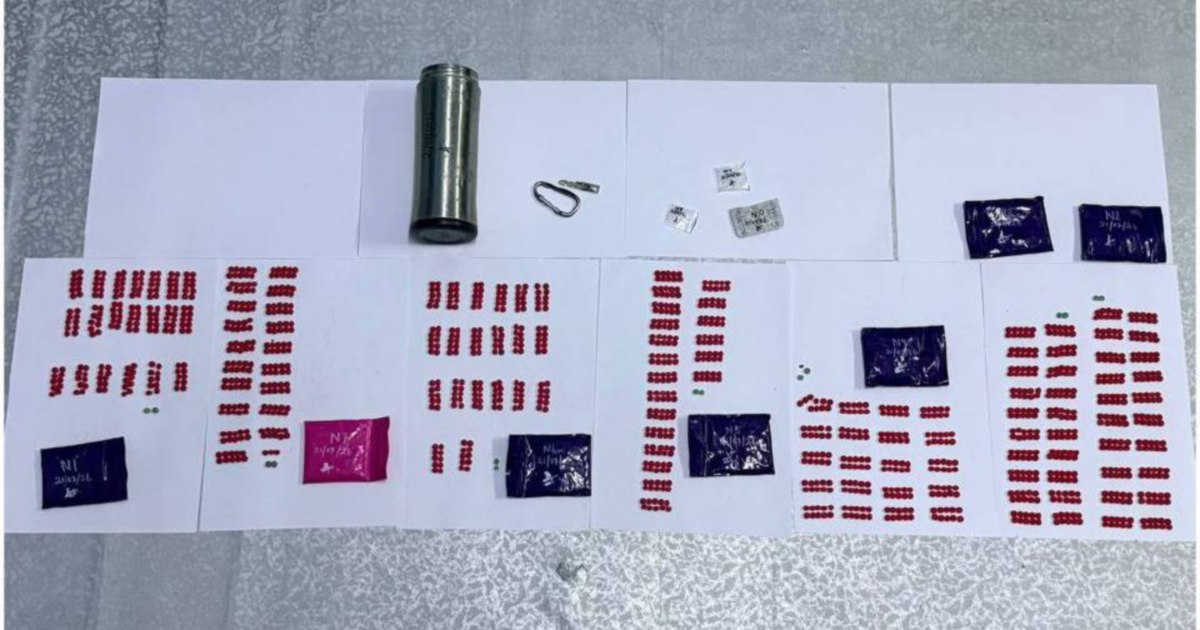
Malaysian police have arrested five individuals during a series of organised crime enforcement operations in the Gombak district, with one suspect standing out for his extensive criminal history involving drug-related offences. The man in question carries six prior convictions for drug violations, marking him as a recidivist offender within the narcotics trade and a key focus of law enforcement authorities attempting to dismantle drug distribution networks operating within the Klang Valley.
The raids, conducted as part of Gombak Organised Crime Focus (GOF) initiatives, represent a sustained effort by police to target criminal syndicates and high-level traffickers believed to be responsible for supplying controlled substances across Selangor and neighbouring areas. Such operations typically involve coordination between multiple police units and intelligence-gathering activities designed to identify and apprehend individuals suspected of leading or participating in organised narcotics enterprises.
The arrest of individuals with repeat offences underscores a persistent challenge facing Malaysian law enforcement: the revolving door effect where convicted drug offenders return to criminal activity following their release. Rehabilitation and reintegration programmes, though expanded in recent years, continue to struggle with high recidivism rates, particularly among those convicted of trafficking or manufacturing rather than simple possession offences.
Gombak, situated in the northern section of Kuala Lumpur and extending into Selangor, has emerged as a focal point for organised crime operations in the federal territory region. The area's strategic location along major transportation corridors, combined with its dense urban population and commercial zones, creates ideal conditions for criminal networks to establish supply chains and distribution points serving the wider Klang Valley metropolitan area.
The involvement of five suspects suggests a coordinated criminal network rather than isolated individual offenders. Organised crime drug operations typically employ a hierarchical structure, with experienced traffickers like the six-time offender orchestrating procurement and distribution while utilising street-level dealers to move product through target markets. Understanding these network connections becomes crucial for police attempting to dismantle operations at their source rather than merely arresting end-users or low-level dealers.
Enforcement operations targeting organised crime have intensified across Malaysia following policy directives emphasising drug prevention and supply reduction. The focus on Gombak reflects intelligence assessments suggesting the area hosts significant criminal infrastructure requiring targeted intervention. These raids often yield not only suspects but also seized drug quantities, cash, vehicles, and communications equipment that provide further investigative leads.
The previous convictions carried by the main suspect indicate this individual had cycled through Malaysia's criminal justice system without achieving lasting behavioural change. Whether prior sentences included rehabilitation components, vocational training, or structured drug treatment remains relevant to understanding why reoffence occurred. Malaysian prisons have implemented various reformation programmes, though resource constraints and overcrowding have limited their effectiveness.
Successful prosecution of individuals with prior records typically results in enhanced sentencing under Malaysian law's repeat offender provisions. Courts frequently impose longer prison terms and higher fines for those with established criminal histories, particularly in drug cases where trafficking or manufacturing charges carry mandatory minimum sentences. The evidential burden for securing convictions becomes potentially lighter when prior patterns of behaviour can be established.
The broader context of drug enforcement in Malaysia reveals a nation grappling with significant consumption and distribution networks. Synthetic drugs, particularly methamphetamine and fentanyl-based products, have proliferated alongside traditional heroin trafficking. Regional drug markets remain heavily influenced by transnational criminal organisations operating across Southeast Asia, with Malaysia serving simultaneously as transit point, manufacturing location, and consumer market.
These GOF operations contribute to an overall enforcement strategy balancing supply reduction efforts with demand management initiatives. Police raids generate short-term disruptions to distribution networks, whilst rehabilitation and community engagement programmes aim for longer-term behavioural change among users and at-risk populations. The arrest of recidivist offenders demonstrates that enforcement alone, without comprehensive intervention addressing underlying addiction and economic factors driving participation in drug markets, produces limited sustained outcomes.
The investigation following these arrests will likely examine financial records, communications data, and witness statements to establish the scope and structure of the suspected criminal enterprise. Intelligence gathered may implicate additional individuals or reveal connections to larger trafficking organisations, potentially spawning further enforcement actions. Such investigations frequently uncover links between drug distribution and other organised crime activities including protection rackets, gambling operations, and money laundering schemes.
Moving forward, the success of these particular arrests will ultimately depend on whether authorities can secure convictions, disrupt the specific drug supply chains these individuals managed, and gather intelligence preventing reorganisation of the network. For Malaysian law enforcement, the persistent challenge remains converting tactical enforcement successes into strategic reductions in organised drug crime capacity across the Klang Valley and beyond.

