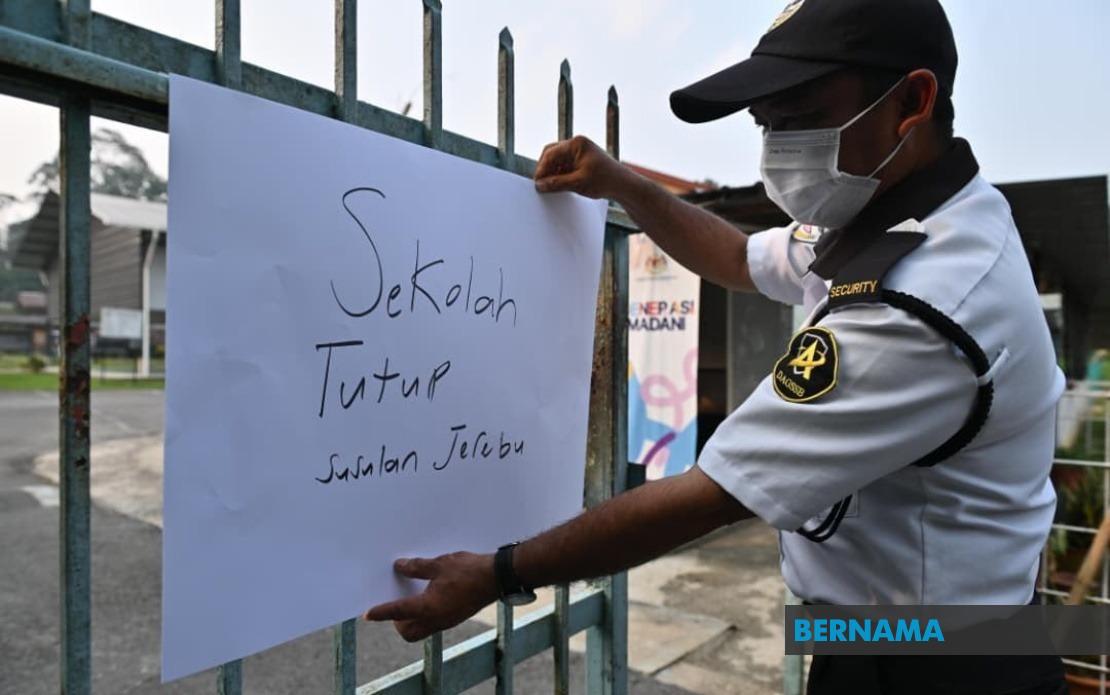
Educational authorities in Sarawak have extended the temporary suspension of classes at schools throughout the Serian district, maintaining closures through Friday as smoke-laden conditions persist across the region. The Sarawak State Education Department announced the decision following consultations with school leadership, reflecting growing concerns about the impact of deteriorating air quality on students and educators in one of Malaysian Borneo's most affected areas.
The haze crisis, stemming from transboundary pollution originating beyond Malaysia's borders, has forced administrators and parents to grapple with significant logistical challenges. Boarding school operations face particular strain, as residential students cannot simply remain at home during emergencies. The extension of closures aims to ease the administrative burden on school leadership while prioritising the health and wellbeing of the student population, many of whom face extended stays at educational facilities away from family support networks.
As of 4 p.m. on the day of the announcement, the Air Pollution Index in Serian had climbed to 178, firmly entrenching the district within the unhealthy category. This measurement, tracked through the Air Pollution Index Management System, provides real-time data that shapes policy decisions across Sarawak's education sector. The API threshold signalling hazardous conditions represents not merely a statistical milestone but a tangible warning about respiratory risks facing children and young people exposed to prolonged outdoor activity.
The extension decision emerged from direct engagement between the State Education Department and school principals across both secondary and primary institutions supervised by the Serian District Education Office. This collaborative approach reflects the complexity of managing widespread disruptions to the academic calendar in a region where school operations remain vulnerable to seasonal pollution events. Education officials emphasised their commitment to updating stakeholders as circumstances evolve, acknowledging that air quality conditions can shift rapidly in response to wind patterns and meteorological changes.
Schools throughout Sarawak are now instructed to monitor the Air Pollution Index Management System continuously, enabling institutional leadership to track real-time pollution data specific to their locations and districts. This decentralised monitoring approach empowers individual schools to make responsive decisions aligned with localized conditions rather than relying solely on state-level directives. The system provides granular geographical information essential for understanding how haze concentrations vary across different parts of the sprawling state.
The transboundary nature of the pollution challenges poses persistent difficulties for Malaysian policymakers, as local mitigation efforts prove insufficient when airborne particles originate from agricultural burning and industrial activities in neighbouring jurisdictions. Serian's recurring struggles with hazardous air quality reflect broader environmental vulnerabilities affecting Sarawak's eastern districts, where geographic positioning leaves communities exposed to pollution drifting across international boundaries during peak burning seasons.
For Malaysian families with children in affected schools, extended closures generate cascading complications beyond simple schedule adjustments. Working parents must arrange alternative childcare, while students miss instructional days that compress already tight academic calendars. The cumulative effect of repeated closure episodes across the academic year creates educational discontinuity that potentially undermines learning outcomes, particularly for examination classes approaching crucial assessment periods.
Sarawak's education system has developed institutional experience managing haze-related crises, yet each episode tests the resilience of planning frameworks designed to balance student protection with educational continuity. The involvement of district-level education offices, school administrators, and state authorities demonstrates the multi-layered governance structure required to navigate environmental emergencies affecting thousands of learners across geographically dispersed communities.
The decision to extend closures through Friday signals authorities' assessment that air quality recovery remains unlikely within the immediate term. This forward-looking stance reflects meteorological patterns typical of transboundary haze episodes, which often persist across multiple days before favourable wind shifts disperse accumulated pollutants. Officials indicated that further announcements would clarify the situation for Monday onwards, maintaining the adaptive posture essential when environmental conditions remain volatile and unpredictable.

