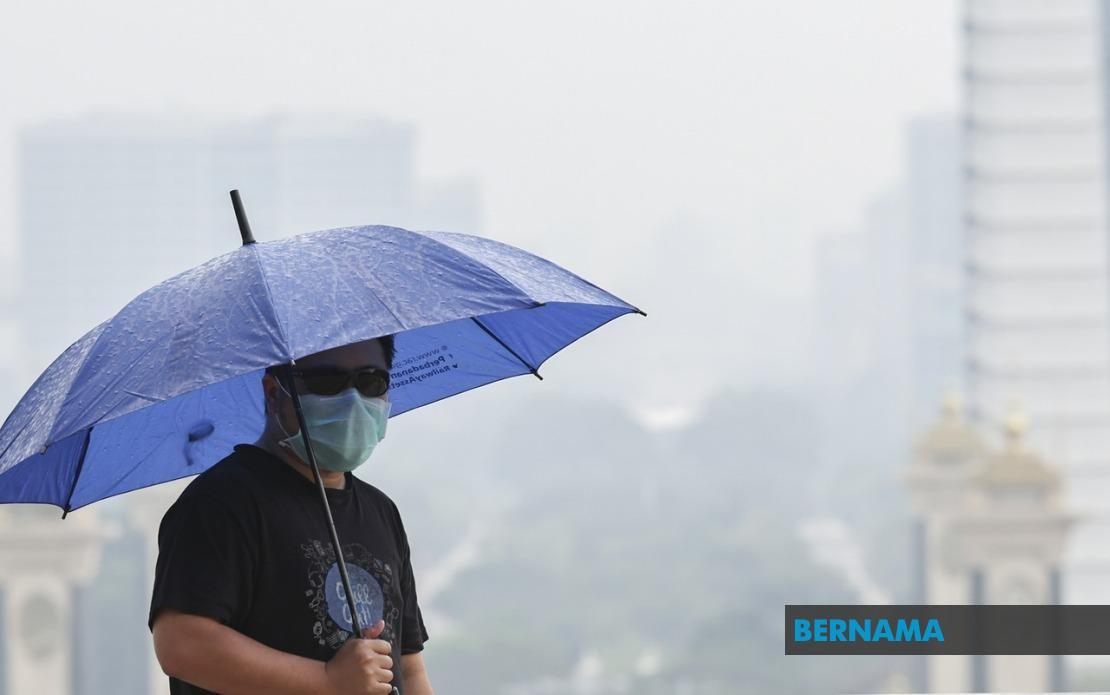
Sarawak's air quality has slipped into unhealthy territory as Serian registered an Air Pollutant Index reading of 153 as of 5 pm on July 27, marking a significant degradation in the state's ambient conditions. The reading places Serian well into the range considered harmful to public health, particularly for vulnerable population groups, and signals a broader environmental concern spreading across the region as the dry season intensifies.
The Natural Resources and Environment Board Sarawak has documented a steady deterioration in air quality since mid-July, with the situation now affecting multiple districts throughout the state. Eleven areas—including the major population centres of Kuching, Samarahan, Sri Aman, Sibu and Bintulu, along with Sarikei, Mukah, Samalaju, Lundu, Tebedu and Lubok Antu—are currently experiencing moderate pollution levels ranging from 51 to 100 on the API scale. This geographical spread indicates that the air quality challenge extends far beyond a single locality and suggests systemic factors affecting the entire state.
Meteorological conditions have emerged as the primary driver of Sarawak's current air quality crisis. The southwest monsoon, which commenced on May 14 and is forecast to persist until September, has established persistent southwesterly wind patterns that are funneling pollutants across the region. The NREB has explicitly flagged the risk of transboundary haze, a phenomenon where air pollution originating from neighbouring jurisdictions—particularly Indonesia's Riau province and other key biomass-burning regions—crosses state and national boundaries and deposits itself over Sarawak's airspace.
The connection between seasonal burning practices and air quality deterioration remains a critical environmental issue for Southeast Asia more broadly. When agricultural and land-clearing activities intensify in neighbouring regions during their dry seasons, the smoke and particulate matter generated by biomass burning are easily transported by prevailing winds into Malaysian territory. For Sarawak, positioned directly in the path of monsoon wind flows, this transboundary dimension means that domestic air quality is partially contingent on environmental management and enforcement efforts occurring beyond its borders—a reality that has long complicated regional environmental cooperation.
Responding to the escalating situation, the NREB has implemented a comprehensive suite of emergency measures designed to limit additional air pollution sources within Sarawak itself. The agency has activated its haze operations room, a coordination centre tasked with monitoring conditions and directing response efforts in real time. Simultaneously, NREB has intensified field patrols across the state to detect and prevent unauthorized burning activities. The board has taken the firm step of revoking all existing controlled burning permits—a significant action that suspends even sanctioned agricultural burning—and has halted the issuance of new permits indefinitely. Additionally, open burning prohibition notices have been distributed to all project developers, signaling that the regulatory environment has shifted decisively toward restriction.
These regulatory interventions reflect a precautionary approach to environmental management, prioritizing air quality preservation over routine agricultural and development activities. By eliminating domestic sources of biomass burning, the NREB aims to prevent local contributions to air pollution from compounding the transboundary haze already arriving from neighbouring regions. The strategy acknowledges that while Sarawak cannot unilaterally control international wind patterns or neighbouring countries' land management practices, it can exercise complete control over its own territory and ensure that local sources do not exacerbate an already deteriorating situation.
Public health implications have prompted the NREB to issue specific guidance to Sarawak's population, particularly those in high-risk categories including children, the elderly, pregnant women, and individuals with respiratory or cardiovascular conditions. The board has advised residents to increase water intake to support respiratory and systemic function, to minimize outdoor activities that would increase exposure to airborne pollutants, and to wear properly fitted face masks when venturing outside. These recommendations represent standard haze-response protocols that have become familiar to Southeast Asian populations increasingly accustomed to seasonal air quality crises.
The timing of this pollution episode carries particular significance given Sarawak's position within Malaysia's broader environmental and economic landscape. The state is heavily dependent on tourism, agriculture, and resource extraction—sectors all vulnerable to air quality degradation. Poor air quality discourages tourist arrivals, creates health liabilities for outdoor agricultural workers, and can trigger international criticism of Malaysia's environmental stewardship. From a public health standpoint, sustained exposure to unhealthy API readings increases respiratory illness incidence, exacerbates existing conditions, and imposes invisible costs on the healthcare system and workforce productivity.
The NREB's forecast that haze conditions will persist through the remainder of the monsoon season—potentially intensifying if biomass burning accelerates in neighbouring regions—suggests that Sarawak faces a prolonged period of elevated air quality risk. The agency's emphasis on the conditional nature of the outlook ("if biomass burning increases outside its borders") underscores the region's vulnerability to external environmental pressures and the limits of unilateral action in addressing transboundary pollution phenomena. Sarawak's experience serves as a microcosm of broader Southeast Asian environmental governance challenges, where atmospheric circulation patterns and economic development patterns in neighbouring jurisdictions directly influence domestic air quality outcomes.
Looking forward, the current episode may catalyze renewed discussions about regional environmental cooperation frameworks and transboundary pollution protocols within ASEAN. Malaysia has historically advocated for stronger mechanisms to address haze, though achieving coordinated enforcement remains diplomatically complex. For residents and businesses in Sarawak, the practical reality is adaptation: implementing indoor air filtration, adjusting work schedules to minimize outdoor exposure during peak pollution hours, and maintaining vigilance regarding their own health. The NREB's prevention-focused approach, while necessary, ultimately addresses only one dimension of a problem whose full resolution requires cooperation across borders and economic systems.

