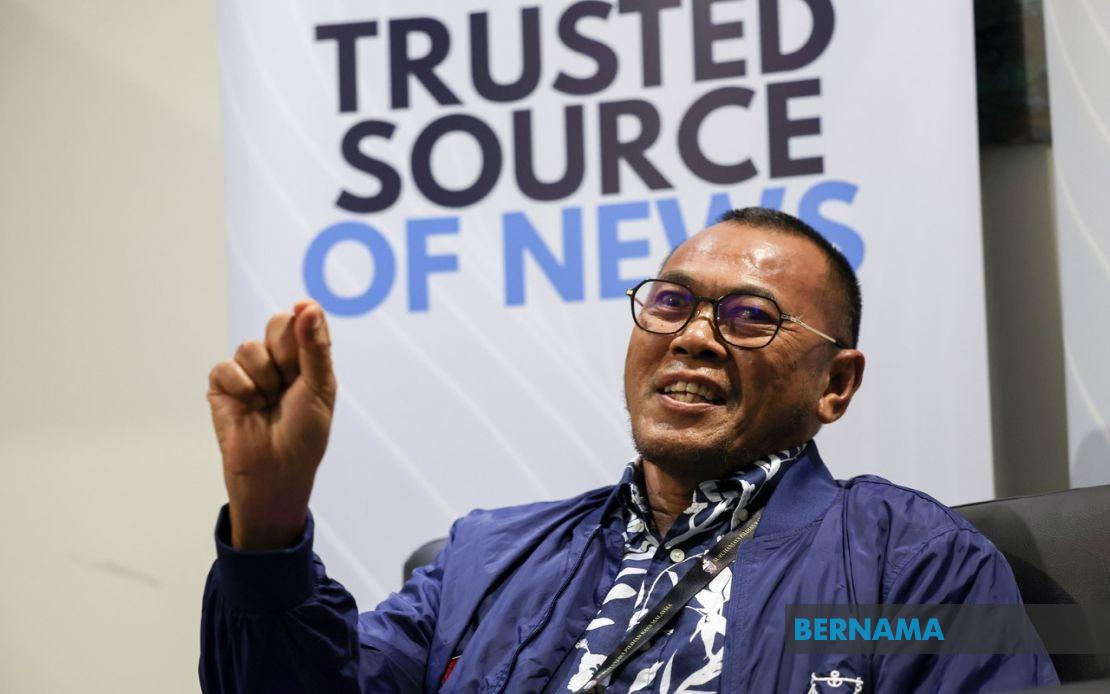
Datuk Pandak Ahmad, the Barisan Nasional incumbent representing Kota Iskandar in the upcoming Johor state election, frames his political approach around a central philosophy: acting as a conduit between constituents and decision-makers. In an interview ahead of the July 11 polling day, the assemblyman outlined how this principle has shaped his tenure and will continue to guide his work if voters grant him another term. The philosophy emphasises careful listening, genuine understanding of community grievances, and practical solutions delivered across all demographic strata within his constituency.
The 132,579-strong electorate of Kota Iskandar is notably young, with more than 131,000 voters under 40 years old—a demographic reality that has forced Pandak to evolve his campaign methods. While grassroots face-to-face engagement remains his primary strategy, the assemblyman has embraced digital platforms including Facebook, Instagram and Threads to reach voters who may not attend traditional ceramah or community meetings. This dual approach reflects broader shifts in Malaysian electoral politics, where younger constituencies increasingly expect candidates to maintain a visible and responsive online presence alongside traditional retail politics.
Pandak's campaign centrepiece is his record on affordable housing delivery. The Johor People's Housing Programme has produced 12,000 units during his current term, targeting middle-income households struggling to break into property ownership. Beyond raw numbers, the programme represents a response to a persistent grievance across Malaysian urban constituencies: the widening gap between wage growth and housing costs. His administration has also committed to building approximately 300 units in Gelang Patah and over 800 units in Taman Damai, Pulau Hijauan, all priced below RM300,000 per unit—a threshold designed to remain accessible to first-time buyers and young families.
Infrastructure development has constituted another pillar of his development agenda. The construction of new religious facilities, particularly a mosque in Pulai Emas, addresses the spiritual needs of a growing Muslim population, while the establishment of the Tunku Mohkota Ismail Youth Centre provides recreational and social infrastructure for younger residents. These projects signal attentiveness to institutions that structure community life beyond purely economic concerns, a politically astute approach in a state where community cohesion remains valued across all demographic groups.
At the administrative level, Pandak has overseen streamlining of bureaucratic processes through collaboration with the Iskandar Puteri City Council. The acceleration of business licensing for small traders—reducing approval timelines from weeks to a single day—speaks to a broader modernisation agenda. This efficiency gain particularly benefits the informal economy and petty traders, constituencies that hold considerable electoral weight in suburban and emerging urban areas. Removing administrative friction, even incrementally, can generate meaningful goodwill among voters navigating regulatory systems daily.
The regeneration of Kampung Sungai Melayu exemplifies Pandak's approach to economic development through heritage preservation and tourism. The centuries-old fishing village, transformed through nearly RM22 million in infrastructure investment, has attracted over 100,000 visitors in connection with Visit Johor Year 2026. Rather than displacing traditional economic activity, the development has adapted fishing communities' existing assets into a tourism draw, creating supplementary income streams. This model of working with rather than against established community enterprises represents a contrast to development approaches that prioritise rapid modernisation over cultural continuity.
Land reclamation further demonstrates Pandak's commitment to practical problem-solving. Recovery of nine acres previously held by private interests has enabled development of a commercial fishing hub, with systematic relocation of affected traders' stalls. Managing such transitions—where development requires moving established businesses—requires negotiating competing interests while maintaining constituent confidence. The transparent handling of such issues can either enhance or damage an assemblyman's credibility among voters dependent on informal sector livelihoods.
Among remaining challenges, traffic congestion stands foremost in constituent complaints. Rapid residential expansion, particularly along routes connecting Universiti Teknologi Malaysia to Pulai Indah and from Gelang Patah to Kampung Ulu Pulai, has created bottlenecks that affect commuting patterns and quality of life. Pandak's response involves technological upgrades to traffic management systems, construction of two new flyovers, and an elevated interchange. These projects require coordination across municipal authorities and reflect the complexity of metropolitan governance in high-growth constituencies where infrastructure struggles to keep pace with population influx.
Looking forward, Pandak envisions extending the Kampung Sungai Melayu tourism model to Pendas, another fishing community with distinct characteristics. The proposed approach combines ecotourism—boat services showcasing local waterways—with fishing activities, creating integrated income opportunities for residents. This vision reflects an understanding that sustainable rural development requires working within communities' existing economic structures rather than imposing externally designed solutions. The adaptability of successful models across different contexts, whilst accounting for local variation, represents a form of applied policy learning.
The Kota Iskandar contest presents a four-cornered battle. Pandak faces competition from Pakatan Harapan's Dzulkefly Ahmad, Perikatan Nasional's S. Anna Pravina, and Parti Bersama Malaysia's Sahrudin Omar. This fragmented opposition provides some advantage to the established BN incumbent, though the proliferation of candidates may also indicate constituent dissatisfaction warranting careful monitoring. Early voting occurs on July 7, with main polling day on July 11.
Pandak's campaign narrative—grounded in tangible delivery across housing, infrastructure and economic development—addresses fundamental voter concerns about material conditions and quality of life. Whether this record sufficiently resonates with an increasingly demanding electorate, particularly among younger voters prioritising affordability and opportunity, will determine his political fate. The Kota Iskandar contest thus serves as a microcosm of broader questions facing Malaysian politics: whether incumbency and development records can overcome anti-government sentiment, and whether digital-age voters value traditional measures of assemblyman performance.

