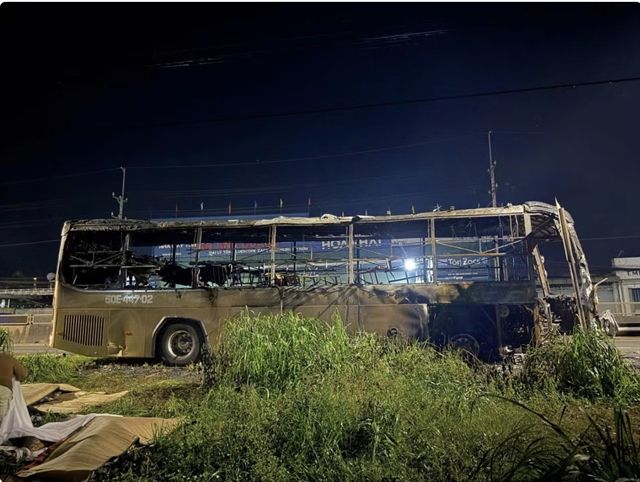
A devastating fire aboard a sleeper bus in southern Vietnam has claimed seven lives, renewing concerns about transportation safety across the nation. The incident occurred in the early hours of the morning when the coach, carrying 33 passengers and crew, struck a roadside embankment along National Highway 1 in Hung Thinh Commune while en route from Dong Nai to Ho Chi Minh City. The vehicle was being operated by 41-year-old driver Tran Thanh Hai, who hails from Khanh Hoa Province. Investigators are examining the circumstances that led to the initial collision, which appears to have set off a chain of catastrophic events.
The sequence of events unfolded rapidly in the darkness. After the bus struck the first embankment, the driver attempted to regain control of the vehicle, only to collide with a second roadside barrier. During or shortly after these impacts, a fire ignited at the front of the bus and spread with alarming speed through the passenger compartment. The swift propagation of flames through the enclosed space trapped numerous passengers inside, creating a life-threatening situation that unfolded faster than many could react or escape. The overnight timing of the accident meant that visibility was poor and emergency response times were extended, compounding the tragedy.
Local residents living near the accident scene demonstrated remarkable bravery in responding to the immediate crisis. They rushed to the burning vehicle with whatever firefighting equipment they could access, including portable fire extinguishers and other improvised tools, attempting to contain the blaze before it consumed the entire bus. However, the intensity and speed of the fire overwhelmed these civilian efforts, and the flames rapidly engulfed the entire vehicle despite their courageous intervention. This situation underscores the limitations of community-based emergency response when confronted with large-scale transportation disasters.
Authorities responded by dispatching professional firefighting units, rescue teams, and specialized equipment to the location. Emergency responders worked to suppress the fire, conduct search and rescue operations, and manage traffic diversions in the affected area. By the time the blaze was finally extinguished, the bus had been nearly completely destroyed, leaving little more than a charred shell. The extent of the damage complicated efforts to identify victims and determine the precise cause of the fire, as critical evidence was consumed by the flames.
The Hung Thinh Commune People's Committee confirmed that seven individuals had perished in the incident based on preliminary reports. Multiple injured survivors were transported to Thong Nhat General Hospital for medical treatment. Among those hospitalized, at least one passenger sustained only minor injuries and was subsequently discharged, though the condition and number of other injured persons remain under assessment. The loss of life represents a significant tragedy for families across the region and raises serious questions about passenger safety in long-distance coach services.
Investigative authorities have established a cordoned perimeter around the accident scene to conduct detailed forensic examinations. Investigators are pursuing multiple concurrent inquiries, including determining the precise cause of the fire, formally identifying all deceased victims through proper procedures, and reconstructing the exact sequence of events leading to the collision and subsequent conflagration. The investigation will likely examine vehicle maintenance records, driver fatigue factors, road conditions, and potential mechanical failures that may have contributed to the initial embankment strike.
This tragic incident represents the second major sleeper bus accident to occur in Vietnam within a seven-day period, intensifying scrutiny of the nation's intercity coach transportation sector. Just one week prior, on July 17, another sleeper bus veered off an expressway in Ha Noi while returning from Thien Cam beach in Ha Tinh Province to Thai Nguyen in the north. That vehicle overturned, resulting in five fatalities and dozens of injured passengers. The clustering of two serious accidents within such a short timeframe suggests potential systemic issues within the long-distance bus industry that may require comprehensive regulatory and safety protocol reviews.
The recurring incidents highlight ongoing concerns about driver fatigue, vehicle maintenance standards, road infrastructure hazards, and emergency response capabilities across Vietnamese transportation networks. Sleeper buses, which are designed to allow passengers to rest during overnight journeys, present unique challenges when accidents occur due to their enclosed design, limited emergency exits, and the disorientation of sleeping passengers during emergencies. The rapid spread of fire through passenger compartments in such vehicles creates particularly perilous conditions that overwhelm standard evacuation procedures. Regional governments and transport authorities throughout Southeast Asia, including Malaysia, may benefit from examining lessons emerging from these Vietnamese tragedies to enhance their own bus safety frameworks and prevent similar occurrences.

