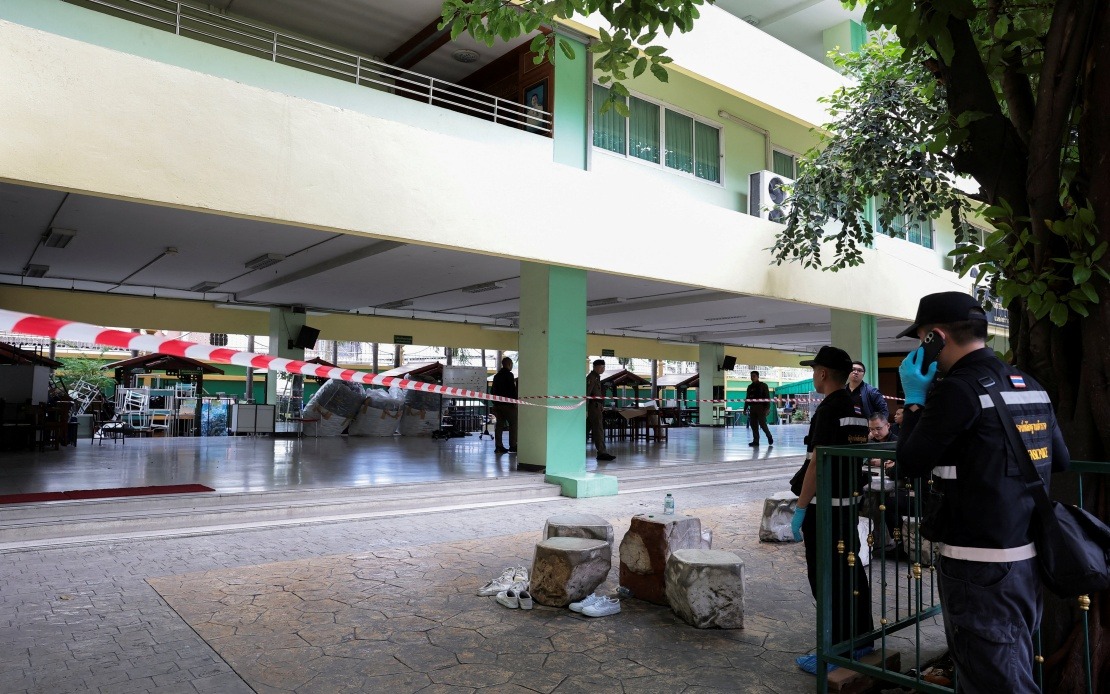
Tragedy struck Debsirin Nonthaburi School in the Bang Kruai district on Friday morning when a student opened fire on the campus, claiming seven lives and leaving at least 15 people injured. The shooting unfolded around 10 am at the institution located in Nonthaburi province, roughly northwest of the Thai capital, making it the second such incident to devastate Thai schools in less than half a year.
Among those killed were three educators and three schoolmates of the gunman, alongside the student perpetrator who died at the scene. Lieutenant General Trairong Piwpan, the Royal Thai Police deputy inspector-general and spokesperson, confirmed the death toll and provided further details to reporters who gathered at the location. A total of fifteen people sustained injuries, with two of these victims classified as seriously wounded and transported to medical facilities for urgent care.
Investigators quickly determined that the weapon used was a 9mm handgun, with 34 rounds of ammunition found outside its magazine. Police established that the firearm did not belong to the shooter but rather to his grandfather, highlighting a troubling lapse in weapon security within the family unit. This detail would later become central to government statements regarding the ongoing crisis of gun ownership in Thailand.
School authorities immediately initiated evacuation procedures, moving teachers and students to the nearby Chanrat Wittaya School to ensure their safety as emergency responders secured the crime scene. Officials appealed to parents and guardians to collect their children promptly, while the police chief directed the deployment of psychologists from Police General Hospital to offer trauma counseling and emotional support to those affected by the violence.
Thai Prime Minister Anutin Charnvirakul, who simultaneously holds the interior ministry portfolio, responded to the incident by expressing profound dismay and offering condolences to the families of the deceased. He swiftly mobilized government resources to assist the wounded and dispatched relevant personnel to coordinate response efforts. His public statements underscored the gravity of the situation and reflected official concern about mounting public safety threats.
The incident prompted Anutin to invoke the government's broader policy on firearm regulation, specifically its decision to halt the renewal of permits authorizing citizens to carry and possess weapons. In his statement, the Prime Minister framed this school shooting as vindication of the administration's restrictive approach to gun ownership, suggesting that the tragedy could have been prevented through stricter permitting mechanisms. The remarks positioned the incident within a wider debate over gun control measures that have become increasingly contentious across Southeast Asia.
This latest violence echoes an earlier shooting that occurred in February at a school in Hat Yai, located in Songkhla province in southern Thailand. In that incident, an 18-year-old assailant opened fire on campus, killing the school director and wounding additional victims before police apprehended him. The recurrence of school shootings within such a short timeframe has intensified pressure on Thai authorities to implement comprehensive measures addressing the root causes of such violence and the accessibility of firearms to individuals capable of committing mass casualty attacks.
The Nonthaburi incident carries significant implications for Malaysia and other Southeast Asian nations grappling with similar security challenges. School safety has emerged as a critical policy issue across the region, where rapid urbanization and social change have created environments where young people may resort to extreme violence. Thai authorities now face mounting scrutiny regarding how weapons owned by family members reach individuals with violent tendencies, a scenario that resonates with concerns expressed by Malaysian parents, educators, and policymakers.
The psychological dimension of these attacks warrants careful examination. The deployment of mental health professionals to support trauma survivors indicates official recognition that mass shootings produce cascading effects throughout communities, affecting not only direct victims but also entire school populations, families, and neighborhoods. This approach offers potential lessons for Malaysian institutions developing comprehensive crisis response protocols that extend beyond physical security measures to encompass mental health intervention and long-term recovery support.
Thailand's experience highlights the complexity of balancing individual rights with collective safety in Southeast Asian contexts where gun ownership remains relatively prevalent. Unlike countries with strict national prohibition on civilian firearms, Thailand permits ownership under regulated conditions, creating ongoing challenges for authorities seeking to prevent weapons from falling into dangerous hands. The revelation that the Nonthaburi shooter obtained his grandfather's weapon underscores the importance of secure storage protocols and family-level accountability, issues that transcend national borders within the region.
Moving forward, Thai officials must address fundamental questions about adolescent behavior, school security infrastructure, and early warning systems that might identify students at risk of violent behavior before tragedy occurs. The government's emphasis on firearm permitting policy, while politically significant, represents only one dimension of a multifaceted problem requiring coordinated responses spanning education, mental health services, law enforcement, and community engagement.

