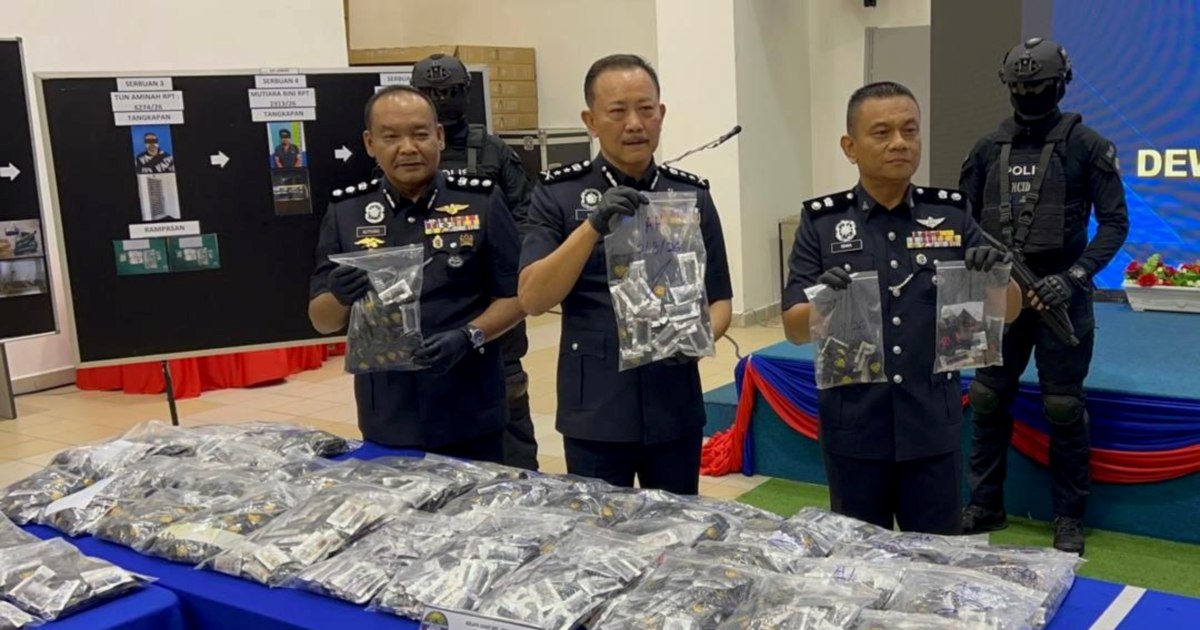
Johor law enforcement agencies have delivered a significant blow to illicit narcotics distribution networks by dismantling an organised operation dedicated to producing and selling drug-infused vape cartridges. In a coordinated enforcement action conducted across multiple locations throughout the state on Sunday, police successfully apprehended seven individuals suspected of orchestrating the scheme. The operation culminated in the seizure of narcotics-laced vape products estimated at RM10.68 million, representing one of the state's most substantial drug interdictions in the vaping category.
The synchronized raids, executed simultaneously at five separate premises, underscore the expanding sophistication of drug trafficking networks in Malaysia and their adaptation to modern delivery mechanisms. Rather than relying solely on traditional forms of narcotics distribution, criminal syndicates have increasingly turned to vaping devices as a means of concealing and marketing controlled substances to consumers. This evolution reflects a troubling trend whereby drug manufacturers modify their techniques to circumvent detection and appeal to younger demographics who may perceive vaping as a less risky alternative to conventional drug consumption.
The Johor operation represents a critical juncture in the ongoing struggle against synthetic drug proliferation in Southeast Asia. Malaysia's geographic position as a regional hub for manufacturing, transit, and consumption has long made it vulnerable to narcotics trafficking. The emergence of drug-laced vapes compounds existing challenges, as these products combine the accessibility and social acceptability of nicotine vaping devices with hidden narcotic content, creating a particularly insidious public health threat.
Authorities investigating the syndicate's operational structure have identified the group's production capabilities and distribution networks as particularly concerning. The conversion of vaping devices into delivery systems for controlled substances demonstrates criminal organizations' ability to exploit legitimate consumer products for illegal purposes. This adaptation also complicates enforcement efforts, as standard vape retailers and consumers may struggle to distinguish between lawful nicotine products and those adulterated with narcotics.
The seven arrests made during Sunday's raids represent a significant disruption to what appears to have been an established criminal enterprise. Investigators are now working to map the complete network, identify additional suppliers and customers, and determine whether the syndicate maintained connections with larger trafficking organizations operating across state and national borders. Such collaborative operations are fundamental to understanding how drug networks distribute their product throughout Malaysia and across the ASEAN region.
From a public health perspective, the emergence of drug-laced vape products presents particular challenges for Malaysian authorities responsible for regulating consumer goods and protecting vulnerable populations. Young people, already susceptible to nicotine addiction through conventional vaping, face heightened risk of drug dependency if they unknowingly consume narcotics-infused cartridges. The difficulty in distinguishing contaminated products from legitimate ones creates a public safety crisis that extends beyond traditional drug enforcement into consumer protection and health education domains.
The RM10.68 million valuation assigned to the seized inventory reflects both the scale of the operation and the significant profit margins inherent in illicit drug distribution. These financial returns incentivize criminal organizations to continue investing in innovative distribution methods and sophisticated production facilities. Dismantling such operations through coordinated police action is essential, yet law enforcement alone cannot address the structural factors driving demand for narcotics or the economic incentives fueling supply networks.
Stakeholders across Malaysia's public health, law enforcement, and regulatory sectors must collaborate to address this emerging threat comprehensively. This includes strengthening border controls to interdict precursor chemicals and finished products, enhancing consumer awareness about counterfeit vaping devices, and implementing stricter regulation of the legitimate vaping industry to prevent criminal infiltration. Educational initiatives targeting youth about the specific dangers posed by drug-laced vapes are equally critical.
The Johor syndicate's dismantling sends a signal that authorities are adapting their enforcement strategies to confront evolving drug trafficking methodologies. However, the sophistication demonstrated by this operation indicates that criminal networks continue to outpace regulatory frameworks in some respects. Sustained investment in intelligence gathering, interagency coordination, and forensic analysis of drug manufacturing facilities will be necessary to maintain enforcement momentum and protect Malaysian communities from this growing menace.
For regional counternarcotics efforts, the Johor case offers valuable insights into trafficking patterns and criminal adaptation that Southeast Asian law enforcement agencies are increasingly encountering. Malaysia's role as a regional leader in combating transnational crime means that successful operations like Sunday's raids contribute to broader ASEAN cooperation frameworks. Sharing intelligence and best practices regarding drug-laced vape interdiction enhances the entire region's capacity to respond to this emerging challenge.
Moving forward, the outcomes of investigations into the arrested individuals and their operations will likely inform policy discussions about regulating vaping devices more stringently. Policymakers must balance legitimate consumer interests against the need to prevent criminal exploitation, a delicate equilibrium that requires evidence-based regulations grounded in practical enforcement realities. The seven suspects now in custody may provide investigators with information about supply chains, criminal associations, and market distribution strategies that will prove invaluable to dismantling related networks operating throughout Malaysia and beyond.

