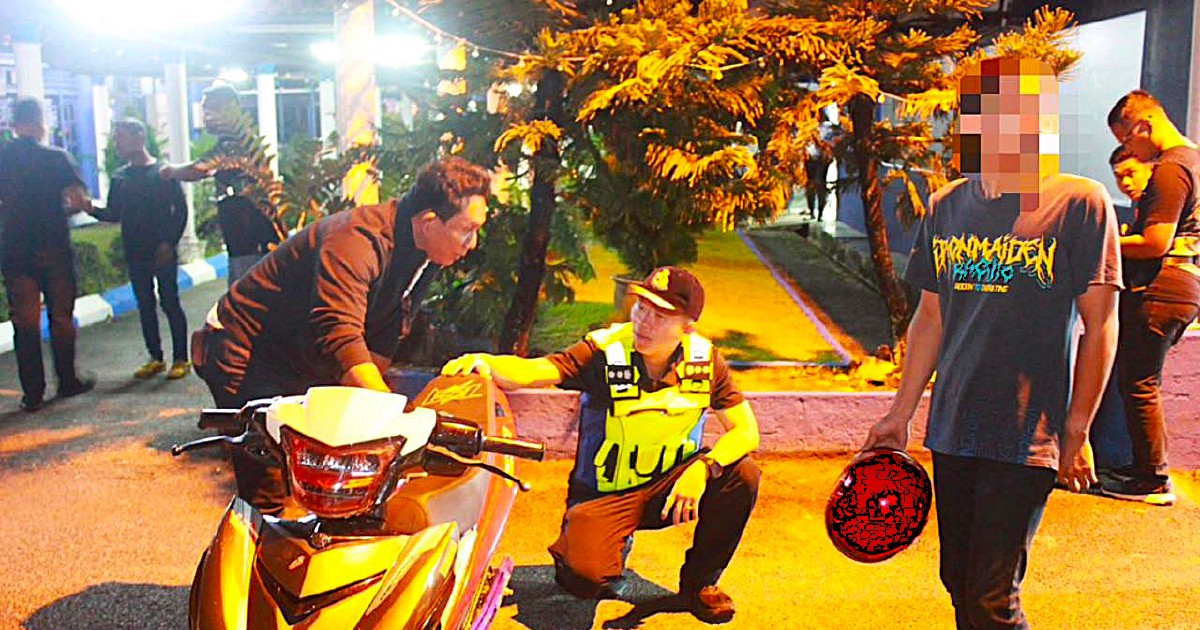
In a significant escalation of traffic enforcement efforts, Klang police have confiscated seven motorcycles as part of a targeted crackdown on illegal street racing that unfolded in the early hours of the morning. The operation reflects growing concerns among law enforcement across the Klang Valley regarding the persistence of unregulated motorcycling activities that endanger public safety on city streets. The seizure marks a substantial intervention in a problem that has plagued residential and commercial areas, disrupting residents and posing serious risks to other road users.
The special operation was designed to directly confront organised street racing networks that have become increasingly brazen in their activities throughout the Klang municipality. Police identified and targeted locations where such illegal activities had been reported with regularity, deploying officers strategically to intercept riders engaged in high-speed manoeuvres and reckless conduct. The timing of the operation during early morning hours suggests law enforcement had gathered prior intelligence about when and where these activities were most likely to occur, allowing for a more efficient deployment of resources.
Beyond the seizure of vehicles, authorities have initiated a formal investigation against one of the riders apprehended during the operation, focusing specifically on allegations of reckless and dangerous driving. This investigation will likely examine the circumstances surrounding the rider's conduct, including excessive speed, unsafe manoeuvres, and any threat posed to other road users or property. The decision to single out this particular rider for investigation indicates that the individual's actions during the operation were deemed to have crossed a notably dangerous threshold.
The confiscation of motorcycles serves as a powerful deterrent within the street racing subculture, as the loss of a valued asset creates immediate financial and practical consequences for offenders. In Malaysia's enforcement framework, vehicle seizure is among the more severe penalties available to police, signalling the seriousness with which authorities are treating these violations. For motorcycle enthusiasts operating within legal parameters, the operation underscores the line between legitimate riding activities and illegal street racing.
Street racing has proven to be a persistent enforcement challenge across Malaysian urban centres, particularly in the Klang Valley where dense population and varied road infrastructure create opportunities for such activities. The problem is not merely about noise or traffic disruption—it represents a genuine public safety hazard. High-speed motorcycle racing in urban environments dramatically increases the likelihood of collisions with other vehicles, pedestrians, and fixed objects, with consequences that can prove fatal or permanently disabling.
The psychological appeal of street racing within certain youth demographics reflects complex socio-cultural factors that enforcement alone cannot address. However, police operations such as this one send an important message that the state will not tolerate activities that violate traffic regulations and endanger the public. The visible enforcement action may deter some potential participants while simultaneously reassuring residents that authorities take their safety concerns seriously.
Klang's experience mirrors challenges faced by other Malaysian municipalities grappling with similar issues. Shah Alam, Petaling Jaya, and other Selangor areas have reported comparable street racing incidents, suggesting this represents a regional phenomenon rather than an isolated problem. Information sharing between police districts and coordinated enforcement campaigns could amplify the impact of individual operations like the one conducted in Klang.
The investigation opened against the specific rider will proceed through established legal channels, potentially resulting in charges under traffic legislation that could include Section 42 of the Road Transport Act 1987, which addresses reckless or dangerous driving. Penalties for such convictions range from fines to driving disqualifications to imprisonment, depending on the severity of findings and whether injuries or property damage occurred. The rider's cooperation and any mitigating factors will influence the trajectory of the case.
For motorcycle owners in the Klang area, the operation serves as a practical reminder to ensure their vehicles are not being used for illegal purposes, as the burden of establishing lawful use falls partly on the registered owner. Some riders may have had their motorcycles commandeered by others or used unknowingly in street racing activities, underscoring the importance of vehicle security and monitoring who has access to one's machine.
The broader implications of this enforcement action extend to road safety consciousness across the Klang Valley. As awareness spreads that police are actively pursuing street racers and confiscating vehicles, rational individuals may recalculate the risk-reward equation associated with such activities. Simultaneously, police departments signal to their personnel and the public that combating hazardous driving behaviour remains a priority despite competing demands on limited law enforcement resources.
Looking ahead, the success of this operation may be measured not merely by the immediate seizures and investigation, but by whether it catalyses a sustained reduction in street racing incidents within Klang. Police may expand surveillance efforts to affected areas, increase weekend and evening patrols, and work with community groups to report suspicious activities. Such multi-layered approaches, when combined with visible enforcement actions, tend to produce more durable reductions in dangerous driving behaviour.
The incident also highlights the need for public education campaigns that reach young riders before they become entrenched in illegal racing cultures. Highlighting the personal and legal consequences of street racing, coupled with information about legitimate avenues for motorcycle enthusiasts—such as organised track days and riding courses—could redirect some energy from illegal to legal channels. Until such comprehensive strategies take root alongside enforcement, operations like Klang's seizure activity will likely remain necessary tools in the police arsenal against urban traffic dangers.

