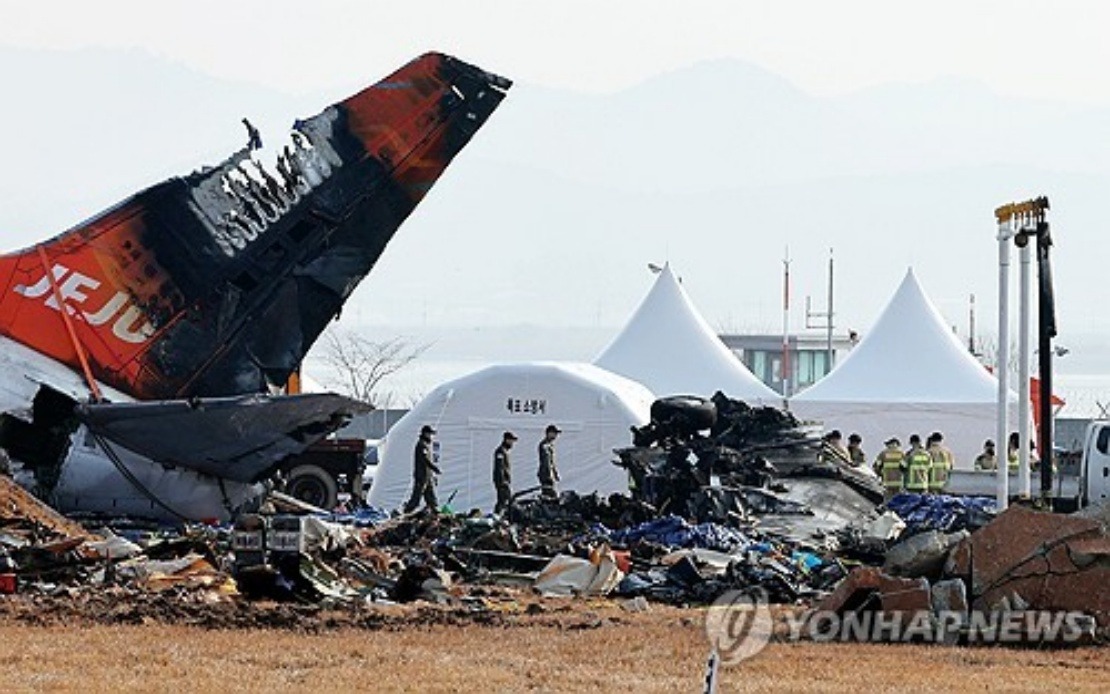
South Korean police have moved to prosecute seven officials from the country's transport ministry on charges of concealing critical safety information about navigation equipment, according to investigators examining the circumstances surrounding one of Asia's deadliest aviation disasters. The referral, announced by a special police investigation team on Tuesday, centres on allegations that ministry personnel deliberately misrepresented the safety status of a localiser system at Muan International Airport in their official communications to the public.
The Jeju Air flight that crashed on December 29, 2024, struck a concrete structure housing the localiser while making an emergency belly landing at the southern airport, approximately 290 kilometres from Seoul. The collision with the mound proved catastrophic, claiming 179 lives among passengers and crew. The aircraft had declared a mayday call after experiencing what authorities determined was a bird strike, forcing pilots to attempt an emergency landing without functioning landing gear. While the bird strike itself may have been unavoidable, subsequent investigations raised serious questions about whether the airport's infrastructure design and equipment placement substantially amplified the disaster's human toll.
At the heart of the criminal investigation lies a troubling allegation: that ministry officials knew the localiser—a sophisticated navigational aid designed to guide aircraft safely during approach and landing—did not fully meet established safety regulations, yet proceeded to issue public statements asserting its compliance. The seven officials allegedly drafted and distributed press releases explicitly claiming the equipment had been installed in accordance with all relevant rules and standards. This assertion, investigators believe, was knowingly false and designed to deflect criticism and potential liability away from government agencies responsible for airport safety oversight.
The localiser's positioning within the concrete barrier structure became a focal point of public and professional scrutiny immediately following the crash. Aviation safety experts and accident investigators questioned whether the equipment's location violated established design principles that typically mandate sufficient clearance between navigational systems and potential collision hazards. The placement appeared inconsistent with international best practices, which generally require such structures to be positioned away from probable impact zones in emergency landing scenarios. Had the localiser been relocated or the concrete mound removed, the aircraft might have safely cleared the obstacle despite its compromised landing configuration.
This case carries significant implications for aviation safety governance across the region and raises broader concerns about accountability within government transport agencies. The alleged cover-up suggests a pattern of institutional prioritisation of reputation management over transparent investigation and remediation of safety defects. For Malaysian aviation authorities and those throughout Southeast Asia, the Jeju Air investigation underscores the importance of independent oversight mechanisms and whistleblower protections within civil aviation administrations. When officials face pressure to present regulatory compliance in a favourable light rather than accurately reporting actual conditions, the entire system's integrity becomes compromised.
The investigation further illuminates how bureaucratic inertia and inter-agency dynamics can obstruct safety improvements. Once the localiser installation had been accepted and publicised, correcting the record would have required admitting an earlier error—a bureaucratic burden that apparently motivated the alleged deception rather than prompting immediate remedial action. This institutional resistance to acknowledging and correcting safety oversights is a systemic vulnerability in many government agencies, particularly in rapidly developing aviation sectors where infrastructure expansion has sometimes outpaced safety standardisation.
The special police investigation team's decision to pursue criminal charges rather than administrative discipline reflects South Korean authorities' determination to send a forceful message about accountability. These are not merely procedural violations or documentation errors; they represent allegations of deliberate misrepresentation of safety-critical information to the public and to aviation professionals who depend on accurate technical data. The prosecution of officials at this level is relatively uncommon and suggests confidence that evidence of intentional deception exists.
For the bereaved families of the 179 victims and for the broader aviation community, these prosecutions represent a partial pathway toward accountability, though they cannot undo the tragedy or restore the lives lost. The investigation demonstrates that authorities are probing not only the immediate technical causes but also the systemic failures and organisational decisions that may have created or worsened the conditions leading to the catastrophe. This comprehensive approach—examining both hardware failures and human responsibility—represents a more complete response to aviation disasters than investigations narrowly focused on mechanical factors.
The case also highlights why nations like Malaysia must maintain rigorous, independent safety audit mechanisms for airport infrastructure and navigation systems. Aviation safety depends fundamentally on trust in the accuracy of technical information provided by government agencies and airport operators. When that trust is compromised by alleged deception, the entire system's credibility suffers, and pilots and airlines operating in that environment face uncertainty about the reliability of official safety assurances. Strengthening internal reporting mechanisms and protecting officials who identify and escalate safety concerns would help prevent future incidents where institutional self-interest overrides public safety imperatives.

