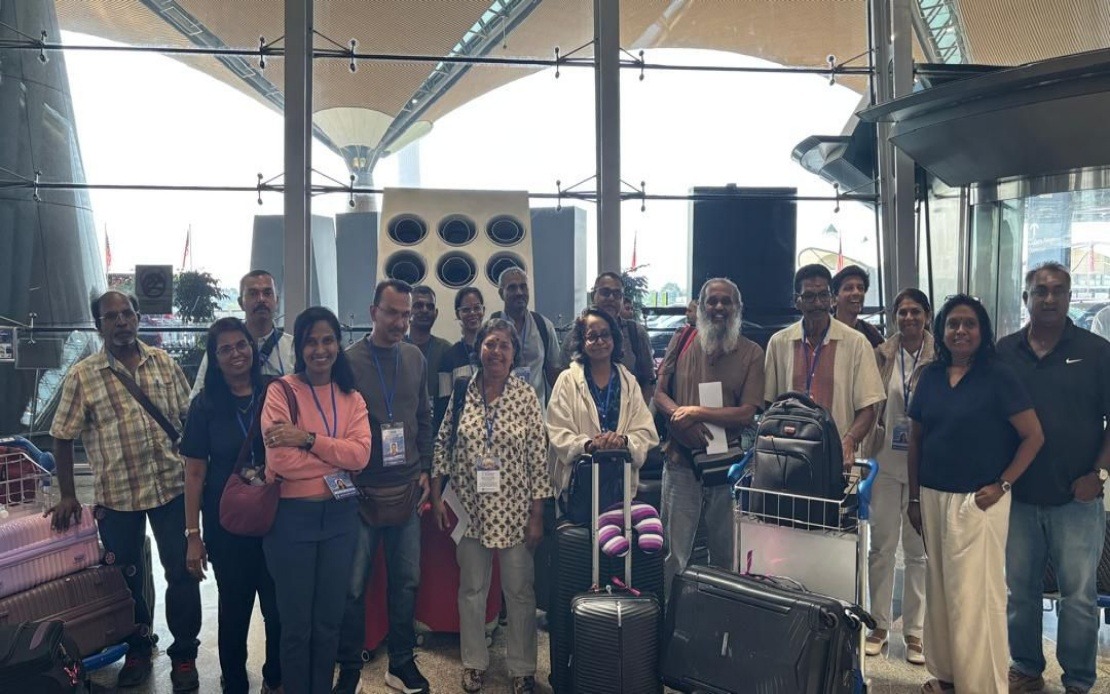
Seventeen Malaysians participating in a sacred pilgrimage to Mount Kailash in Tibet have gone silent following devastating flash floods that ravaged areas near the Nepal-Tibet border, triggering an urgent search and rescue operation involving Malaysian diplomatic officials and Nepalese authorities. The group, organized by Nepal-based travel company Fishtail Tours & Travels, was last heard from on August 27 at approximately 8:18 am Nepal time, just two kilometres from the Nepal-Tibet Immigration Checkpoint, before all communication abruptly ceased.
Among those unaccounted for are members of the same family, including a 59-year-old father, 54-year-old mother, 60-year-old uncle, and 58-year-old aunt, whose relative R. Logadashini confirmed their participation in the pilgrimage group that had entered Nepal on August 23. The itinerary had been scheduled to continue through September 5, taking participants through some of the most challenging terrain in the Himalayan region. Logadashini revealed that the last communication from her family members came through a WhatsApp message at approximately 8:40 am Malaysian time, after which all contact disappeared without explanation.
The Ministry of Foreign Affairs, operating through Wisma Putra, has acknowledged that 55 Malaysians reported to the Malaysian Embassy in Kathmandu remain unreachable in the aftermath of the flooding disaster. However, officials emphasized that no official confirmation of Malaysian casualties has been received as of the latest updates, leaving families in a state of anxious uncertainty. The embassy has established direct coordination channels with Nepalese search and rescue teams, local authorities, and relevant travel agencies to piece together information about the missing pilgrims and determine their current whereabouts and condition.
Prime Minister Datuk Seri Anwar Ibrahim has personally intervened in the crisis by ordering all relevant government agencies to prioritize locating and establishing contact with affected Malaysians. In response, Malaysian diplomatic missions stationed in Kathmandu and New Delhi have been fully mobilized to support rescue efforts and gather intelligence. This high-level governmental response underscores the seriousness with which authorities are treating the situation and the concern for the safety of Malaysian nationals abroad.
The natural disaster that triggered this emergency unfolded when heavy rainfall combined with a glacial collapse to create devastating flash floods across Nepal's Rasuwa and Nuwakot districts. The floods have severely disrupted telecommunications infrastructure and severed critical road links that connect the affected mountainous areas to Kathmandu, the capital city. This geographical isolation has significantly hampered the coordination of rescue operations and prevented immediate access to affected regions, making it extremely difficult for authorities to reach stranded individuals or assess the full extent of damage and casualties in the region.
The Nepal-Tibet border corridor through which the Malaysian pilgrimage group was traveling is one of the most frequently traversed routes in the Himalayan region, serving as a vital passage for religious pilgrims journeying to Mount Kailash and for trekkers heading towards Mount Everest and other mountainous destinations. The route's popularity stems from its relative accessibility compared to alternative paths, making it a natural choice for organized pilgrimage groups. However, this concentration of traffic also means that when disasters strike in this corridor, they can affect multiple groups simultaneously, as evidenced by the current crisis.
In a development offering some reassurance to Malaysian families and authorities, a separate pilgrimage group led by legendary Malaysian mountaineer Datuk N. Mohanadas has been confirmed safe and secure in Tibet. Mohanadas's expedition comprises 56 people in total, including 39 Malaysians alongside four Singaporeans and three Canadians. Mohanadas reported that his group had been aware of the sudden severe weather, flash floods, and casualties reported at the Nepal-Tibet border region but had fortunately positioned themselves on an unaffected route that remained secure throughout the disaster. The group has proceeded with their planned three-day pilgrimage circuit around Mount Kailash, demonstrating that not all pilgrimage parties in the region were caught in the path of the devastation.
The contrast between the two groups highlights the unpredictable and localized nature of such mountain disasters. While Mohanadas's party maintained their schedule and safety protocols successfully, the timing and precise location of the missing group placed them directly in the path of the flood surge. For Malaysian families with relatives in the uncontacted group, the knowledge that another nearby pilgrimage expedition has survived and continued provides limited comfort, as the specific circumstances and exact locations of the missing seventeen remain unknown.
The incident raises significant questions about emergency communication protocols and disaster preparedness for organized pilgrimages in remote mountainous regions. Tour operators and travel agencies organizing such journeys must balance the spiritual appeal and cultural significance of these pilgrimages with comprehensive risk assessment and contingency planning. The absence of contact for more than 24 hours underscores how quickly mountain environments can isolate travelers and disable modern communication systems, leaving families and authorities scrambling to gather information.
For Malaysia's wider pilgrimage tourism sector and families planning similar religious journeys to sacred sites, this crisis will likely prompt renewed discussions about safety standards, travel insurance requirements, and communication backup systems. Many Malaysian Muslims and adherents of other faiths undertake pilgrimage journeys annually to various sacred destinations across Asia, and incidents like this one inevitably influence perceptions about the risks involved and the adequacy of support systems in place.
The Malaysian government's swift mobilization of diplomatic resources demonstrates the nation's commitment to protecting its citizens abroad, even in challenging remote locations where traditional rescue infrastructure may be limited. The coordination between multiple agencies and international partners reflects standard protocols for missing nationals overseas, though the mountainous terrain and communication blackout present extraordinary obstacles to locating and assisting the missing group.
As search and rescue operations continue in Nepal, Malaysian authorities maintain their urgent push to establish contact with the missing pilgrims and confirm their status. Families of the 17 unaccounted Malaysians await anxiously for news, hoping that communication channels will soon reopen and that the group will emerge safely from the disaster zone. The coming hours and days will be critical in determining the outcome of this unfolding humanitarian crisis in one of the world's most unforgiving environments.

