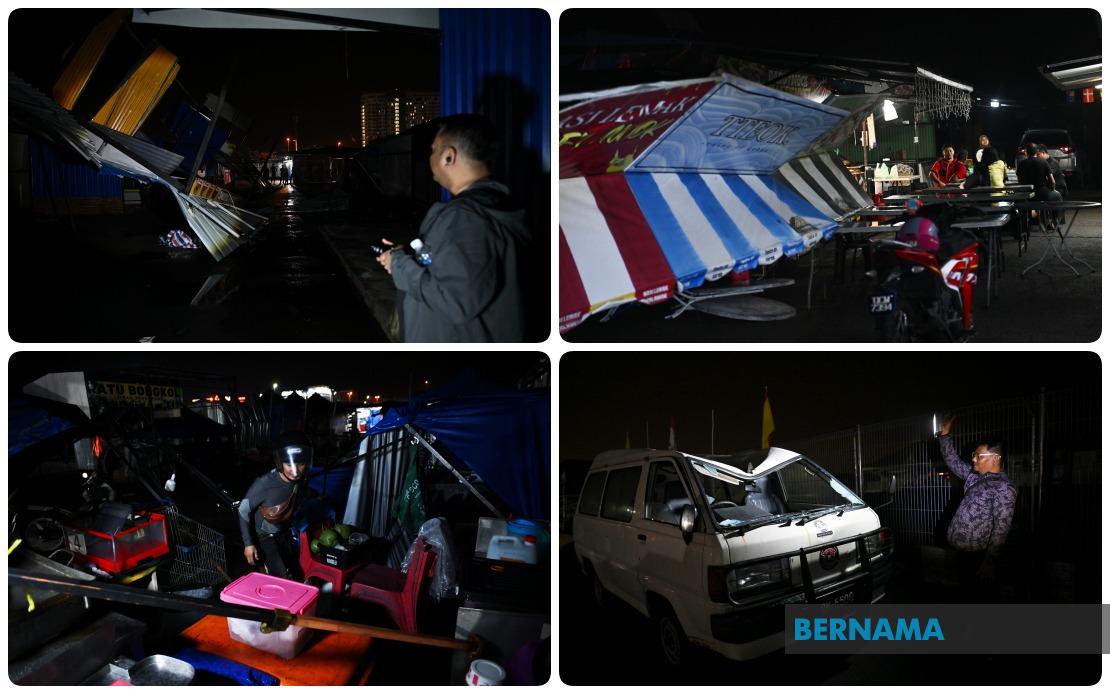
A sudden severe weather event has devastated the N6 Metrocity 2 Youth Night Market in Kuching, with authorities forced to shut down operations following widespread infrastructure damage and vendor losses during peak weekend trading hours. The incident, which struck during typically busy business periods, has left the market community grappling with significant financial consequences and uncertainty about resuming normal trading activities.
The Malaysian Meteorological Department (METMalaysia) had issued thunderstorm warnings for the Sarawak region between 5 pm and 9 pm, covering Kuching, Serian, Siburan, Samarahan, Simunjan, Kapit and Song. However, the intensity of the violent winds that descended on the market site far exceeded normal weather expectations for the season. According to eyewitness accounts from traders on the ground, the sudden atmospheric disturbance generated extraordinarily powerful gusts that transformed the commercial venue into a hazardous environment within moments.
Vendor Mohamad Faisal, aged 42, described the chaotic scene as canopies began lifting and becoming airborne projectiles. He recounted how traders abandoned their stalls and merchandise to seek shelter, fearing the detached structures would collide with people in the vicinity. The spontaneous evacuation reflected the genuine danger posed by the uncontrolled movement of heavy commercial equipment across the cramped market space. Faisal emphasised that the unpredictability of the flying canopies—appearing from multiple directions simultaneously—created an acute risk to personal safety that superseded concerns about protecting inventory or earnings.
The scale of physical destruction proved substantial, with N6 Metrocity 2 Youth Night Market deputy chairman Hamzah Hassan characterising it as the most severe incident the market has experienced in its operational history. More than 40 trader lots from the market's approximately 300 total operating units sustained serious damage. Beyond the vendor stalls themselves, critical shared infrastructure suffered catastrophic failures, including the main stage, the management office, and the electrical distribution system that supports daily operations. This dual-layer damage—affecting both individual business assets and communal facilities—compounds the recovery challenge significantly.
Financial assessments compiled by market leadership reveal concerning individual loss figures. Each affected trader faces estimated canopy replacement costs ranging from RM2,000 to RM5,000, determined by the size and structural specifications of their particular installations. These figures account only for the tent structures themselves, excluding collateral damage to essential business equipment such as cooking apparatus, water storage systems, and point-of-sale infrastructure. Traders who have maintained operations at the market for a decade or longer reported immediate losses approaching RM2,000 per stall, underscoring the economic blow to established small business operators.
The cumulative financial impact across the affected vendor community represents a substantial setback for the night market ecosystem, which functions as a crucial employment and income source for Kuching's informal trading sector. Many of these operators lack insurance coverage for weather-related damage, leaving them personally responsible for all recovery and replacement expenses. The concentration of losses among a relatively modest number of stalls—40 out of 300—means those affected experience disproportionate hardship compared to the unaffected majority, potentially creating equity concerns within the vendor community.
Market management has initiated outreach efforts seeking external assistance to alleviate the financial pressure on affected traders. Hamzah Hassan indicated receptiveness to contributions and support from relevant government ministries, elected representatives, and cooperative organisations. This appeal reflects recognition that individual traders and the market association alone lack sufficient resources to facilitate rapid recovery and restoration of full operational capacity. The emphasis on soliciting external aid signals the severity of the situation and the genuine economic distress experienced by vendors dependent on nightly sales revenue.
The incident's timing during peak weekend business hours amplified its economic consequences, as traders were actively conducting transactions and had stockpiled inventory when the storm struck. Unlike damage occurring during setup or teardown periods, the disruption interrupted active commercial activity and created immediate revenue losses in addition to property damage. Weekend trading typically generates the market's highest weekly earnings, making the timing particularly disadvantageous for affected vendors whose income stability depends on consistent weekend performance.
For the broader Sarawak region, this weather event underscores ongoing vulnerability to severe meteorological phenomena that can strike with minimal warning despite formal weather advisories. The N6 Metrocity 2 Youth Night Market incident serves as a case study in the preparedness gaps affecting informal commercial spaces across Southeast Asia. Unlike established retail infrastructure with engineered structural requirements and weather-resistant design standards, night markets typically operate under minimal regulatory oversight regarding storm-resistant infrastructure specifications.
The closure of the market creates secondary economic consequences extending beyond the 40 directly affected vendor stalls. Regular customers lose access to the market's diverse food and merchandise offerings, potentially redirecting spending to competing venues. The loss of nightly foot traffic impacts nearby businesses and services that benefit from market activity. Employees who work the markets as casual staff also face temporary income interruption until operations resume, multiplying the ripple effects of the initial weather damage.
Market authorities now confront complex decisions regarding timeline and sequencing for recovery activities. Restoring the shared infrastructure—particularly the electrical system critical for food preparation and refrigeration—likely requires priority attention before individual vendors can safely resume operations. Coordinating among 40-plus affected traders regarding simultaneous canopy replacement and equipment repair presents logistical challenges that could extend closure periods and defer revenue recovery. The market's 10-year operational history prior to this incident suggests generally sound management practices, but the catastrophic nature of this event has exposed operational and structural vulnerabilities requiring systematic review and potential enhancement.
Moving forward, the incident raises questions about whether Kuching's informal trading sector requires enhanced building code standards, improved weather warning dissemination systems, or community-level disaster response protocols. The experience accumulated through this single event could inform discussions about infrastructure resilience across Malaysia's broader network of night markets, food courts, and hawker centres that collectively support thousands of small traders and employ tens of thousands of workers throughout the nation.

