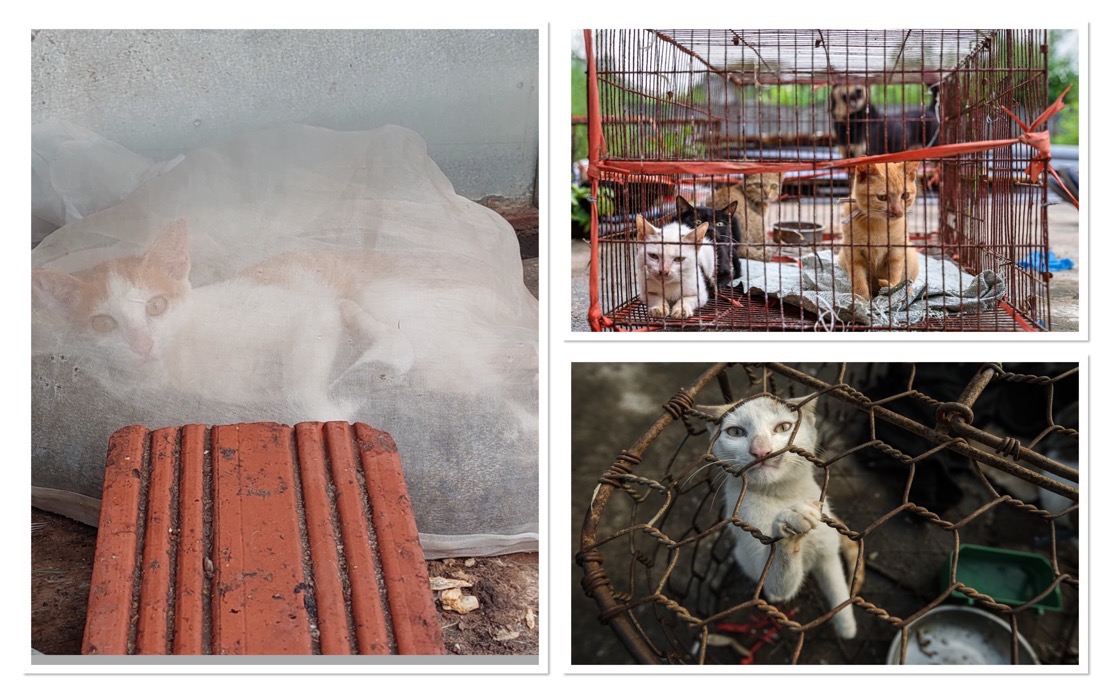
An estimated one million cats are slaughtered annually in Vietnam as part of a clandestine trade driven by deeply rooted superstitions and traditional beliefs about health and prosperity. The brutal practice extends across Indochina, with smaller but significant numbers of cats killed in Cambodia and Laos, where indigenous populations largely pursue the trade for perceived medicinal value. This underground economy, which persists despite decades of campaigns by governments and international animal welfare advocates, highlights a troubling disconnect between cultural mythology and the actual views of ordinary people in the region.
The persistence of this trade became starkly visible in Ho Chi Minh City last week when local police dismantled a smuggling operation and rescued approximately 500 cats from a gang that had allegedly stolen and sold felines across provincial boundaries for the past three years. Nine individuals were detained in connection with the case, exposing the organised nature of what many assume is merely informal slaughter. The incident underscores how cat trafficking operates within structured criminal networks rather than existing as isolated incidents of traditional consumption.
According to FOUR PAWS, a leading global animal welfare organisation, the demand for cat meat stems primarily from cultural and social traditions rather than any substantial dietary necessity. Jon Rosen Bennett, the organisation's dog and cat welfare director, explained that consumption patterns are rooted in specific beliefs: in Vietnam, some consumers time their consumption of cat meat according to the lunar calendar, believing it can reverse periods of misfortune or attract positive circumstances. Others purchase cat meat based on convictions about its purported health-giving or curative properties, though these beliefs lack scientific foundation.
What distinguishes cat meat from other contentious animal products is the premium pricing commanded by black cats, which supposedly possess enhanced luck-bringing or medicinal qualities. FOUR PAWS investigations in 2020 documented that live cats were traded for approximately US$6 to US$8 per kilogramme, while processed cat meat fetched between US$10 and US$12 per kilogramme. These price differentials create financial incentives for traffickers to target specific animals and perpetuate the trade, even as enforcement remains sporadic and inconsistent across the region.
A striking contradiction undermines the narrative that cat meat consumption reflects widespread cultural acceptance. Survey data gathered by FOUR PAWS reveals that approximately 90 percent of Vietnamese respondents expressed support for banning the dog and cat meat trade entirely. Furthermore, more than 90 percent of survey participants rejected the notion that consuming cat flesh constitutes a legitimate part of Vietnamese cultural identity. This substantial gap between the continued existence of the trade and public sentiment suggests that vocal minorities with economic interests drive the practice rather than genuine grassroots demand, a pattern familiar to Southeast Asian policymakers grappling with various animal welfare issues.
The absence of a nationwide legal prohibition on cat slaughter, sale, or consumption in Vietnam creates a regulatory vacuum that enables traffickers to operate with relative impunity. Unlike companion animals recognised in statutory frameworks in some developed nations, cats in Vietnam occupy an ambiguous legal status that provides no formal protection. This legal void means that enforcement relies on case-by-case police investigations rather than systematic prohibition, allowing organised trafficking networks to develop resilience through adaptation and relocation.
Beyond the immediate animal suffering inherent in the trade, Bennett highlighted significant public health risks that extend far beyond the individual cats involved. The mass undocumented movement of live animals across provincial and international borders creates conditions conducive to the spread of rabies and other zoonotic diseases that can transmit from animals to humans. In an era of heightened awareness about pandemic preparedness following COVID-19, the unregulated trafficking of potentially disease-carrying animals represents a poorly monitored vulnerability in regional biosecurity frameworks. The intersection of traditional beliefs and animal trafficking thus creates cascading risks that demand policy attention beyond animal welfare considerations alone.
The problem extends significantly beyond cats, though feline trafficking often receives less international attention than the dog meat trade. Animal welfare organisations estimate that more than 10 million dogs are slaughtered annually across Southeast Asia, though this figure encompasses both traditional consumption and organised trafficking networks. Yet even the dog meat trade, despite its larger scale, faces growing public opposition and shifting social norms, particularly among younger, urbanised populations in major Southeast Asian cities who increasingly view such practices as incompatible with modern values.
REsponses to these entrenched practices have begun to shift in recent months. In early June, FOUR PAWS launched an online public reporting platform in Cambodia as part of a broader awareness campaign targeting both dog and cat meat trades. Such platforms represent an effort to harness citizen engagement and reporting to supplement government enforcement, acknowledging that traditional regulatory approaches alone have proven insufficient to eliminate the trade. The mechanism also provides a pathway for concerned members of the public to contribute information without direct confrontation with traffickers, potentially improving the safety profile of reporting.
For Malaysian readers, the persistence of the cat meat trade across Indochina offers important lessons about the relationship between cultural traditions and contemporary public values. While Malaysia has made substantial progress in establishing animal welfare frameworks, particularly regarding companion animals, the Indochinese experience demonstrates how superstition-based traditions can persist in legal grey areas when not explicitly prohibited. Furthermore, the public health dimensions highlighted by FOUR PAWS—particularly regarding disease transmission through unregulated animal trafficking—carry direct relevance for Malaysia's own border management and surveillance systems, given the potential for infected animals to cross into Malaysian territory.
The regional context also reflects broader tensions between rapid economic development and traditional practices. Even as Vietnam and Cambodia experience significant urbanisation and economic growth, segments of their populations maintain belief systems rooted in agricultural societies where such practices once served different functions. As Southeast Asia continues its economic trajectory, policymakers face mounting pressure to reconcile national identities and cultural heritage with contemporary ethical frameworks and international expectations regarding animal welfare, a balance increasingly demanded by both foreign investors and increasingly vocal domestic constituencies.

