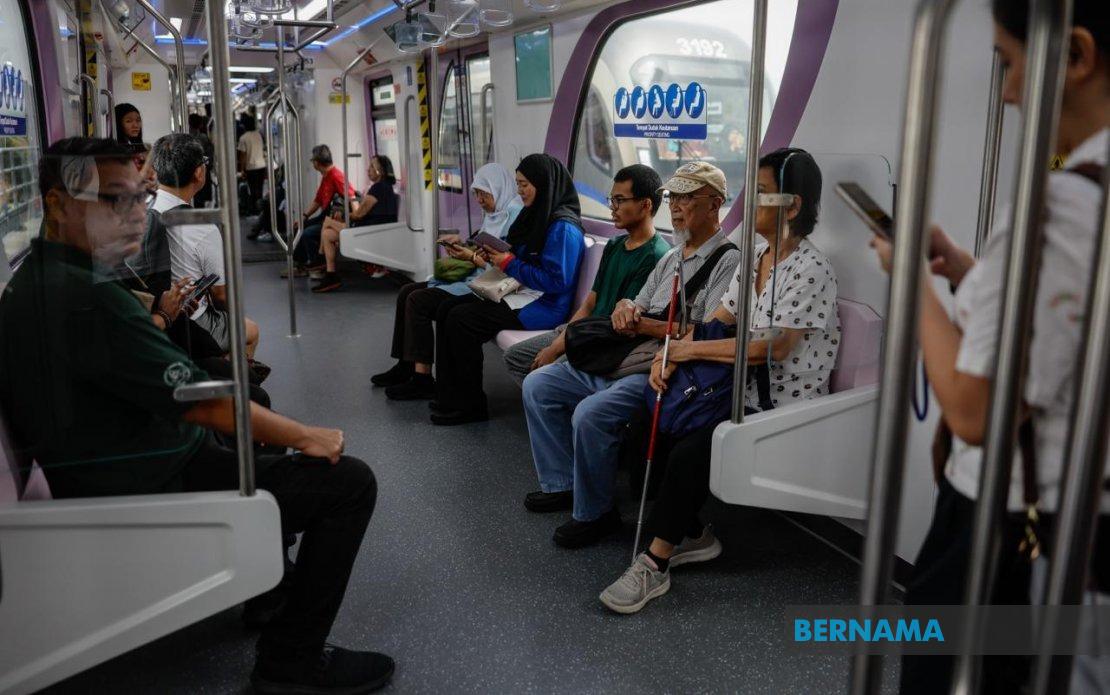
The newly launched Light Rail Transit 3 (LRT3) Shah Alam Line commenced operations on June 29 to widespread commuter appreciation, with travellers commending the service's efficiency, comfort levels, and effectiveness in shortening journey times across the Klang Valley. Yet alongside this endorsement came constructive feedback from passengers about enhancements needed to strengthen accessibility features, particularly for persons with disabilities (PwDs), signalling that while the transport authority has made meaningful progress, refinement remains necessary to create a truly inclusive public transit system.
The RM16.63 billion infrastructure project represents a cornerstone initiative in the government's broader strategy to modernise Malaysia's public transport network and reduce congestion on key metropolitan routes. By linking Kajang to Glenmarie 2, the line addresses a significant gap in the eastern and western corridors of the Klang Valley, enabling commuters to bypass congested interchanges and reach destinations more swiftly. This direct connectivity is particularly valuable for workers in the Bandar Utama and surrounding commercial zones, where travel time compression translates directly into productivity gains and quality-of-life improvements.
Razlan Ibrahim, a 40-year-old visually impaired commuter who undertook a comprehensive trial of the system on opening day, offered a nuanced assessment that captures both the line's achievements and its limitations. His journey from Kajang to Glenmarie 2 demonstrated that the transport operator has absorbed principles of inclusive design, yet his recommendations underscore that implementation remains uneven. The tactile pathways—textured guidance strips that allow blind and low-vision users to navigate independently—received particular praise from Ibrahim, who noted their effectiveness at Bandar Utama Station in directing passengers to accessible facilities including dedicated PwD toilets, prayer rooms for both genders, and lift access points.
However, Ibrahim identified a critical gap in the information accessibility architecture: the absence of adequate Braille signage at crucial decision points throughout the network. He stressed that while physical navigation aids work well, directional information remains inadequately served, leaving visually impaired users unable to independently identify facilities or understand station layout without assistance. This distinction—between mobility aids and information access—reveals a common implementation pattern in developing transit systems, where infrastructure designers prioritise movement over communication. Addressing this gap would require relatively modest investment in standardised Braille labelling protocols rolled out across all stations, representing a meaningful step toward genuine inclusivity.
Samantha Fong, a 26-year-old private sector employee, articulated the practical benefits that have emerged from the line's opening, emphasising how direct routing eliminates the friction of multi-stage journeys that previously characterised travel between key employment and residential nodes. She highlighted that the removal of interchange requirements streamlines her daily commute significantly, reducing fatigue and unpredictability. Her suggestion for women-only coaches reflects passenger security concerns that have become increasingly central to public transit planning across Asia, particularly in major urban centres where female commuter safety remains a persistent policy consideration. Such dedicated spaces have proven effective in regional systems including those in India, Singapore, and other Malaysian lines, suggesting their implementation merits serious consideration.
The government's decision to provide complimentary fares throughout July represents a strategic intervention designed to build ridership habits during the critical early adoption phase. Prime Minister Datuk Seri Anwar Ibrahim announced on June 28 that all passengers, including those using Prasarana Malaysia Berhad's feeder bus services, would travel free until July 31. This extended trial period—substantially longer than typical system launches—acknowledges the Klang Valley's entrenched car dependency and provides sufficient time for diverse user segments to evaluate whether the service genuinely suits their mobility patterns. For students, shift workers, and others with variable schedules, this extended window is particularly valuable in determining long-term viability.
Rainchie Lee, another young private sector employee, characterised her inaugural experience as smooth and unhurried, noting that train frequency appeared adequate to maintain acceptable wait times even on the opening day when curiosity-driven demand typically peaks. Her observation that the promotional period allows users to assess route suitability before committing to long-term usage reflects a pragmatic approach to transit adoption. In Malaysian cities where car ownership rates remain high and public transport usage concentrated among necessity-based commuters, the opportunity to experience a new line under zero financial risk can substantially influence subsequent modal choice decisions. For employers in the Bandar Utama precinct and surrounding commercial districts, the line's opening may prompt workforce mobility shifts that reduce parking pressures and improve recruitment capacity from broader geographic areas.
The line's reception also reflects broader aspirations within Malaysia's transport planning community to establish seamless, dignified public transit that competes effectively with private vehicle convenience. The Klang Valley's continued population growth and traffic congestion have created political pressure for rapid capacity expansion, yet the LRT3 Shah Alam project demonstrates that expansion alone proves insufficient without attention to user experience quality. Commuter feedback regarding comfort, safety, and accessibility establishes performance benchmarks that subsequent phases of the project must meet or exceed, particularly given the substantial public investment at stake.
Disability advocacy organisations are likely to build upon Ibrahim's recommendations by advancing a more comprehensive accessibility audit of the entire network, examining not merely the presence of physical features but their effectiveness in practice. The gap between tactile pathways and Braille signage exemplifies how accessibility requires integrated design across multiple sensory and information channels. This insight carries implications extending beyond the LRT3 to the broader Malaysian transit network, where systematic accessibility review could identify and rectify similar inconsistencies across existing lines. Regional transit authorities in Singapore, Thailand, and Indonesia are increasingly adopting comprehensive accessibility standards as baseline requirements, establishing expectations that Malaysian operators may need to meet to remain competitive in attracting and retaining diverse commuter populations.
The line's commercial success will ultimately depend on whether the positive opening-day experience translates into sustained ridership after the free-fare period concludes on July 31. Operators must carefully monitor whether converted trial users establish regular usage patterns that justify the substantial infrastructure investment. The feedback from passengers regarding women-only coaches, enhanced disability facilities, and other comfort measures should inform decisions about operational refinements in the critical first year. These user suggestions, rather than representing complaints, constitute invaluable market research from actual commuters attempting to integrate the service into their daily lives.
Looking forward, the LRT3 Shah Alam Line's trajectory will influence policy decisions regarding subsequent transit expansion projects across Malaysia. If the line successfully captures significant modal share from private vehicles and establishes itself as a preferred option for Klang Valley commuters, it will strengthen the case for additional rapid transit investment. Conversely, if ridership deteriorates after the promotional period or if accessibility complaints accumulate, it will signal that design and operational decisions require substantial revision. The coming months represent a crucial window during which operator responsiveness to early user feedback—particularly regarding disability access—will establish whether the LRT3 represents the beginning of a genuinely inclusive public transport revolution or merely an expensive infrastructure addition that perpetuates existing inequities in transit accessibility.

