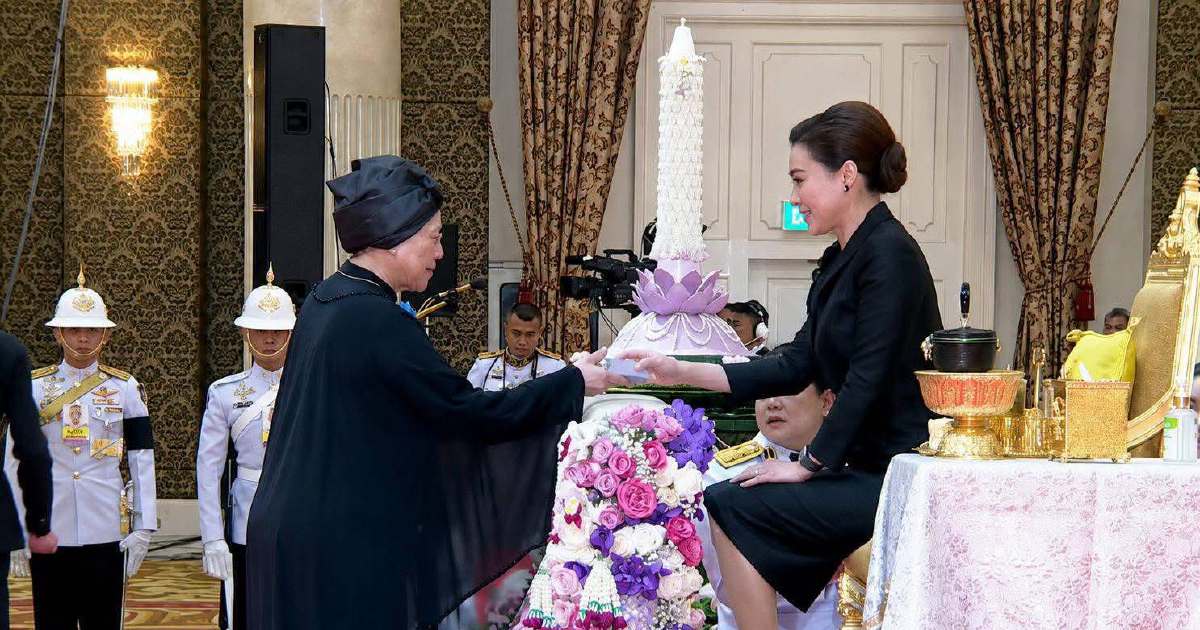
Prime Minister Datuk Seri Anwar Ibrahim and his wife Datuk Seri Dr Wan Azizah Wan Ismail have publicly recognised the achievements of Prof Emerita Tan Sri Datuk Seri Dr Sharifah Hapsah Syed Hasan Shahabudin following her receipt of the Outstanding Woman Award for Social Development, an honour that underscores the growing acknowledgement of women's instrumental contributions to Malaysia's progress.
The recognition extended by the nation's top leadership comes at a significant moment when Malaysian society continues to grapple with questions about women's participation in governance, academia, and social welfare. The conferment of such an accolade to Prof Emerita Sharifah Hapsah serves as a testament to her decades of commitment to advancing social development initiatives that have touched numerous lives across the country. Her work in this sphere has evidently made a lasting impact on policies and programmes affecting vulnerable communities and marginalised populations.
The decision to spotlight her achievements reflects a broader shift in how Malaysia's political establishment views and values women's leadership. By extending personal congratulations through the highest office in the land, the Prime Minister and his spouse have signalled that women's contributions to nation-building are not peripheral but central to Malaysia's developmental agenda. This symbolic gesture carries weight beyond ceremonial recognition, suggesting an institutional commitment to amplifying and celebrating women's roles across all sectors.
Prof Emerita Sharifah Hapsah's career trajectory embodies the multifaceted nature of women's engagement in social development work. Her trajectory—from academic excellence to practical implementation of welfare programmes—demonstrates how women in Malaysia continue to bridge the gap between theory and action, between policy formulation and ground-level impact. Her recognition validates the pathways that female professionals have carved in addressing systemic social challenges.
The timing of this award also carries implications for regional discourse on women's empowerment. As Southeast Asian nations increasingly benchmark their progress on gender equality and women's participation metrics, Malaysia's institutional recognition of exemplary female leaders contributes to a larger narrative of regional advancement. The award presents an opportunity to examine what benchmarks of success should look like for women in development work and social service sectors across the region.
From a Malaysian perspective, the conferment of this honour invites reflection on the pipeline of female talent in social development sectors. While recognising extraordinary individuals like Prof Emerita Sharifah Hapsah is important, it also raises questions about systemic support structures that enable women's advancement in these fields. Are there sufficient funding mechanisms, mentorship programmes, and institutional frameworks that facilitate the next generation of women leaders in social development?
The partnership between the Prime Minister and his wife in delivering these congratulations also merits attention. Datuk Seri Dr Wan Azizah Wan Ismail, herself a pioneering figure in Malaysian politics and healthcare, represents a category of women leaders whose influence operates across multiple domains. Her presence in this recognition ceremony amplifies the message that women's achievements deserve prominent visibility and celebration within the highest echelons of government.
Prof Emerita Sharifah Hapsah's award carries particular resonance for Malaysian universities and research institutions. Her recognition validates the contributions of academic women who extend their expertise beyond campus boundaries to address real-world social problems. This intersection of scholarship and practical application remains underrepresented in mainstream discussions about higher education's role in national development, yet it constitutes a significant dimension of Malaysian academia's social impact.
Looking forward, such recognition platforms can catalyse broader institutional changes. When governments publicly celebrate women's achievements in social development, it influences recruitment patterns, resource allocation, and policy priorities within relevant sectors. Young Malaysian women considering careers in social welfare, community development, and related fields receive a powerful signal that excellence in these domains garners national recognition and respect.
The award also reflects evolving conversations about what constitutes meaningful development work. Beyond conventional metrics of economic growth, Malaysia is increasingly engaging with frameworks that prioritise social cohesion, community resilience, and human welfare. Women leaders like Prof Emerita Sharifah Hapsah have been instrumental in shaping these conversations and demonstrating their practical implementation.
For Malaysian institutions and policymakers, this moment offers an opportunity to examine representation patterns across social development leadership. Are women adequately represented in decision-making bodies that shape welfare policy? Are budgets allocated equitably across programmes led by male and female administrators? These structural questions require attention alongside celebratory recognition of individual achievements.
The Prime Minister's acknowledgement of this award ultimately communicates a nuanced message: Malaysia recognises that women's contributions to social development are not merely supplementary but constitutive of the nation's progress. As the country navigates complex social challenges—from poverty alleviation to urban-rural disparities—leveraging the full spectrum of female talent and expertise becomes increasingly indispensable to achieving sustainable and inclusive development outcomes.

