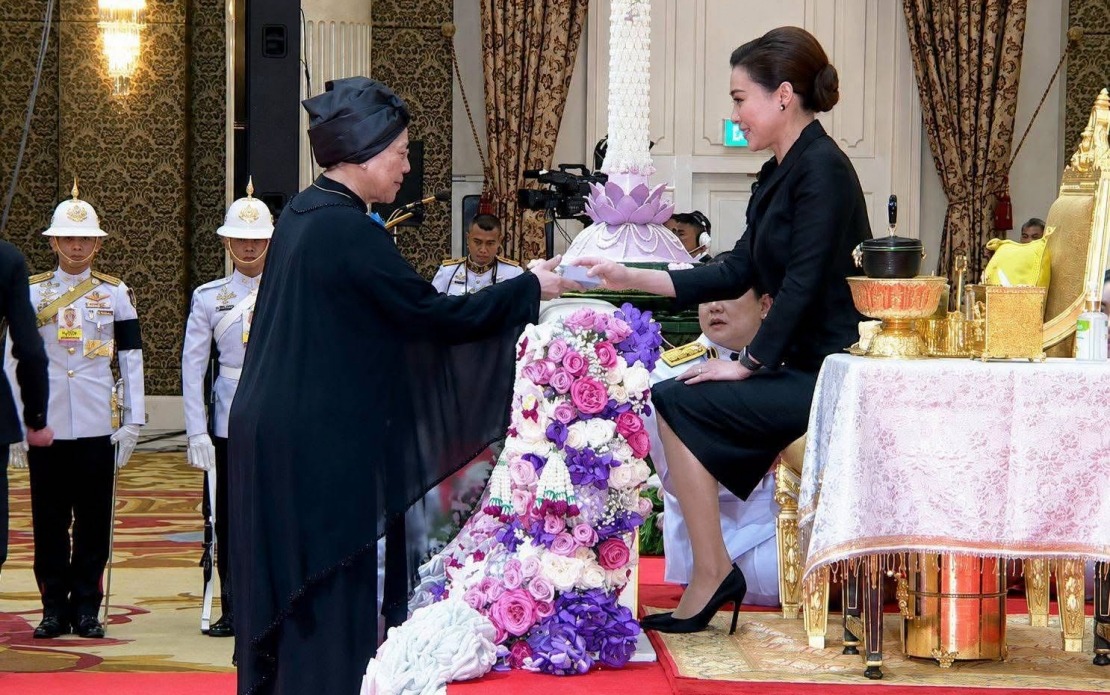
Prime Minister Datuk Seri Anwar Ibrahim has used the international recognition of a prominent Malaysian academic to underscore the government's commitment to advancing women's roles across society. Prof Emerita Tan Sri Datuk Seri Dr Sharifah Hapsah Syed Hasan Shahabudin received the Outstanding Woman Award for Social Development from Queen Suthida Bajrasudhabimalalakshana of Thailand, a distinction that Anwar, along with his wife Datuk Seri Dr Wan Azizah Wan Ismail, marked as a significant achievement for the nation.
The award carries deeper implications than a simple individual honour. For Anwar, the accolade represents tangible evidence that Malaysian women are gaining traction on the international stage, breaking through barriers in academic, social and professional spheres. The recognition by a neighbouring Southeast Asian monarchy adds regional weight to the achievement, positioning Malaysia as a nation producing women of substantive intellectual and social standing. This international validation comes at a time when many developing nations are reassessing women's participation in leadership and development initiatives.
In his statement on social media, Anwar framed the award not merely as personal accomplishment but as a reflection of broader national capability. He emphasized that Sharifah Hapsah's recognition demonstrated the calibre and competence embedded within Malaysia's female population across multiple disciplines. This framing serves a dual purpose: it celebrates individual excellence while simultaneously advancing the government's narrative about inclusive nation-building. The emphasis on women's contributions to society suggests an administration keen to highlight diversity as a strength rather than a peripheral concern.
The Prime Minister's explicit mention of the Malaysia MADANI agenda in his congratulatory remarks reveals how women's advancement has been integrated into the government's overarching development philosophy. MADANI, which prioritizes prosperity, sustainability, innovation and inclusivity, positions women not as beneficiaries of development but as active architects of it. By linking Sharifah Hapsah's award to this agenda, Anwar signals that women's participation is foundational to Malaysia's modernization trajectory, not supplementary to it.
Anwar's call for the award to inspire greater female participation across knowledge sectors, leadership positions and community engagement reflects a strategic understanding of demographic realities. Malaysia's female population represents nearly half the nation's human capital, yet traditional barriers to women's advancement in certain professional and political spheres persist. The invocation of compassion alongside knowledge and leadership suggests an attempt to reframe women's contributions beyond narrow technical or economic measures, acknowledging the broader social dimensions of development work.
The government's stated commitment to expanding opportunities for women across various sectors indicates recognition that systemic barriers remain. Whether in corporate boardrooms, academic institutions, political office or technical professions, Malaysian women continue to face structural obstacles despite educational parity with men in many fields. Anwar's pledge to ensure women's talent and leadership remain central to national development appears to acknowledge that deliberate policy interventions and cultural shifts are necessary to translate potential into actual participation.
The timing of highlighting Sharifah Hapsah's achievement merits consideration within Malaysia's broader political context. As the nation navigates post-pandemic economic recovery and grapples with questions of inclusive growth, foregrounding women's contributions to social development reinforces a narrative of progressive governance. For a Prime Minister working to consolidate support across diverse constituencies, demonstrating commitment to women's advancement serves multiple constituencies simultaneously—appealing to younger voters concerned with equality, educated professionals seeking meritocratic advancement, and religious communities when framed through values of compassion and community service.
International recognition of Malaysian women scholars and leaders carries implications for the nation's soft power and regional standing. Thailand's conferral of this award on a Malaysian academic strengthens bilateral cultural ties while positioning Southeast Asia as a region where women's intellectual contributions are increasingly acknowledged. This regional dimension matters for Malaysia, which maintains significant people-to-people and institutional connections throughout Southeast Asia. Women academics and professionals form networks across borders, influencing policy conversations and institutional development beyond formal diplomatic channels.
The inclusion of Anwar's wife, Dr Wan Azizah, in the congratulations represents symbolic importance often overlooked in formal announcements. Her presence as joint celebrant acknowledges her own standing as a political figure and advocate for women's issues. This joint statement from the Prime Minister and his spouse potentially carries more weight than a solo message, suggesting institutional and personal alignment on gender advancement issues at the highest levels of government leadership.
Looking forward, the challenge for policymakers lies in converting rhetorical commitments into measurable progress. While celebrating individual achievements remains important for inspiration and morale, systemic change requires dedicated resource allocation, mentorship structures, flexible work arrangements and cultural shifts within institutions. Malaysian women's advancement depends not only on celebrating excellence when it emerges but on creating conditions where such excellence becomes normative rather than exceptional.
The broader context of this award within Asia's development trajectory cannot be ignored. Nations across the region increasingly recognize that excluding half the population from full economic and professional participation represents a significant squandering of human potential. Malaysia's explicit framing of women's advancement as central to MADANI development places it broadly in line with regional and global trends, though implementation pace and depth will determine whether such commitments translate into substantive change across Malaysian society.

