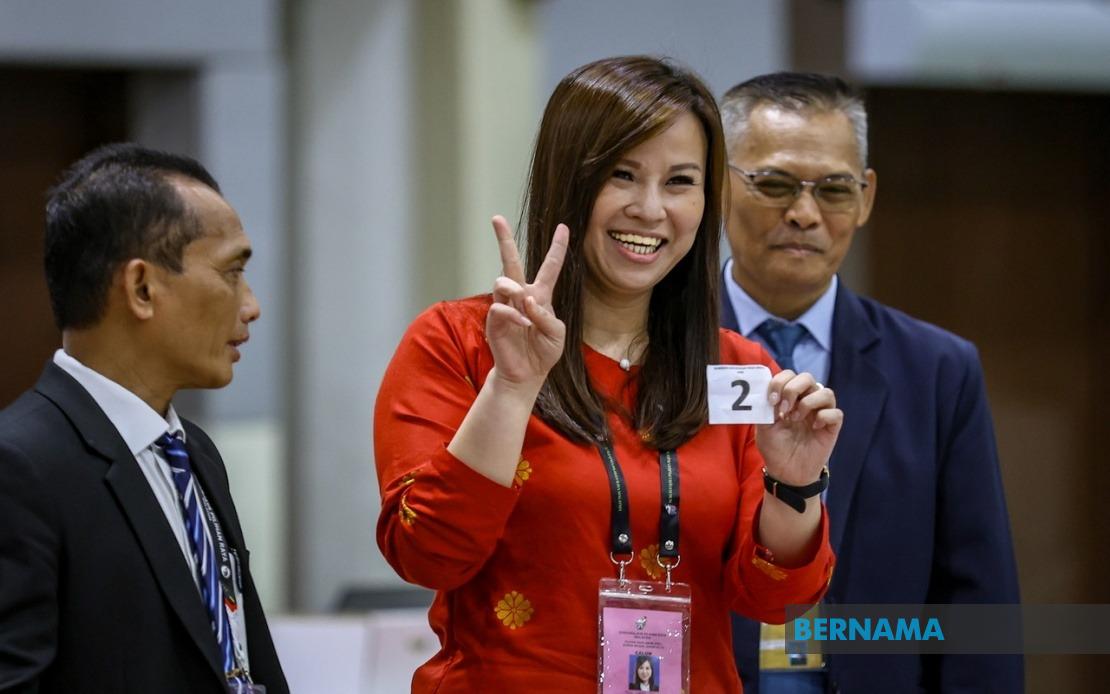
Sharon Teo, the Pakatan Harapan candidate for the Permas state seat, has positioned infrastructure development and public welfare as the cornerstones of her campaign for the 16th Johor state election. The Johor Amanah Women's Youth chief, who filed her nomination at Dewan Muafakat in Taman Mawar here on June 27, emphasised that these priorities emerge directly from conversations with residents throughout the constituency. Her focus on tangible service delivery marks a strategic pivot towards bread-and-butter issues that resonate with voters navigating the post-pandemic economic landscape.
Road infrastructure has emerged as Teo's signature issue, reflecting widespread concerns about safety and accessibility across the Permas district. During her nomination filing, she stressed that deteriorating road conditions pose genuine risks to residents and impact business activity in neighbourhoods throughout the constituency. This emphasis on maintenance and upgrading of transport links addresses a chronic complaint in many Johor constituencies, where rapid urbanisation has outpaced infrastructure investment. By anchoring her campaign on a visible, measurable problem, Teo is offering voters a clear metric against which to evaluate performance should she win the seat.
The candidate brings relevant political experience to her campaign, having previously worked as an aide in the Pulai parliamentary constituency under the late Amanah deputy president Salahuddin Ayub. This background provides her with exposure to constituent services and parliamentary procedure, though her entry into direct electoral competition represents a significant step forward in her political trajectory. She indicated that a comprehensive manifesto detailing her vision and specific policy proposals for Permas voters will be released in the coming weeks, signalling a structured campaign approach rather than improvised promises.
The incumbent, Barisan Nasional's Baharudin Mohamed Taib, won the Permas seat in 2022 and is now mounting a defence of his mandate in an increasingly competitive political environment. Acknowledging the strength of his opponents, Baharudin expressed awareness that complacency could prove costly in the four-way contest. His decision to campaign on the BN manifesto rather than launching a personal platform reflects the coalition's preference for unified messaging, though this approach potentially limits his ability to distinguish himself as an individual representative responsive to local grievances.
The Permas constituency, located within the broader Pasir Gudang parliamentary constituency in southern Johor, encompasses 113,963 eligible voters. This voter base, substantial enough to make the seat genuinely competitive, has undergone significant demographic change in recent years as urbanisation has accelerated across the region. Understanding this electorate's composition—the balance between established residents and newer arrivals, between working-class and middle-class neighbourhoods—becomes crucial for all candidates seeking to craft persuasive campaign messages.
This state election features a notably fragmented political landscape in Permas, with four candidates competing for the seat. Beyond Sharon Teo and Baharudin, T. Vela represents Perikatan Nasional, bringing the Islamist coalition's perspective to the race, while Dr Zamil Najwah contests for Parti Bersama Malaysia, a relative newcomer to Johor's electoral landscape. This four-cornered contest complicates traditional two-coalition dynamics and creates opportunities for candidates who can consolidate support among specific voter demographics or address particular local concerns more effectively than their rivals.
The timing of the Johor state election, scheduled for July 11 with early voting on July 7, compresses the campaign period into a relatively brief window. For candidates like Teo, this compressed timeline demands efficient resource deployment and strategic messaging focused on high-impact issues. Early voting provisions benefit working voters who may struggle to vote on election day, potentially expanding the electorate participating in the contest. The short campaign season also means that first-mover advantage and media momentum become disproportionately important factors in determining electoral outcomes.
Permas represents a bellwether constituency for understanding broader trends in Johor politics. The state has emerged as genuinely competitive terrain following the 2022 general election, with Pakatan Harapan making significant inroads into traditionally Barisan-held territory. Results in seats like Permas will indicate whether PH has consolidated its earlier gains or whether BN has successfully rebuilt its support base. For Malaysian voters observing this contest, the Permas result will offer meaningful signals about the state's political direction heading into the next general election cycle.
The welfare dimension of Teo's campaign addresses economic pressures facing ordinary Johoreans as living costs continue to rise and employment remains precarious for vulnerable populations. Infrastructure and welfare represent interconnected concerns—poor roads impede economic activity and hamper service delivery, while weak social safety nets amplify the impact of infrastructure deficiencies on low-income households. By linking these issues, Teo positions herself as attentive to both the immediate infrastructure needs and the broader economic security concerns that animate voter behaviour in urban and semi-urban constituencies.
BN's strategy of relying on collective party messaging rather than personalised local platforms carries both advantages and risks. The coalition benefits from institutional machinery, established administrative capacity, and the legitimacy of governing structures, yet voters increasingly demand evidence of individual responsiveness to local problems. In constituencies like Permas where alternatives exist, voters may punish candidates perceived as interchangeable party functionaries rather than engaged local representatives. Baharudin's acknowledgment that his opponents possess genuine strengths indicates awareness of this vulnerability, yet his campaign approach may inadvertently reinforce the impression of a candidate dependent on party rather than personal brand.
The broader context of Johor politics shapes this Permas contest in important ways. The state has transitioned from being a BN stronghold into genuinely contested political territory where multiple coalitions compete vigorously for voter support. Johor's economic significance as Malaysia's industrial heartland and its diverse population make state-level outcomes here influential for national political trajectories. The Permas race, while ostensibly a local constituency contest, thus carries implications extending well beyond the immediate district and touches on fundamental questions about whether BN can arrest its declining support or whether PH has fundamentally reshuffled Malaysian politics.
For Southeast Asian observers watching Malaysia's democratic evolution, the Johor state election and contests like Permas demonstrate the region's vibrant electoral competition. These races show voters actively engaging with candidates on substantive policy grounds rather than defaulting to incumbency or ethnic mobilisation. The presence of four competing candidates, each representing distinct political philosophies and constituencies, reflects the region's increasingly pluralistic political landscape. Sharon Teo's focus on infrastructure and welfare, Baharudin's reliance on coalition unity, Vela's Islamic platform, and Zamil's representation of an emerging political force collectively illustrate the genuine diversity of electoral choice available to Malaysian voters.

