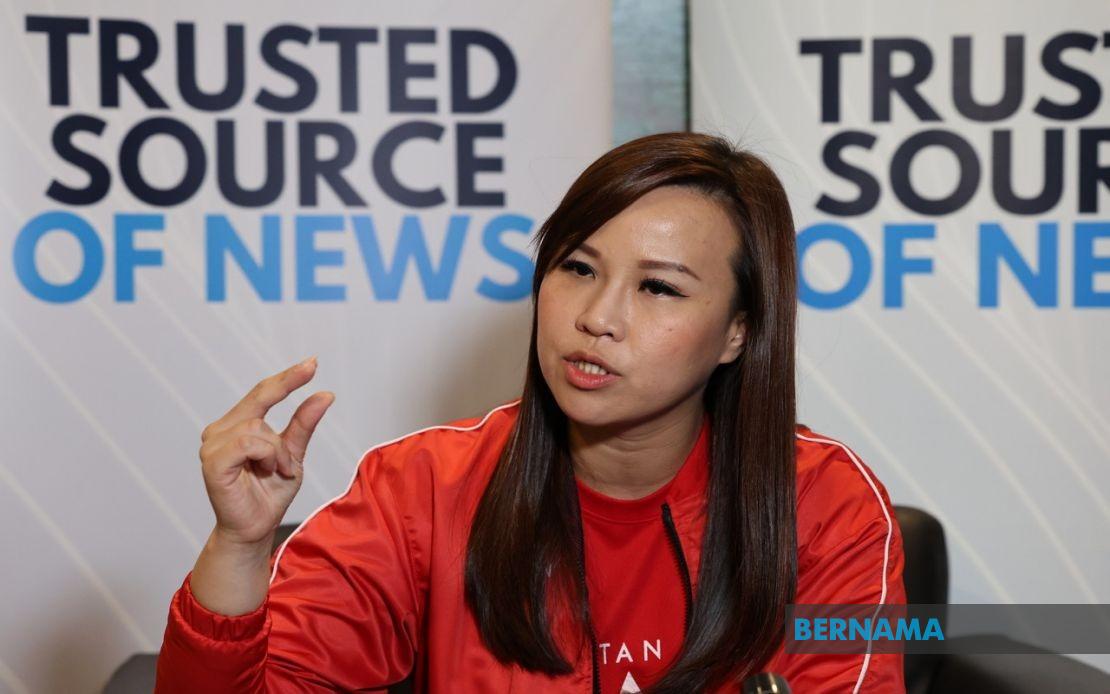
Sharon Teo Siew Hui, the 36-year-old Pakatan Harapan candidate contesting the Permas seat in the ongoing Johor State Election, has anchored her campaign on a political philosophy shaped by years of working alongside the late Datuk Seri Salahuddin Ayub. The former Minister of Domestic Trade and Cost of Living, popularly remembered as "Bapa Rahmah Malaysia," left an indelible mark on Teo's understanding of what elected representation should entail—moving beyond symbolic leadership to genuinely address constituent grievances with persistence and humility.
Teo's entry into formal politics came in 2018 when she formally joined Parti Amanah Negara, though her connection to Salahuddin's work preceded that milestone. She initially supported him as a volunteer before deepening her involvement as his special officer, a role that afforded her a window into his working methods. What struck her most was not grand policy announcements but rather the quotidian reality of political commitment: watching Salahuddin personally track the resolution of public complaints late into the evening, sending messages close to midnight to ensure that residents' problems were being resolved rather than merely recorded and filed away.
This intimate exposure to on-the-ground governance has become central to Teo's campaign messaging. She has committed to replicating Salahuddin's approach in Permas by establishing PermasKu, a dedicated centre designed to function as a single point of contact for constituency matters. The concept moves beyond the traditional complaints desk; instead, it promises systematic monitoring from initial complaint through final resolution, ensuring that issues do not languish in bureaucratic limbo. For voters accustomed to the frustration of problems raised but never resolved, this pledge represents a substantive shift in how their representatives might interact with them.
Critics have labelled Teo a "parachute candidate"—a common Malaysian accusation levelled at newcomers to electoral politics. She has pushed back against this characterisation by detailing her organisational journey within Amanah. Beginning as an ordinary member, she progressed to serve as Assistant Secretary of Amanah Johor and subsequently as head of Amanah Johor Wanita Muda, the party's young women's wing. Additionally, her repeated accompaniment of Salahuddin during previous campaigns and community events in Permas means the constituency is not unfamiliar terrain but rather a place where she has already built relationships and demonstrated sustained engagement.
During her first five days of campaigning, Teo has been listening more than speaking, allowing residents to set the agenda for conversation. The issues emerging reflect the grinding realities of urban life in a rapidly developing state: infrastructure deficiencies including potholes that damage vehicles and back lanes behind commercial premises that have deteriorated to the point of becoming safety hazards, traffic congestion that consumes commuters' time, and public facilities in need of urgent upgrading. These are not sexy policy areas that dominate national headlines, but they constitute the daily texture of existence for ordinary families in Permas.
Teo's focus on young voters signals an attempt to broaden the electorate's engagement with politics beyond traditional mobilisation. She plans to deploy social media outreach and e-sports initiatives to connect with first-time voters and school leavers who might otherwise feel politics was something performed for them rather than with them. This approach acknowledges a demographic shift in Malaysian politics: younger voters increasingly expect politicians to meet them where they are, digitally and culturally, rather than assuming they will be motivated by conventional campaign mechanics.
Her proposed first 100 days in office, should she win, outline a methodical approach to governance. Rather than rushing to implement pre-conceived solutions, she intends to undertake a rapid audit of Permas, gathering comprehensive data on the constituency's most pressing challenges and sequencing responses according to genuine priority rather than political convenience. This includes conducting a full infrastructure survey to identify and rank urgent repairs, then committing to ground-level engagement in every area to develop action plans grounded in resident input rather than bureaucratic assumptions.
The contest for Permas is a four-way race that reflects the fragmented state of Malaysian electoral politics. Baharudin Mohamed Taib, the incumbent from Barisan Nasional, secured the seat in 2022 with a majority of 7,926 votes—a margin substantial enough to suggest voter satisfaction but not so large as to be insurmountable. Competing alongside Teo are candidates from Parti Bersama Malaysia (Dr Zamil Najwah) and Perikatan Nasional (T. Vela), meaning the anti-BN vote is potentially split across multiple alternatives. This fragmentation could theoretically advantage the incumbent, though it equally complicates his path to victory if opposition votes consolidate.
For Teo, the Salahuddin connection operates simultaneously as asset and constraint. It provides legitimacy—voters knew Salahuddin, respected his work ethic, and may transfer that regard to someone who studied under his mentorship. Yet it also invites comparison; she will be measured against a legacy of accessible governance and ethical commitment that, while inspiring, sets an exacting standard. The question confronting Permas voters is whether Teo can authentically embody Salahuddin's spirit of service-oriented politics or whether she remains ultimately a beneficiary of his name and reputation trading on a connection rather than genuine conviction.
The Johor State Election occurs at a moment of considerable flux in Malaysian politics. The federal coalition led by Pakatan Harapan faces challenges from both an emboldened Perikatan Nasional and from internal tensions within its own camp. Johor, long a Barisan Nasional stronghold, has become increasingly competitive as voters test whether alternative coalitions offer credible governance options. Teo's campaign in Permas is one test among many of whether opposition parties can translate policy promises into on-the-ground delivery that resonates with voters more immediately than partisan affiliation.

