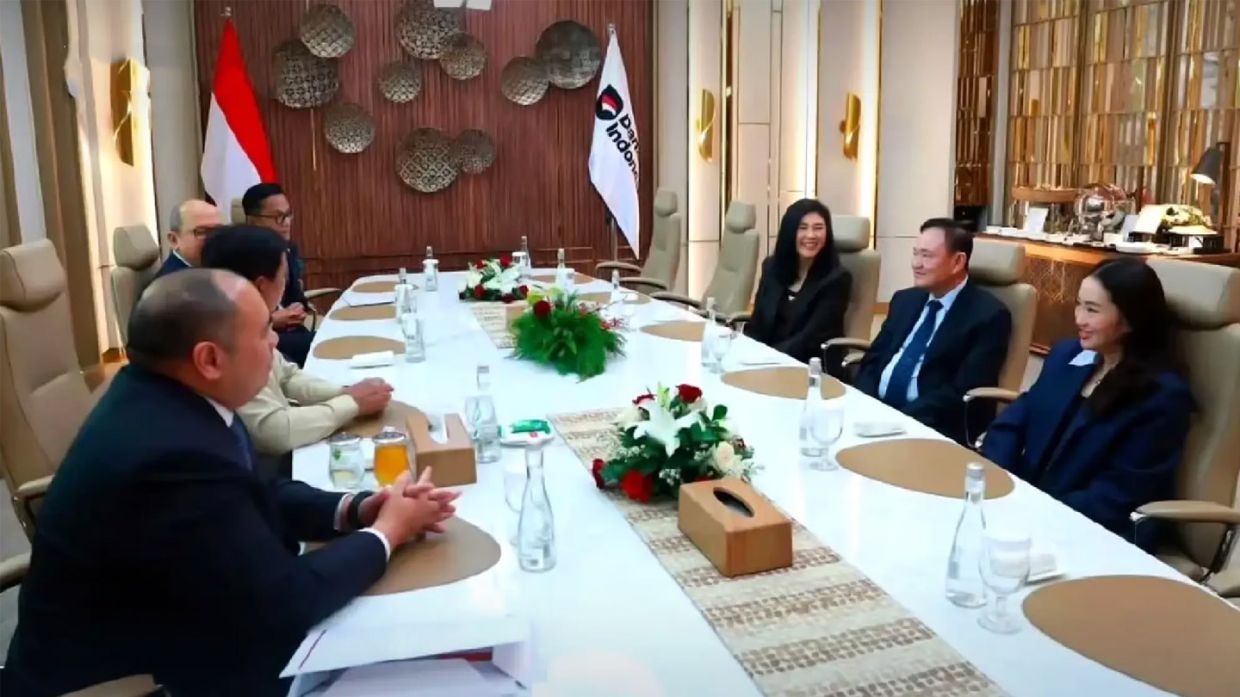
The prominent Shinawatra family has deepened its engagement with Indonesia's new administration, with three former Thai prime ministers holding separate meetings with President Prabowo Subianto in Jakarta this week to explore investment opportunities and long-term economic partnerships. The gatherings underscore the family's continued influence in regional business circles despite their complicated recent political history in Thailand, as well as Prabowo's apparent willingness to cultivate ties with major regional business figures and former leaders.
Thaksin Shinawatra, his younger sister Yingluck Shinawatra and their daughter Paetongtarn Shinawatra convened with Prabowo and senior executives at the Danantara building on July 9, according to statements from the Indonesian Cabinet Secretariat. The three represented successive governments in Bangkok—Thaksin held office from 2001 until his ouster in 2006, Yingluck governed from 2011 to 2014, and Paetongtarn led Thailand most recently from 2024 through 2025. The breadth of their collective experience across Thai governance reflects the Shinawatra family's enduring political significance, even as controversies surrounding their leadership tenures remain contested domestically.
The formal discussion at Danantara focused substantially on asset management strategies, investment pathways, and frameworks for sustainable economic expansion that could benefit both nations. These conversations took place at a moment when Indonesia is positioning itself to attract major capital inflows and restructure its national holdings under Prabowo's administration. Danantara Indonesia itself functions as the state's principal vehicle for managing, optimising and developing strategic national assets—a role that aligns closely with the economic transformation priorities Prabowo has outlined since assuming office.
Thaksin's participation carried particular significance given his existing advisory board position at Danantara, a role that has afforded him insight into Indonesia's high-level investment deliberations and strategic asset allocation. As an advisory council member, Thaksin has been positioned alongside other prominent international figures with expertise in finance and investment. His recommendations during the July 9 meeting reflected this standing, with the former Thai leader sharing perspectives on long-term economic development approaches with Prabowo and Danantara's executive leadership.
The composition of Danantara's delegation underscored the gravity with which Indonesia's leadership approached the encounter. Rosan Roeslani, the agency's group chief executive officer, attended alongside Dony Oskaria, chief operating officer, and Pandu Sjahrir, chief investment officer. The presence of these senior figures suggests that the discussions ventured beyond ceremonial pleasantries into substantive terrain regarding Indonesia's strategic investment posture and capital deployment frameworks.
Beyond the formal boardroom setting, the Shinawatra family also attended an informal gathering at Prabowo's private residence, where the Indonesian president hosted the former Thai leaders and family members in what the Cabinet Secretariat characterised as a warm and cordial environment. This personal dimension to the engagement reflects longstanding relationships between the participants and signals Prabowo's openness to building personal rapport with influential regional figures outside traditional diplomatic channels. Such private meetings often facilitate candid discussions that formal settings cannot accommodate, potentially laying groundwork for future collaboration.
The meetings arrive at a significant juncture for both nations. Indonesia is consolidating Prabowo's economic agenda following his recent presidential inauguration, while Thailand navigates its own political complexities. For the Shinawatra family, these Jakarta meetings represent an avenue for maintaining relevance in regional capital markets and investment networks despite their constrained position within Thai politics. The family has long pursued economic interests abroad, particularly across Southeast Asia, where their accumulated capital and networks retain considerable value.
From Indonesia's perspective, hosting the Shinawatra delegation aligns with Prabowo's stated commitment to broadening international cooperation and anchoring Indonesia's economic position amid shifting global conditions. By engaging established business personalities and former leaders from neighbouring Thailand, Indonesia signals openness to collaboration that transcends traditional state-to-state diplomacy. This approach potentially expands the channels through which capital, expertise and strategic thinking can flow into Indonesia's economy.
The investment focus of the discussions matters significantly for the region. Both Thailand and Indonesia are grappling with questions about attracting foreign direct investment, modernising infrastructure, and creating sustainable frameworks for growth. The Shinawatra family's experience navigating these challenges in Thailand, combined with their capital resources and international networks, positions them as potential partners for Indonesian initiatives. Conversely, Indonesia's scale and growth potential offer Thai investors opportunities for diversification and expansion beyond their domestic market.
Critically, these engagements also illustrate how regional influence operates increasingly through economic and business channels rather than purely political ones. The Shinawatra family's ability to command audience with a sitting president reflects their accumulated economic power and network position, not merely their former political status. This shift underscores broader regional trends wherein business titans and former leaders maintain outsized influence long after leaving office, shaping cross-border investment flows and economic partnerships in ways that formal institutions sometimes cannot.
Looking forward, the outcomes of these Jakarta meetings could influence capital flows between Thailand and Indonesia, particularly in sectors where the Shinawatra family maintains interests. Whether these discussions translate into concrete investment commitments or remain largely exploratory remains unclear from public statements thus far. Nevertheless, the willingness of both parties to engage substantively suggests mutual interest in developing economic ties that could extend well beyond the initial conversations.

