The Sibu Municipal Council is attempting to ease mounting public discontent with its digital parking enforcement system by introducing a buffer period and dedicated provisions for older drivers. The council announced it will implement a grace period spanning five to ten minutes before issuing Over Parking Notices, giving motorists adequate time to register their vehicles through the mobile application after parking. Additionally, a Senior Citizen Parking Pass will become available from August for drivers aged 60 and above, though specific terms remain under development.
Chairman Clarence Ting Ing Horh justified the adjustments during a media briefing, acknowledging that the system's initial rollout this month had created genuine friction. He emphasised that the council recognises users require time to physically park, exit vehicles, and navigate the app interface. Rather than serving as a punitive mechanism, Ting framed the revised approach as prioritising accessibility and customer experience over strict penalty enforcement. The council has already directed system provider Primal Solution Sdn Bhd to programme these modifications into its enforcement protocols.
The timing of these concessions reflects sustained criticism emanating from Sibu residents who have vented frustrations online about operational shortcomings. Users reported encountering barriers including cumbersome registration procedures—particularly problematic for elderly residents unfamiliar with digital platforms—unintuitive interface design, sluggish performance during peak hours, unexpected session timeouts, transaction processing delays, and most problematically, fines arriving before payment transactions completed. These technical and usability issues transformed what should have been a straightforward modernisation initiative into a public relations challenge for municipal authorities.
Ting addressed concerns about appeals and enforcement accuracy by clarifying that motorists contesting notices—whether due to registration errors or legitimate circumstances—can formally petition the council for reconsideration. Every issued notice, he assured, is backed by photographic documentation automatically captured and stored within the system, providing verifiable evidence. This transparency measure aims to restore confidence among users sceptical about the system's impartiality, particularly after hearing anecdotal accounts of apparently incorrect enforcement.
The council has also demarcated enforcement responsibilities more clearly in response to social media allegations conflating different parking violation categories. Parking wardens employed by the contractor handle revenue collection issues such as unpaid or expired parking, Ting explained, while the municipal enforcement division and police continue investigating unlawful parking infractions including traffic obstruction. This clarification attempts to counter false claims suggesting private contractors have been issued authority beyond their contractual remit.
Operational improvements extend beyond policy adjustments. The council has instructed the contractor to foster more helpful interactions between wardens and confused users, encouraging them to provide guidance rather than issuing immediate notices. Additionally, wardens must now remain bare-faced during duty except where valid medical reasons justify covering, enabling easy identification and reducing anonymity-related apprehension among the public. A dedicated assistance counter positioned at Sibu Public Library offers free orientation sessions for those requiring help registering or operating the application.
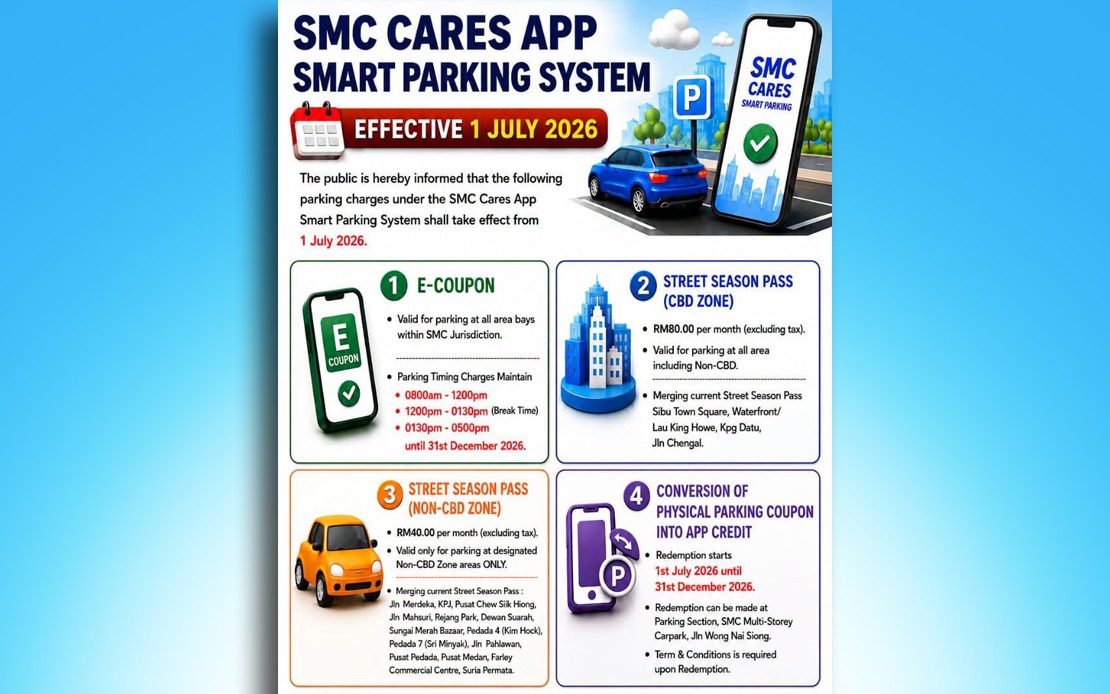
Defending the pricing structure against allegations that Sibu charges excessively compared to other Sarawak municipalities, Ting presented comparative data suggesting the rates remain competitive within the state. Revenue collected through the system flows directly to municipal coffers, while the contractor receives compensation through separate service arrangements, creating a transparent financial structure that aligns council interests with system performance rather than penalisation volume.
The system has already attracted significant user uptake despite teething problems. The council reported exceeding 93,000 active registrations since launch, tracking toward its year-end target of 100,000 users. This participation level demonstrates that underlying demand for digital parking solutions exists within Sibu's motoring population, even where execution has stumbled. Success will ultimately depend on whether the announced improvements meaningfully resolve the technical frustrations driving negative sentiment.
For Malaysian urban centres implementing or considering similar smart parking infrastructure, Sibu's experience offers instructive lessons. Digital enforcement systems, regardless of technological sophistication, require user-centric design and staged rollout allowing identification and correction of operational friction points before full deployment. Grace periods and demographic accommodations signal that municipal authorities recognise technology should enhance rather than complicate residents' daily lives. Public consultation and responsive adjustment, rather than defensive posturing, rebuild trust after botched implementation.
The council's willingness to recalibrate its approach also acknowledges that traditional enforcement mindsets must evolve when deploying automated systems. Parking management increasingly serves as both revenue source and mobility management tool in congested urban areas. Sibu's adjustments suggest that sustainable digital parking adoption requires balancing municipal fiscal objectives with genuine user support, particularly for demographics less comfortable navigating technological platforms. Whether these modifications sufficiently address underlying system reliability issues remains to be seen as implementation proceeds through coming months.

