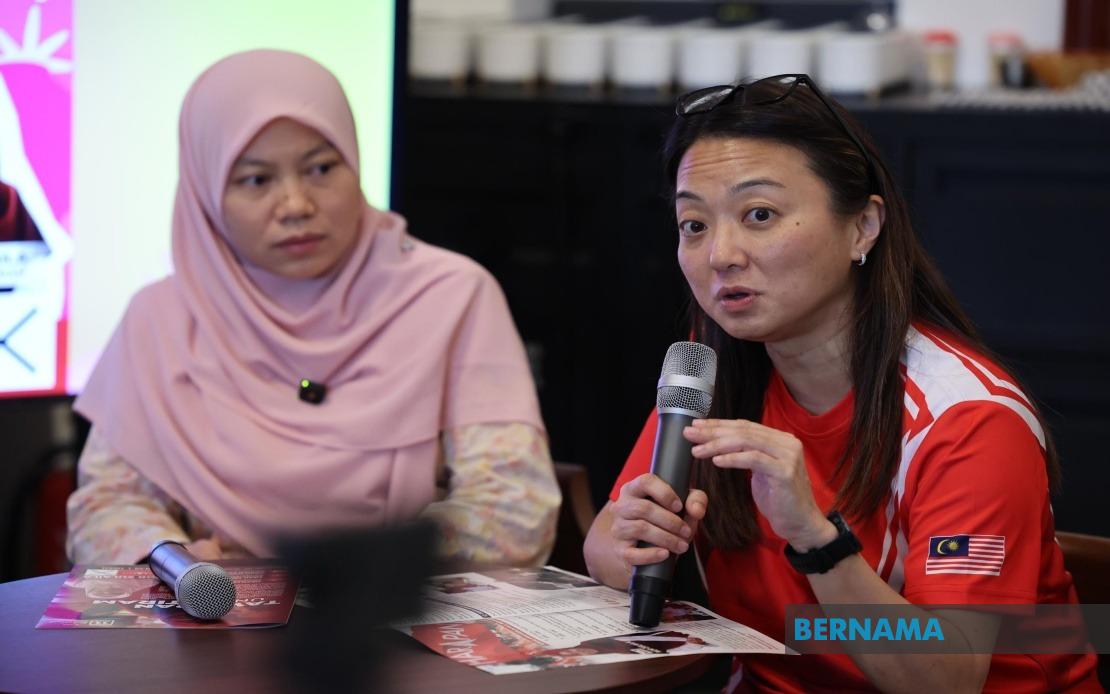
As the 16th Johor state election enters its final phase, DAP deputy secretary-general Hannah Yeoh has mounted a robust defence against suggestions that Pakatan Harapan's campaign platform merely replicates competitor promises. Speaking in Johor Bahru on July 4, the Minister in the Prime Minister's Department took issue with characterisations of manifestos as "copy-paste" documents, reframing the debate around what voters actually need from their elected representatives.
Yeoh's intervention reflects a broader conversation within Malaysian political circles about manifesto authenticity and differentiation. When multiple parties commit to addressing identical policy areas—welfare expansion, housing affordability, and public services—questions naturally arise about whether these represent genuine policy divergence or merely formulaic campaign rhetoric designed to appease broad voter demographics. Yet Yeoh's counterargument carries weight: in representative democracy, convergence on fundamental issues often signals that politicians across the spectrum recognise shared societal problems, even if they propose different solutions.
The welfare portfolio stands as perhaps the clearest example. As Malaysia navigates post-pandemic economic recovery and persistent inflation concerns, almost every political formation contesting the Johor election has incorporated welfare improvements into their platforms. Housing affordability likewise features prominently across manifestos, reflecting decades-long anxieties about property prices, developer practices, and first-time homebuyer accessibility. These are not niche concerns or partisan talking points; they represent bread-and-butter issues that shape electoral outcomes across income groups and demographics.
Yeoh's framing invites voters to view manifesto similarities as validation rather than criticism. If welfare commitments appear across multiple platforms, perhaps this indicates genuine political consensus about urgency rather than intellectual laziness. The implication is that voters should focus less on superficial textual overlap and more on implementation capacity, track records of delivering on promises, and the specific mechanisms each party proposes for addressing shared challenges. This distinction becomes particularly important in Malaysian elections, where coalition politics and shifting alliances mean that campaign promises often encounter the messy realities of coalition compromise and resource constraints.
The DAP's emphasis on gender representation adds another dimension to its Johor campaign narrative. By fielding eight female candidates among its seventeen nominees, the party positions itself as committed to expanding women's participation in state governance—a positioning that extends beyond token appointments. Yeoh highlighted that these women candidates possess the capability to occupy major ministerial portfolios and, theoretically, to serve as Menteri Besar should voters grant them the opportunity.
The example of Nor Zulaila Abd Ghani, standing for the Tiram seat, exemplifies DAP's argument about candidate quality and diversity. Her twelve-year track record across local, state, and federal administrative roles demonstrates substantive public sector experience rather than parachute candidacy. More significantly, her mixed ethnicity—with a Malay mother and Chinese father—provides symbolic representation of Malaysia's multicultural fabric, countering narratives that position certain positions as belonging to particular communities. In a state with Johor's demographic complexity and historical significance within Malaysia's federal arrangement, such representation carries political and social weight.
The Tiram contest itself features four candidates representing the major political blocs: Pakatan Harapan through DAP, Barisan Nasional, the newer Parti Bersama Malaysia, and Perikatan Nasional. This four-cornered arrangement mirrors the fragmentation seen across Malaysian state-level politics since 2018, creating unpredictable outcomes where vote splits can determine winners with substantially less than majority support. Nor Zulaila's candidacy thus functions both as a test case for DAP's female representation strategy and as a bellwether for voter sentiment regarding coalition politics and governance philosophy.
Pakatan Harapan's decision to contest all fifty-six Johor seats represents an aggressive stance, signalling confidence in recovering ground lost during the 2023 general election cycle when the coalition faced significant headwinds across the peninsula. The polling scheduled for July 11, with early voting on July 7, compresses the campaign period, placing emphasis on already-established voter networks and media penetration rather than gradual persuasion strategies. This timeline also means that manifesto-level details matter less than party branding, candidate visibility, and existing partisan identification.
Yeoh's comments should be understood within this compressed political calendar. By dismissing manifesto-copying allegations early and reframing the narrative around shared voter priorities, DAP attempts to redirect media and voter attention toward candidate quality and implementation competence. This strategy assumes that voters evaluating Johor's options will prioritise demonstrated capability and representation demographics over word-for-word manifesto comparison—a reasonable assumption given typical electoral behaviour patterns but one that requires sustained campaign reinforcement.
The manifesto similarity debate, though seemingly technical, touches on deeper voter concerns about authenticity and political differentiation in an era when Malaysian voters increasingly express frustration with perceived sameness across established parties. By defending convergence as evidence of responsiveness rather than laziness, Yeoh attempts to reestablish a degree of political legitimacy for Pakatan Harapan's Johor campaign. Whether this framing resonates with voters will become apparent on July 11, when Johoreans determine not merely which coalition governs but what they interpret as genuine political representation.

