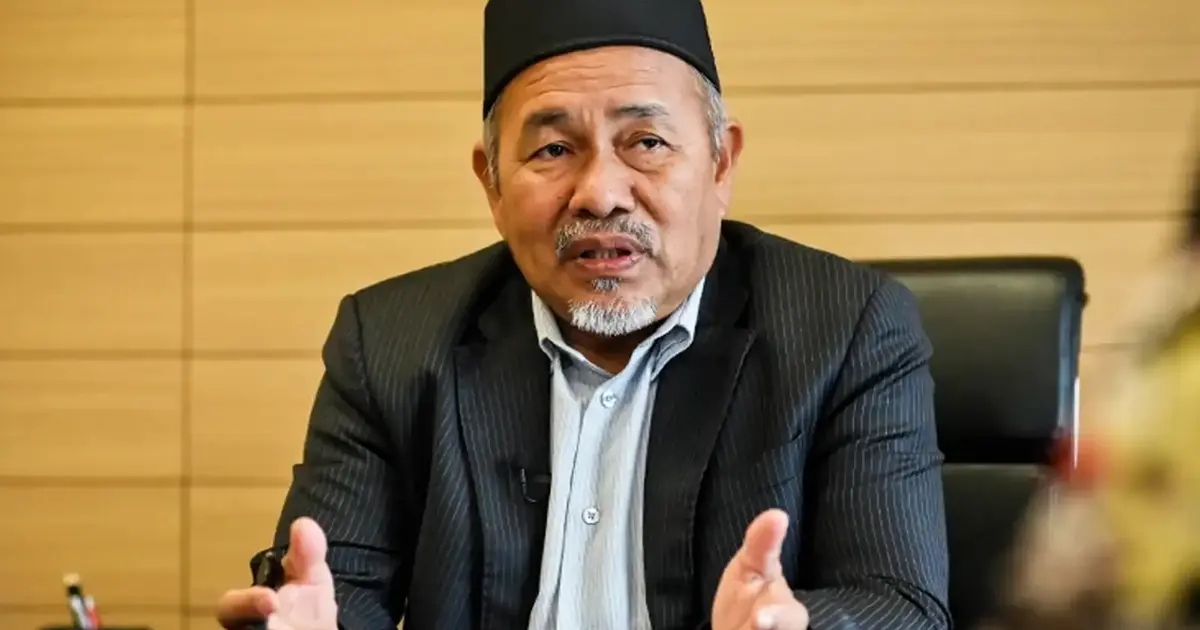
The foundation of any lasting political alliance rests on more than electoral arithmetic or temporary convenience. As PAS treasurer-general Iskandar Abdul Samad has underscored, the partnership between PAS and Umno requires an unwavering commitment to shared principles and a coherent strategic direction that extends well beyond the immediate political cycle. This assessment carries particular weight given the turbulent history of Malay-Muslim political alliances in Malaysia, where past coalitions have often fractured under pressure or divergent interests.
The emphasis on sincerity reflects a broader concern within PAS leadership about the durability of current arrangements. Political pacts in Malaysia's landscape have frequently proven temporary, collapsing when circumstances shift or when one party perceives advantage in realignment. By highlighting the need for genuine commitment rather than mere tactical cooperation, Iskandar Abdul Samad signals that PAS views its relationship with Umno as a strategic partnership that demands consistency and mutual respect. This framing is particularly relevant for PAS, which has experienced multiple coalition transitions over recent decades and carries institutional memory of broken agreements.
The requirement for a clear, articulated vision speaks to a fundamental challenge facing both parties. Voters increasingly expect political coalitions to offer tangible policy platforms and coherent governance frameworks rather than simply pooling resources to secure electoral victory. PAS and Umno, despite their shared appeal to Malay-Muslim constituencies, have maintained distinct organisational cultures and, at times, different policy priorities. Establishing a unified vision requires reconciling these differences and presenting a compelling narrative about the coalition's purpose and direction to their respective membership bases and the broader electorate.
Iskandar Abdul Samad's warning against Bersatu interference represents a significant indicator of coalition tensions. Bersatu, the party founded by former Prime Minister Mahathir Mohamad and currently led by Muhyiddin Yassin, has historically positioned itself as an alternative vehicle for Malay-Muslim political representation. The caution against Bersatu attempting to instigate conflict suggests that PAS leadership perceives genuine risk of external manipulation or the exploitation of internal disagreements to destabilise the alliance. This dynamic reflects the competitive nature of Malaysia's Malay-Muslim political space, where multiple parties vie for influence within overlapping voter constituencies.
The backdrop to this emphasis on alliance stability is Malaysia's complex coalition politics. Following the 2022 general election, the Umno-PAS partnership became central to the formation of the Perikatan Nasional government framework, fundamentally reshaping the country's political landscape. Yet maintaining such partnerships has proven challenging, with periodic tensions emerging over ministerial allocations, policy direction, and the pace of political reform. For PAS, which has experienced rapid growth in parliamentary and state-level representation, the alliance with Umno offers access to federal power but also requires accommodation of a much larger coalition partner.
The economic and governance implications of coalition stability extend far beyond party considerations. Business confidence, policy continuity, and investment decisions all depend on political arrangements remaining sufficiently stable to allow coherent long-term planning. A fractured alliance in federal government could trigger the kind of political instability that undermines economic performance and public service delivery. This reality creates shared incentives for both PAS and Umno to maintain functional relationships, even where disagreements exist on specific policy matters or resource distribution.
Regionally, the strength and coherence of the PAS-Umno partnership resonates beyond Malaysia's borders. Southeast Asian observers monitor coalition stability in major regional economies, and political instability in Kuala Lumpur affects confidence across the wider region. A credible, stable government formation in Malaysia provides reassurance to trading partners, investors, and neighbouring governments about the continuity of policy frameworks and international commitments.
The explicit warning against Bersatu interference also underscores internal competition within the Malay-Muslim political establishment. Bersatu's positioning has created a three-way competition alongside PAS and Umno for representation of this demographic group. Iskandar Abdul Samad's comments suggest that PAS views Bersatu as a potential spoiler capable of exploiting coalition divisions to reassert its own political relevance. This dynamic adds complexity to alliance management, requiring both PAS and Umno to maintain cohesion partly in response to external competitive pressures.
Moving forward, the sustainability of the PAS-Umno partnership will likely depend on their ability to deliver tangible governance outcomes that justify the coalition to their supporters. Beyond rhetoric about sincerity and vision, both parties must demonstrate practical commitment through policy implementation, resource sharing, and the management of internal disputes. How successfully they navigate this challenge will shape not only their own political futures but also the broader stability of Malaysia's federal system and the country's capacity to address pressing economic and social challenges.
For Malaysian observers and regional analysts alike, the health of this coalition remains a crucial indicator of political stability. The coming months and years will reveal whether the commitment to shared vision and sincere partnership can withstand the inevitable pressures and temptations that emerge in competitive Malaysian politics. The stakes extend well beyond party interests to encompass the country's broader governance trajectory and regional standing.

