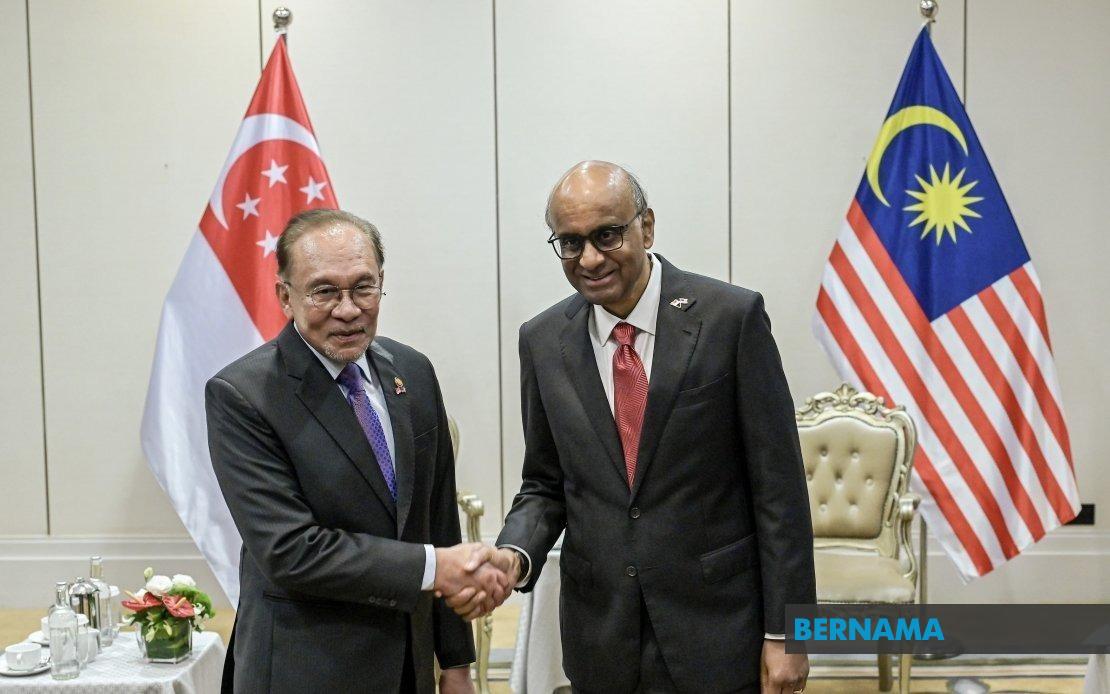
Singapore and Malaysia have committed to expanding their partnership across multiple strategic domains, signalling a renewed focus on bilateral ties that extend well beyond traditional political engagement. The pledge emerged during President Tharman Shanmugaratnam's inaugural state visit to Malaysia, which ran from July 12 to 15, including a formal courtesy call on Prime Minister Datuk Seri Anwar Ibrahim on Monday. The two leaders used the high-level meeting to map out areas where their complementary strengths and shared challenges could drive meaningful collaboration that benefits both nations and the broader region.
Food security and energy represent the cornerstone of the renewed cooperation framework. For both countries, these sectors carry outsized strategic importance. Singapore, as a city-state with minimal agricultural capacity and heavy reliance on energy imports, faces perpetual vulnerabilities in supply chains. Malaysia, conversely, possesses abundant natural resources and agricultural potential but confronts the challenge of meeting rising regional demand while maintaining sustainability. By formalising cooperation in these areas, the two nations can create more resilient frameworks that reduce individual exposure to market shocks and geopolitical disruptions. The move reflects mature statecraft, acknowledging that economic interdependence, properly managed, strengthens rather than weakens national interests.
The courtesy call itself carried symbolic weight. President Tharman was accorded full state honours at Istana Negara, where he and his wife Jane Ittogi Shanmugaratnam received formal welcomes from His Majesty Sultan Ibrahim, King of Malaysia, and Her Majesty Raja Zarith Sofiah, Queen of Malaysia. Such ceremonial recognition underscores the diplomatic significance both governments attach to the relationship and signals to regional and international observers that Singapore-Malaysia ties remain a priority despite historical tensions that occasionally surface between the neighbours.
Beyond the capital, President Tharman extended his engagement to Selangor, meeting with Sultan Sharafuddin Idris Shah and Menteri Besar Datuk Seri Amirudin Shari on Tuesday. This deliberate inclusion of state-level officials reflects a more sophisticated understanding of Malaysian federalism and suggests that Singapore recognises the importance of building direct relationships with subnational actors who wield considerable economic and administrative influence. The diversification of diplomatic contact points reduces dependence on central government channels and creates multiple entry points for sustained engagement.
During these Selangor discussions, both sides identified several emerging areas for collaboration. Technical and vocational education emerged as a priority, a recognition that both economies require skilled workforces to compete in an increasingly technology-driven global marketplace. Climate adaptation and flood mitigation also featured prominently, reflecting the shared vulnerability of Southeast Asian nations to intensifying environmental pressures. These practical cooperation mechanisms typically generate tangible benefits for ordinary citizens and create constituencies invested in bilateral stability.
The growth of start-ups and entrepreneurial ecosystems formed another pillar of the dialogue. Both Singapore and Malaysia are competing to establish themselves as regional innovation hubs, and strategic collaboration rather than zero-sum competition could accelerate the development of complementary tech sectors. Start-up ecosystems thrive on talent mobility, cross-border investment flows, and shared regulatory learning. President Tharman's welcome of increased exchanges between Singapore and Selangor specifically signals openness to deepening these entrepreneurial connections at the state level, potentially creating more decentralised innovation partnerships.
The two leaders also engaged substantively on regional geopolitical developments, particularly the volatile situation unfolding in West Asia. This discussion underscores how even bilateral meetings increasingly incorporate broader international security considerations. For Malaysia and Singapore, developments in West Asia carry multiple layers of significance. Both nations host substantial Muslim populations with historical and cultural connections to the region; both depend on stable maritime corridors that pass through waters affected by Middle Eastern tensions; and both are invested in maintaining the international rules-based order that underpins their own prosperity and security.
A critical theme running through the bilateral engagement was the reaffirmation of commitment to international law, specifically the United Nations Convention on the Law of the Sea (UNCLOS) and freedom of navigation. This emphasis is not incidental but rather reflects genuine shared interests. Both Singapore and Malaysia are maritime trading nations whose economies depend absolutely on unobstructed sea lanes. The South China Sea, which separates the two countries and connects them to global markets, has witnessed increasing militarisation and disputes over maritime claims. By publicly recommitting to UNCLOS and freedom of navigation principles, both leaders send a signal to other regional actors that they will resist attempts to restrict access or unilaterally alter the maritime status quo.
The timing of President Tharman's inaugural state visit also deserves attention. It comes at a moment when both countries face intensifying external pressures—from great power competition between the United States and China to climate change to technological disruption. In such an environment, deepening ties with immediate neighbours represents prudent strategic positioning. For Malaysia, hosting Singapore's president and extending engagement across multiple government levels demonstrates confidence in the bilateral relationship and commitment to regional stability. For Singapore, reciprocating with substantive cooperation offers reassurance to a larger neighbour that it remains a trusted and valuable partner rather than a potential flashpoint.
The breadth of areas covered—from food and energy through education, entrepreneurship, and environmental management—reflects an understanding that modern strategic partnerships cannot be confined to traditional security matters. They must encompass the full spectrum of challenges and opportunities that determine whether populations enjoy prosperity and safety. By anchoring cooperation in practical domains that generate shared benefits, both governments create a foundation that can weather occasional diplomatic friction and narrow mutual interests.
Looking forward, the success of this expanded partnership will depend on translating political commitments into operational mechanisms. Establishing joint working groups, regular high-level consultations, and concrete project timelines will be essential. The precedent set by President Tharman's visit—engaging not just central authorities but state governments and non-traditional partners—suggests both nations are thinking creatively about how to deepen ties. For Malaysian and Singaporean observers, the renewed emphasis on cooperation offers tangible benefits: improved food supplies, more reliable energy access, better education and training opportunities, and enhanced environmental resilience. Equally important, it reinforces the notion that two neighbours with distinct systems and occasional disagreements can still chart a course of productive engagement that serves their populations and contributes to regional peace.

