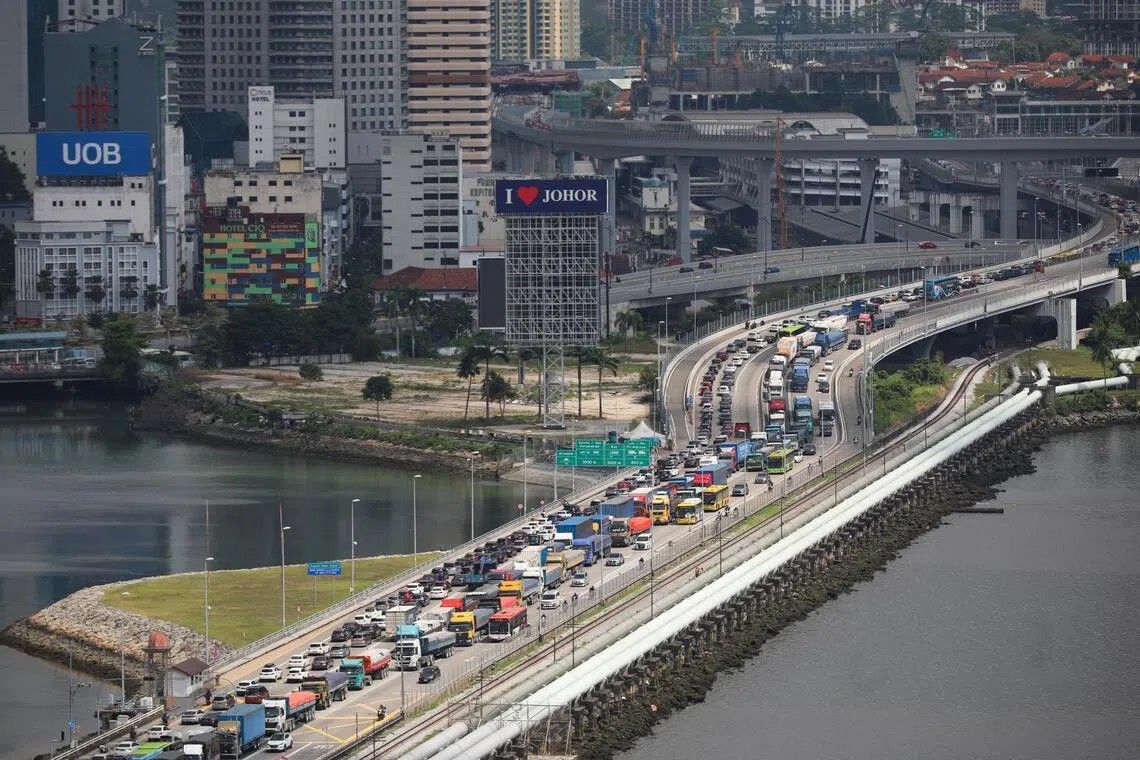
Motorists heading across the Causeway or Second Link during Singapore's National Day long weekend should brace themselves for severe congestion at the Woodlands and Tuas checkpoints, with the Immigration and Checkpoints Authority (ICA) flagging the period from August 7 to 10 as particularly challenging for cross-border travel. The advisory, issued on August 3, represents a cautionary signal as the region prepares for what is traditionally one of the busiest travel periods of the year, with significant numbers of Singaporean residents heading to Malaysia and Malaysian visitors arriving for the holiday period.
To manage the anticipated bottlenecks, ICA has recommended that travellers adjust their departure times strategically, avoiding the predictable rush hours that typically see queues snake back into Malaysian territory. Early mornings and late evenings offer the most viable windows for those seeking to minimise wait times, though even these traditionally quieter periods are likely to see elevated volumes during a long weekend. The authority has also urged all cross-border travellers to monitor real-time traffic conditions at both checkpoints before setting out, allowing them to make informed routing decisions and potentially divert if conditions warrant it.
The scale of cross-border movement during holiday periods has reached unprecedented proportions in recent years. Between May 26 and June 28, encompassing the Hari Raya Haji celebrations, Vesak Day observances, and the June school holidays, more than 18 million travellers transited through the two land checkpoints, underscoring the remarkable traffic volume that materialises during extended breaks. On a single day during this period—June 19—the checkpoints processed 598,000 travellers, shattering the previous record of 589,000 set on December 19, 2025, and illustrating the exponential growth in cross-border mobility that the region has experienced.
The consequences of such congestion can be severe for those caught in it. During peak clearance periods, private vehicle drivers have faced waits extending to three hours simply to complete immigration formalities, with traffic bottlenecks extending deep into Malaysian territory amplifying delays. These prolonged waits create cascading effects throughout the morning and evening commute periods, effectively rendering the checkpoints as chokepoints that can paralyse the movement of goods and people across one of Asia's busiest borders. For Malaysian and Singaporean residents who cross regularly for work or family reasons, such delays add stress and lost productivity to their routines.
Security considerations have added another layer of complexity to checkpoint operations. Since February 28, ICA has intensified security screening procedures across all checkpoints in response to heightened global security risks, particularly following recent geopolitical developments in the Middle East. While these enhanced measures are essential for protecting both nations' citizens, they inherently slow processing times and make the congestion challenge during peak travel periods even more acute. The calibration between security rigour and throughput efficiency remains a delicate balancing act that authorities must constantly manage.
To alleviate pressure on the system, ICA has been actively promoting technological solutions that can significantly expedite the clearance process. The MyICA mobile application, which generates QR codes for faster immigration processing, represents a straightforward method for digitally savvy travellers to reduce their passage time substantially. More innovatively, the New Clearance Concept deployed for motorcycle and motorcycle pillion passengers utilises facial recognition technology to streamline verification, generating results that border on remarkable: clearance rates have improved by more than 35 percent compared to pre-pandemic 2019 levels, translating to an additional 7,600 travellers per hour during departure peak periods. These improvements suggest that further digitalisation of the checkpoint experience could yield substantial benefits across all vehicle categories.
However, technological solutions alone cannot solve the fundamental challenge of too many vehicles arriving simultaneously at fixed physical infrastructure. Human behaviour remains critical to managing flows efficiently. ICA has appealed directly to motorists to exercise discipline within the checkpoint environment: maintaining proper lane discipline, adhering strictly to traffic rules, and most critically, avoiding queue-cutting. The authority has characterised queue-cutting not as a minor infraction but as a significant traffic management problem that disrupts the carefully choreographed flow of vehicles and delays all other travellers. Enforcement has teeth: drivers caught queue-cutting are directed to execute a U-turn and rejoin the queue from the back, effectively nullifying any time advantage they might have sought. During the recent Hari Raya Haji and Vesak Day period, 52 motorists faced enforcement action for traffic violations and dangerous driving, with consequences ranging from referral to Traffic Police for investigation and prosecution to being barred from Singapore entry.
The implications of cross-border traffic management extend beyond mere inconvenience. For Malaysian workers employed in Singapore, checkpoint delays directly erode earning hours and can create workplace tardiness issues. For businesses relying on just-in-time inventory management across the border, congestion translates to disrupted supply chains. For tourists and leisure travellers, wasted hours in queues diminish the enjoyment value of their trips. For freight operations, unpredictable clearance times increase logistics costs. These cumulative impacts ripple throughout both economies, which remain deeply integrated despite being separate sovereign entities.
Planning and cooperation will be essential for anyone contemplating cross-border travel during the National Day weekend. Those unable to shift their travel times should ensure their immigration documentation is comprehensive and their vehicle papers in perfect order, eliminating unnecessary delays during clearance. The earlier adoption of digital systems like MyICA represents an investment of minutes now that pays dividends during high-traffic periods. Equally important is the simple act of respecting fellow travellers by maintaining orderly queuing behaviour and allowing the system to function as designed rather than attempting individual shortcuts.
Looking forward, the August 7 to 10 period will serve as another stress test for land border infrastructure that has been operating near theoretical capacity limits during peak periods. The data generated will likely inform ongoing discussions about whether current checkpoint infrastructure can sustainably accommodate the growing volumes of cross-border movement, or whether investment in additional capacity, technology, or administrative procedures may be necessary. For now, the immediate message is clear: prepare in advance, travel intelligently, and cooperate fully with authorities to ensure the smoothest possible experience for everyone crossing the border during this busy long weekend.

