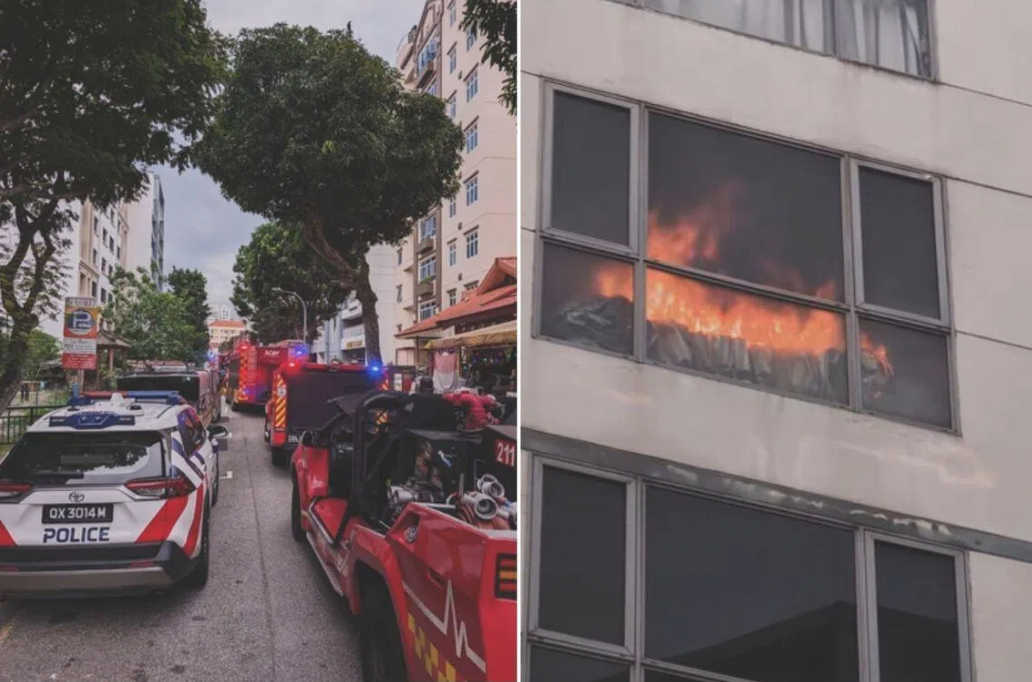
An unattended power-assisted bicycle battery sparked a fire that displaced residents from Casa Aerata condominium in Singapore's Geylang district on Sunday evening, drawing fresh attention to the mounting safety risks posed by increasingly common personal mobility devices across Southeast Asia. The Singapore Civil Defence Force responded to the blaze at 9 Lorong 26 Geylang shortly after 5:35pm on June 21, finding the battery charging in a living room on the seventh floor of the residential building. The swift evacuation of five occupants from neighbouring units prevented any injuries, but the incident underscores a growing hazard that authorities and residents throughout the region must confront as e-bikes and electric scooters proliferate in urban areas.
The fire's electrical origin traced directly to the power-assisted bicycle battery itself, according to initial investigations by the SCDF. What made this incident particularly alarming was the device's location and charging circumstances—unattended and placed indoors, conditions that represent fundamental oversights in battery safety protocol. Firefighters extinguished the flames using a hosereel and compressed air foam backpack, preventing the fire from spreading to other units and causing more extensive damage. However, the structural damage proved sufficient that heat from the blaze shattered a window on the affected unit, prompting local Member of Parliament Cai Yinzhou to clear the area below in anticipation of falling glass.
This incident arrives amid troubling trends in electrical fire statistics. The SCDF disclosed that 34 of 304 electrical fires recorded at residential premises in 2025 involved active mobility devices, a category encompassing power-assisted bicycles, personal mobility devices, and mobility aids. While the overall number of AMD-related fires declined modestly from 67 incidents in 2024 to 49 in 2025, the composition of these fires shifted dangerously, with personal mobility device fires actually increasing from 25 to 31 cases year-on-year. This divergence suggests that while some safety awareness may be taking hold, other segments of the e-mobility market remain persistently problematic.
The Geylang fire crystallizes a behaviour pattern that regulators have repeatedly warned against: charging batteries overnight or for extended periods without supervision. Many users, particularly those unfamiliar with lithium-ion battery chemistry, fail to appreciate the cumulative thermal stress that extended charging sessions impose on cells. When combined with substandard or non-original batteries—a widespread problem in Southeast Asia where counterfeit and knockoff products flood the market—the risk of thermal runaway and combustion escalates dramatically. The SCDF's explicit warnings against purchasing non-original batteries for active mobility devices carry particular weight in Malaysia and the broader region, where counterfeit electronics and unregulated battery manufacturers represent significant market share.
For Malaysian readers, the implications extend beyond Singapore's borders. The proliferation of power-assisted bicycles and personal mobility devices across Kuala Lumpur, Georgetown, and other Malaysian cities means residents face identical hazards. Unlike automobiles, which come with factory-installed charging infrastructure and standardised safety protocols, e-bike and e-scooter charging remains largely ad-hoc and dependent on user diligence. Many apartment dwellings, particularly older residential blocks, lack dedicated charging facilities, forcing residents to improvise by placing batteries in living spaces, bedrooms, and storage areas where fire would present maximum danger to occupants.
The regulatory landscape across Southeast Asia remains fragmented and permissive. While Singapore's SCDF actively monitors and publicises safety data, enforcement of battery standards and user education varies considerably across the region. Malaysia's regulatory framework for e-mobility devices remains less developed than Singapore's, creating opportunities for dangerous practices to flourish unchecked. The dominance of informal and semi-formal supply chains for batteries and charging equipment means that many Southeast Asian consumers lack reliable information about product safety certifications or proper charging procedures.
The incident also illuminates a broader pattern of infrastructure inadequacy. Modern cities have integrated e-bikes and e-scooters into their transport ecosystems without necessarily providing corresponding safety infrastructure. Secure, supervised charging stations remain relatively scarce across Southeast Asian cities, incentivising residents to charge devices wherever convenient—often in violation of manufacturer specifications and basic fire safety principles. As the e-mobility sector matures, city planners and building operators must recognise that integrated charging infrastructure represents not merely a convenience feature but a public safety necessity.
Manufacturer responsibility similarly deserves scrutiny. While major brands produce batteries with thermal management systems and safety cutoffs, the proliferation of cheaper alternatives and aftermarket products creates a secondary market where such protections prove absent or defective. Consumer awareness campaigns, while valuable, cannot fully compensate for the absence of supply-chain integrity and regulatory enforcement. The responsibility for preventing tragedies like the Geylang fire extends beyond individual users to encompass manufacturers, retailers, and regulators who together shape the safety landscape.
Looking forward, the incident suggests that Southeast Asian authorities must adopt a more proactive stance on e-mobility device safety. Singapore's data-driven approach to tracking and publicly reporting AMD-related fires provides a useful model, but only if paired with concrete regulatory measures such as mandatory safety certifications, standardised labelling requirements, and enforcement against counterfeit batteries. Malaysia should consider whether its current regulatory framework adequately protects residents from similar incidents, particularly given the rapid expansion of e-bike and e-scooter usage across its urban centres. The Geylang fire, though contained and resolved without serious injury, carries an urgent message about the consequences of treating e-mobility device batteries as inconsequential household items rather than hazardous materials requiring proper care and infrastructure.