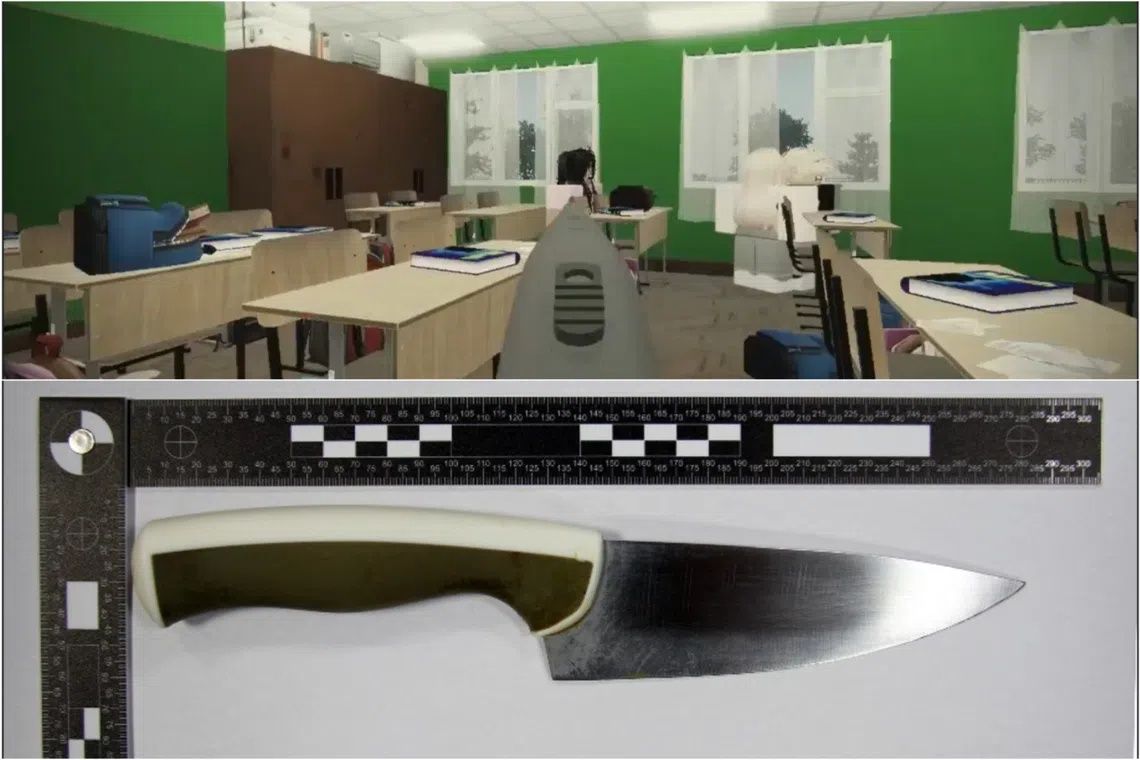
Singapore has moved to detain three teenagers in separate cases of self-radicalisation fuelled by violent extremist ideology, with one case involving a 14-year-old student who came alarmingly close to executing a planned mass stabbing at his secondary school. The Internal Security Department announced the detentions on July 27, underscoring what authorities describe as a persistent and troubling threat from youth increasingly drawn to extremist narratives online. The cases highlight the evolving nature of radicalisation in Southeast Asia, where digital platforms have become primary vectors for violent ideology targeting the region's young.
The youngest detainee, a Secondary 2 student, was arrested in May, roughly a month before he intended to carry out his attack during the June school holidays. The teenager had progressed beyond mere ideological commitment, having prepared a detailed 21-page manifesto outlining his attack methodology, specific weapon selections, and a roster of intended victims focused on non-Muslim teachers and students. His planning extended to tactical considerations, such as timing the assault during school holidays when he believed fewer staff members would be present to intervene. The case demonstrates how extremist materials available on mainstream platforms can coalesce with personal grievances to produce concrete plans for violence.
The youth's pathway to radicalisation originated in 2024 when he encountered first-person shooter content on the gaming platform Roblox, aged just 12. His ideological trajectory accelerated when he subsequently discovered material related to Omar Mateen, the perpetrator of the 2016 Pulse nightclub shooting in Orlando, Florida, which killed 49 people and wounded 58 others. Rather than recoiling from such violence, the teenager identified with Mateen's narrative, particularly viewing the attacker's history of bullying as justification for mass casualty violence. He became convinced of the religious permissibility of targeting LGBTQ individuals and attempted to promote extremist content among his peers, though authorities note these efforts did not result in further radicalisation.
By late 2025, personal grievances compounded the teenager's extremist ideological orientation. Bullying by classmates combined with academic pressure created a psychological environment in which violent retaliation appeared justified in his mind. His weapon selection process reveals how he adapted his plans to Singapore's specific security environment. Initially attracted to firearms, he recognised the nation's stringent gun control laws rendered that option impractical. He subsequently researched improvised explosive devices, exploring bomb-making materials and acquisition costs, but abandoned this approach due to insufficient funds and lack of suitable construction facilities. Ultimately, he settled on knife attacks, building confidence through repeated viewing of ISIS execution and stabbing tutorial videos available online.
The second detainee, Tan Jun Jie, 19, represents an older, tertiary-educated demographic within the radicalisation spectrum. Tan developed plans for knife attacks specifically targeting Singapore Armed Forces personnel at Sembawang Air Base and LGBTQ students at his educational institution. His radicalisation extended into the cybersecurity domain, where he attempted to execute distributed denial-of-service attacks against websites of Muslim organisations he deemed ideologically deviant. Arrested in April and issued a detention order in May, Tan's case illustrates how extremist ideology can motivate attacks against multiple categories of targets, reflecting both geopolitical grievances and social hatred. His activities demonstrate radicalisation's intersection with technical capabilities, a dimension that complicates threat assessment.
The third case involves a 15-year-old Secondary 4 student whose aspiration centred on advancing the ISIS cause through a pressure-cooker bombing campaign. This teenager viewed Singapore as an enemy of the militant group and envisioned attacks in densely populated civilian areas designed to maximise casualties. Although he conducted online research into pressure-cooker bomb construction and harboured clear violent intent, he had not finalised specific targets or timelines when apprehended. Notably, his family members and friends were aware of his extremist convictions but did not report him to authorities, highlighting the communal dimension of radicalisation intervention.
Senior Minister K. Shanmugam, who also holds the Home Affairs portfolio, articulated the asymmetric challenge facing Singapore's security apparatus. He observed that security agencies must succeed in preventing every single attack, whereas aspiring perpetrators need to succeed only once. This formulation captures the fundamental strategic disadvantage confronting counterterrorism efforts in the digital age, where motivated individuals can access attack planning materials with minimal friction. Shanmugam emphasised that families and the broader public must remain vigilant in reporting concerning behaviour and extremist communications among young people, recognising that institutional safeguarding mechanisms alone cannot adequately contain the threat.
The three cases collectively represent a troubling trend in Southeast Asia's security landscape. Singapore's Internal Security Department notes that more than half of the 23 youths detained under the Internal Security Act over the past decade had intended to mount attacks within the republic, and radicalised youth are increasingly younger. The 14-year-old's case exemplifies this downward age trajectory, with his radicalisation pathway commencing at age 12 on gaming platforms ostensibly designed for recreational purposes. The convergence of mainstream digital spaces, extremist content, and vulnerable adolescent psychology creates conditions whereby radicalisation can accelerate rapidly without triggering institutional intervention mechanisms.
The role of readily available weapons in accelerating these plots cannot be overlooked. Singapore's security authorities expressed concern that the detainees had identified easily obtainable implements with blades as attack instruments and sought information online regarding explosive construction. This pattern suggests that extremist content functions not merely as ideological material but as operational guidance, with online resources providing practical tutorials for violence implementation. The teenagers did not require access to sophisticated weapons systems or extensive military training; instead, they leveraged publicly available information and common household items to develop attack capabilities.
The online radicalisation pathway demonstrates how terrorist organisations, particularly ISIS, have evolved their recruitment strategies to target digitally native youth populations. The teenagers' exposure occurred not through dark web forums or encrypted platforms exclusively, but through mainstream gaming environments and social media where content moderation remains inconsistent. One detainee added family members and friends to chat groups where he distributed pro-ISIS propaganda, while others shared extremist videos with schoolmates and peers. This diffuse distribution mechanism outpaces institutional monitoring capacity and normalises extremist content consumption within peer networks.
The psychological dimensions of these cases reveal how personal vulnerabilities intersect with extremist ideology to produce radicalisation. The youngest detainee's identification with bullying narratives articulated by mass shooters demonstrates how extremist content can reframe individual grievances within a grandiose ideological framework. By adopting the extremist worldview, socially marginalised teenagers gain access to narratives that validate their resentment and position them as participants in significant global struggles. This psychological compensation function represents a particular challenge for intervention, as it addresses genuine emotional needs through pathological ideological solutions.
For Malaysia and the broader Southeast Asian region, Singapore's experience with youth radicalisation carries significant implications. The cross-border digital nature of extremist recruitment means that Malaysian and regional youth face identical exposure to ISIS content and narrative frameworks accessible through gaming platforms and social media. The cases underscore the necessity for comprehensive digital literacy education, robust community reporting mechanisms, and rapid intervention protocols targeting at-risk adolescents. Unlike conventional security threats that require significant planning and resource acquisition, ideologically motivated youth attacks can materialise with minimal preparation, compressed timelines, and ordinary weapons, rendering traditional intelligence gathering less effective.
Singapore's detention of these three youths represents a successful interdiction of imminent threats, but the underlying radicalisation vector remains active and evolving. The security challenge extends beyond individual prosecution to encompassing broader social resilience, family engagement, educational intervention, and content governance. As extremist organisations continue optimising recruitment strategies for younger demographics across Southeast Asia, regional security cooperation and coordinated digital platform regulation will likely become essential counterterrorism components. The cases demonstrate that radicalisation threats in Southeast Asia increasingly originate not from external terrorist cell recruitment but from self-directed pathways activated through mainstream digital platforms accessible to any adolescent with internet connectivity.

