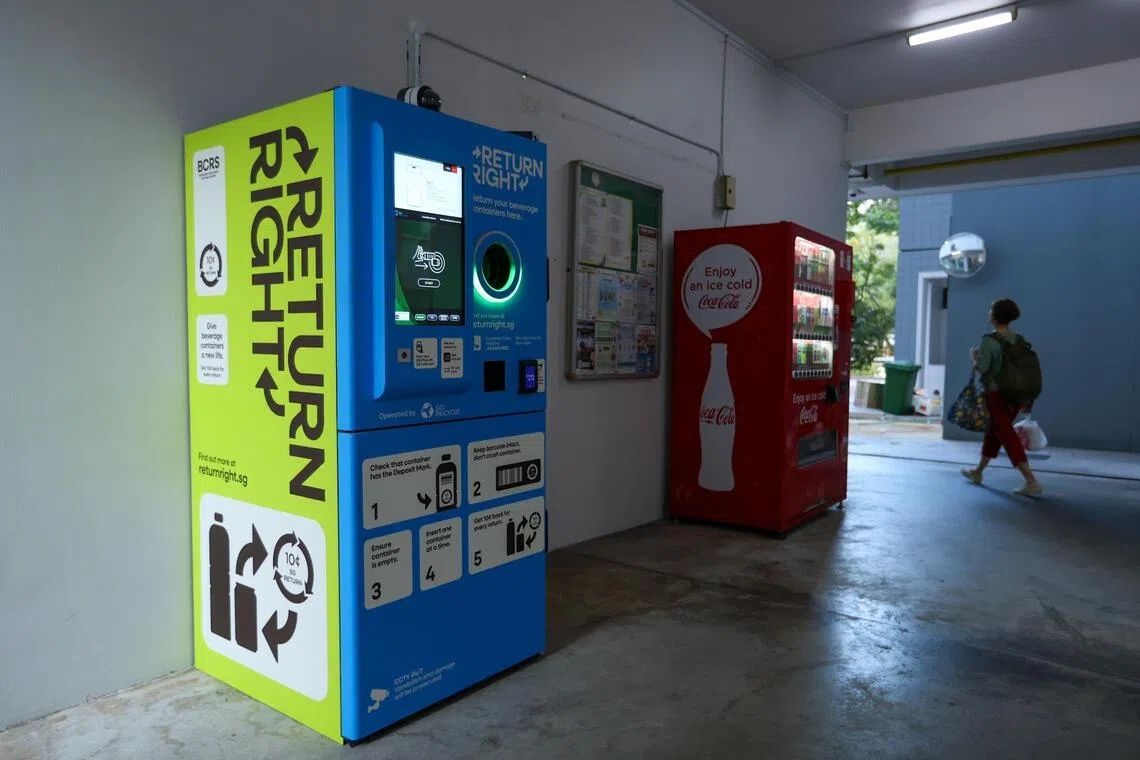
Singapore's National Environment Agency has moved swiftly to dismiss accusations of misappropriation and corruption related to its nascent beverage container recycling initiative, characterising online allegations as stemming from a fundamental misunderstanding of how the scheme operates. The statement, released on August 15 through social media, addresses mounting public confusion that emerged following parliamentary remarks about the programme's performance during its opening months.
The source of the controversy traces to comments made in Parliament on August 5 by Senior Minister of State for Sustainability and the Environment Janil Puthucheary. He informed lawmakers that between April and July, the Beverage Container Return Scheme had processed more than one million successful refund transactions involving 5.5 million used bottles and cans deposited into reverse vending machines. However, this announcement proved ambiguous to many observers, who interpreted the figures to mean that the vast majority of containers—roughly 4.5 million—had been returned without corresponding refunds.
The misinterpretation gained traction online, with commenters speculating that the deposit money for the unreturned containers represented unaccounted funds and suggesting deliberate misappropriation by scheme administrators. The narrative, while based on faulty arithmetic, touched a nerve in Singapore's civic discourse, where public trust in government institutions carries significant weight but occasionally buckles under scrutiny. The speed at which unfounded allegations can propagate through social media highlighted vulnerabilities in public communication around even well-intentioned policy initiatives.
NEA's clarification addresses the confusion by explaining the mechanics of how consumers interact with the recycling machines. Users do not return one container per transaction; instead, they can deposit multiple beverage containers simultaneously and receive consolidated refunds for all items in that transaction. With an average of 5.5 containers returned per transaction across the 1.06 million transactions recorded, the mathematics align perfectly with the 5.5 million total containers mentioned by Puthucheary. This operational detail, while straightforward, had eluded many observers in initial discussions.
The financial implications, when calculated correctly, appear far more modest and transparent than initial misinterpretations suggested. Each container carries a 10-cent deposit—a deliberately low threshold designed to encourage participation without creating a significant financial barrier. Across the 5.5 million containers processed, approximately S$550,000 in deposits has been refunded to consumers. This figure represents neither missing nor misappropriated funds but rather legitimate payouts to individuals engaging with the recycling programme as intended.
The Beverage Container Return Scheme itself represents Singapore's attempt to address growing plastic waste through a deposit-return model gaining traction globally. Under the system introduced on April 1, consumers pay an additional 10 cents when purchasing canned or bottled beverages, with the option to recover this amount by inserting the used containers into designated reverse vending machines. The mechanism incentivises recycling while shifting financial responsibility toward consumers who actively participate in recovery efforts.
The scheme's early months, however, were not without technical difficulties. Multiple users reported receiving no refunds due to machine malfunctions, requiring them to contact programme administrators directly to recover their deposits. Complaints also emerged regarding machines rejecting legitimate returns, frustrating consumers attempting to comply with the recycling initiative. These concrete operational failures, while unrelated to accusations of fraud, likely contributed to broader public scepticism about the programme's integrity and competence.
Puthucheary acknowledged these technical issues when he addressed Parliament, characterising them as isolated incidents handled appropriately by scheme operators. He noted that the vast majority of transactions and container returns proceeded without complications, and that the scheme operator worked with machine vendors to swiftly resolve problems when they arose. This framing suggested technical teething troubles rather than systemic dysfunction, though it left open questions about how comprehensively the problems had been addressed.
For Malaysian observers, Singapore's experience with the beverage container deposit scheme offers instructive parallels and cautionary lessons. Malaysia has pursued its own extended producer responsibility frameworks and recycling initiatives, though deposit schemes remain less prevalent in the region. The Singapore situation demonstrates how technological implementation can outpace public understanding, creating communication gaps that misinformation readily fills. It also underscores the importance of transparent, detailed explanations when launching programmes involving consumer financial transactions, however modest.
The regulatory architecture surrounding the BCRS includes requirements that the scheme operator submit annual financial reports to the NEA, providing oversight mechanisms designed to prevent impropriety. These accountability structures, while present, depend on public awareness to function effectively. The recent controversy, despite its factual foundation, revealed that many Singaporeans questioned whether such oversight was sufficiently rigorous or transparent.
Going forward, the BCRS faces the dual challenge of resolving residual technical issues while rebuilding confidence among a segment of the public primed to view it sceptically. Puthucheary's parliamentary statement and NEA's subsequent clarification represent attempts at damage control, but they may not fully address the underlying concern—that citizens struggle to understand how their deposits flow through the system and whether adequate safeguards protect them. For recycling initiatives across Southeast Asia, the lesson is clear: operational transparency and user-friendly communication are as crucial as the environmental objectives driving policy design.

