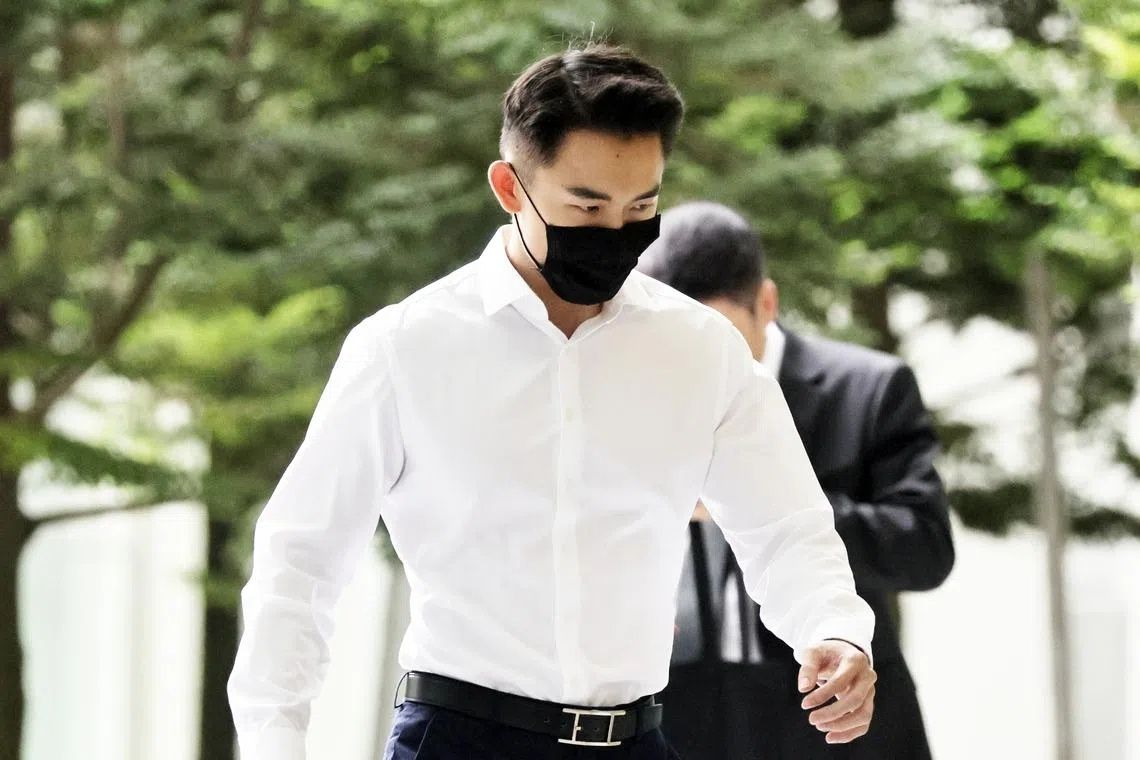
A medical practitioner in Singapore has become the latest person convicted following a major narcotics operation at a luxury Sentosa resort last year. Rayson Lee Rui Sheng, 36, was found guilty on Tuesday of consuming MDMA, commonly known as ecstasy, after authorities uncovered drug use at a private villa gathering at the Sofitel Singapore Sentosa hotel on August 9, 2023. The conviction represents a significant legal outcome from what proved to be one of the most substantial drug-related arrests at a hospitality venue in recent Singapore enforcement history.
Lee's case stems from a coordinated police operation that unfolded in the early morning hours of August 9, 2023. Acting on intelligence, officers conducted a check at the hotel shortly after 5.30am and discovered substances suspected to be controlled drugs. The Central Narcotics Bureau was immediately mobilized to the scene, and the operation ultimately resulted in the arrest of 49 male guests aged between 21 and 46 who had gathered at the villa. The scale of the operation illustrated the extent of the suspected drug activity that had been taking place at the private event.
Lee was not alone in his conviction. A 29-year-old associate, Tan Li Ming, was also found guilty on the same day of one count of drug consumption. Both men's biological samples—urine and hair—tested positive for traces of both MDMA and ketamine, according to analysis conducted by the Health Sciences Authority. The presence of these substances in their hair samples proved particularly damaging to their legal defence, as such evidence typically indicates a pattern of use rather than a single accidental exposure.
The two men had mounted a coordinated defence centred on the assertion that their beverages had been deliberately contaminated without their knowledge or consent. They contested the drug consumption charges by arguing they were unwitting victims of individuals who had spiked their drinks during the party. However, District Judge A Sangeetha rejected this narrative after careful examination of the evidence presented and the testimony delivered during the trial. The judge observed a critical inconsistency in the defendants' accounts: despite their claims that their drinks had been compromised, both men continued to consume additional beverages throughout the evening, behaviour inconsistent with someone genuinely concerned about drink tampering.
The judge's assessment of the defendants' credibility proved decisive in the case. Judge Sangeetha determined that the explanations provided by Lee and Tan during trial proceedings lacked believable foundations. More significantly, the hair sample analysis revealed evidence of prior drug consumption, indicating that neither man was encountering these substances for the first time. The forensic evidence thus established a pattern rather than an isolated incident, undermining their claims of victimization and inadvertent consumption. This distinction between occasional use and established patterns has become increasingly important in Singapore's drug enforcement approach.
Lee's account of the evening raised particular questions under cross-examination. He stated that he had arrived at the villa around 8am on August 9, after spending the previous evening at an acquaintance's birthday celebration and subsequently visiting a nightclub in Clarke Quay where he encountered Tan. Upon reaching the villa in the early morning hours, Lee claimed he found it populated with numerous individuals, many of whom he did not recognize. He asserted that during his time at the venue, he consumed three drinks provided by strangers, yet maintained he observed neither pills nor drug paraphernalia and witnessed no one consuming narcotics.
Tan's testimony presented a somewhat different narrative, though ultimately equally unconvincing to the court. He claimed to have observed what appeared to be a suspicious scene in a pantry area, where a group of four or five unidentified men were allegedly drawing liquid from a bottle using a syringe and injecting the mixture into plastic cups. After consuming from one such cup, Tan said he noticed white residue at the bottom. He claimed that when he approached someone to inquire about the substance being added to drinks, he was told it was "G-water" that would produce intoxicating effects, yet he maintained he did not understand what this substance was—a claim the prosecution found implausible.
The prosecution team, comprising Deputy Public Prosecutors Jocelyn Teo and Dhiraj G Chainani, systematically dismantled the defence narrative by highlighting fundamental inconsistencies and implausibilities. They noted that if Lee and Tan were genuine victims of deliberate drink-spiking, they should have been able to provide specific details about their alleged perpetrators. Instead, both men could only reference vague descriptions of unknown individuals, a shortcoming the prosecutors characterized as fatal to their credibility. The DPPs argued that the defence strategy amounted to presenting "hypothetical scenarios and unexplored possibilities" rather than coherent evidence.
Particular skepticism attached to claims regarding plastic cups that allegedly contained drug residue but were never seized by police. The prosecution effectively countered this argument by observing that even if such cups had been tested and found to contain drugs, this would merely confirm that the defendants had consumed drug-contaminated beverages, not that they had done so unknowingly. This logical reframing highlighted how the defence arguments ultimately supported rather than contradicted the consumption charge. Additionally, Lee's admission that he had previously consumed pills in Thailand in June 2023 further undermined claims of inexperience with narcotics.
The case reflects ongoing challenges in Singapore's approach to drug enforcement in social settings, particularly among educated professionals. The conviction of a medical doctor signals that professional status offers no immunity from narcotics laws, a message authorities have consistently reinforced. The scale of arrests at the Sofitel event—49 individuals—demonstrates that organized drug use at hospitality venues remains a concern for law enforcement, despite years of stringent drug policy implementation.
For regional readers, the Singapore case underscores the sophisticated forensic techniques now employed across Southeast Asia to detect drug use, particularly hair analysis that can reveal consumption patterns spanning months. The case also illustrates how legal systems in the region treat claims of unknowing consumption with considerable scepticism, particularly when biological evidence contradicts defendant testimony. Malaysian authorities monitoring the case will note the prosecution's successful strategy of using inconsistencies in defendants' accounts and the forensic evidence of prior use to overcome credibility challenges.
The conviction also highlights evolving social dynamics in affluent urban communities, where private gatherings may facilitate drug use despite strict legal frameworks. As Southeast Asian cities develop increasingly sophisticated nightlife and hospitality sectors, law enforcement has had to correspondingly refine detection and prosecution strategies. The Sentosa raid demonstrated capacity for rapid response and coordination between agencies, a model that may influence enforcement approaches across the region as similar patterns emerge in other major urban centres.

