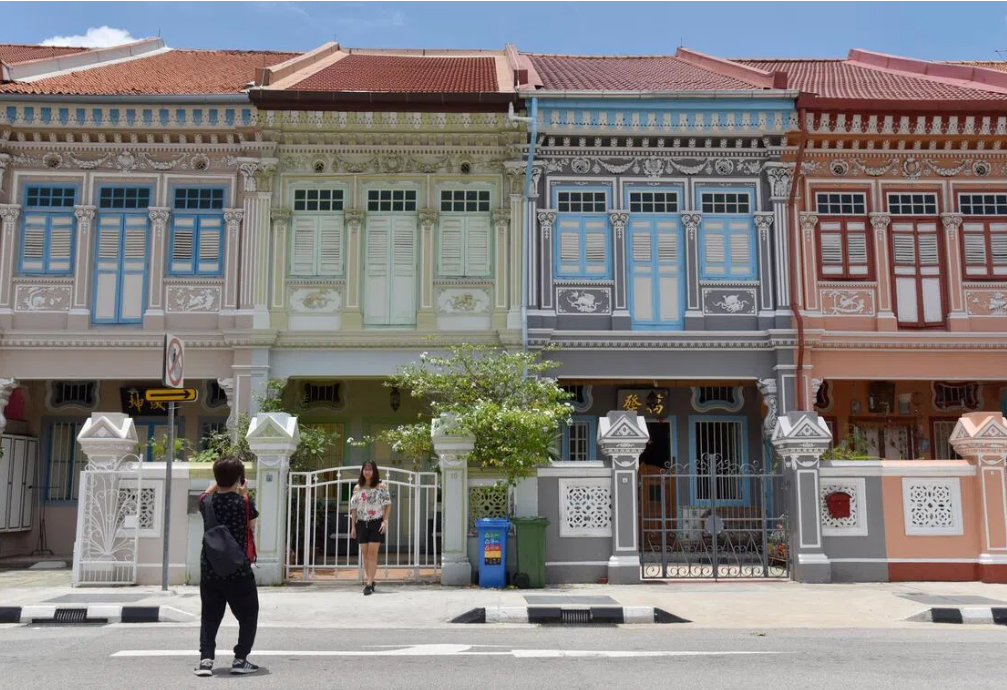
The Singapore Tourism Board and ride-hailing platform Grab are jointly promoting a three-month incentive programme aimed at encouraging visitors to explore the island's diverse precincts through subsidised transport. Tourists arriving between August and October—a period that encompasses major events including the Singapore Grand Prix and Singapore River Festival—will gain access to two complementary Grab ride vouchers upon enrolling in the Singapore Grab Travel Pass, a bundled service offering reductions across transport, dining, and leisure activities.
The initiative reflects Singapore's strategic approach to deepening visitor engagement beyond traditional tourist zones. The first voucher extends a 20 per cent discount specifically for journeys to and from four distinct neighbourhoods: Katong-Joo Chiat, Tiong Baru, Mandai, and Sentosa, with the benefit capped at two uses per customer. This geographic targeting encourages travellers to venture beyond central business districts and experience authentic local culture, heritage, and culinary offerings concentrated in these areas.
Equally significant is the second promotional voucher, which targets nocturnal exploration of Singapore's vibrant nightlife precincts. Offering a single-use 20 per cent discount on Grab rides between 7pm and 4am to venues clustered around Holland Village, Clarke Quay, Boat Quay, and Robertson Quay, this initiative addresses a previously underexploited segment of visitor behaviour. The extended temporal window recognises Southeast Asian travel patterns, where leisure trips often feature substantial evening entertainment consumption.
The campaign's timing is deliberately strategic. October's Singapore Grand Prix weekend from October 2 to 11 traditionally attracts substantial international crowds, while the Singapore River Festival running September 11 to 20 positions mid-year as a high-interest period. By bundling transport incentives with these marquee events, the Tourism Board maximises the likelihood of visitor participation and repeat neighbourhood visitation during extended stays.
Grab Singapore's managing director Alejandro Osorio emphasised the neighbourhood-centric philosophy underpinning the campaign, noting that Singapore's appeal lies in its heterogeneous local experiences rather than monolithic attractions. This messaging diverges from conventional destination marketing that emphasises iconic landmarks, instead positioning the city-state as a collection of distinct communities with individual character and appeal. For Malaysian and Indonesian visitors particularly—key demographic targets within the Southeast Asian promotion—this framing speaks to the value of granular exploration within a compact geography.
The Singapore Tourism Board's executive director for Southeast Asia, Terrence Voon, underscored the leverage of Grab's established regional market presence across nine countries including China, Indonesia, Thailand, and Vietnam. By utilising the platform's existing user base and targeted advertising infrastructure, the initiative reaches prospective travellers during the planning phase rather than solely upon arrival, potentially extending booking windows and accommodation duration.
The voucher scheme complements the board's broader "We don't wait for fun" campaign, launched in February to cultivate younger demographics aged 25 to 39. That initiative has already spotlighted underutilised precincts such as New Bahru and Joo Chiat across multiple Asian markets, building brand awareness among experience-seeking travellers less inclined toward conventional sightseeing. The Grab partnership operationalises awareness by converting interest into actual visitation through direct financial incentives.
Recent performance metrics underscore Singapore's tourism momentum. In 2025, international visitor arrivals reached 16.9 million—a 2.4 per cent increase from 16.5 million in 2024—while tourism receipts climbed to an all-time high of $32.8 billion. These figures position tourism as an increasingly vital economic contributor, particularly given diversification imperatives across the city-state's service economy. The board projects that by 2026, arrivals will expand to between 17 million and 18 million, with spending reaching $31 billion to $32.5 billion, requiring sustained promotional investment to convert projection into achievement.
Government commitment to tourism expansion is evident in capital allocation. In May, Minister-in-charge of Trade Relations Grace Fu, who also holds the Sustainability and Environment portfolio, announced a $740 million injection into tourism development projects over the subsequent five-year horizon. This funding supports infrastructure, attractions, and digital innovation—the Grab partnership exemplifying how technology facilitates visitor mobility and economic diffusion throughout the archipelago.
For Malaysian travellers, the initiative carries particular relevance. With geographic proximity and established Grab adoption, Malaysian users experience minimal friction in access and utilisation. The emphasis on neighbourhood exploration aligns with Malaysia's own urban regeneration efforts in cities like Kuala Lumpur and Georgetown, suggesting mutual learning potential. Additionally, the campaign's pricing structure—20 per cent reductions on incremental transportation—effectively reduces visitor costs, rendering Singapore comparatively more accessible to middle-income Malaysian and Indonesian tourists.
The partnership represents a sophistication in destination marketing beyond traditional tourism board campaigns. By embedding incentives within existing daily-use applications rather than requiring separate bookings or registrations, Grab's integration reduces adoption friction. Visitors already using the platform for standard rides encounter the Travel Pass as a natural upgrade, while the precinct-specific vouchers provide algorithmic nudges toward undervisited neighbourhoods during journey planning.
Looking forward, the success of this August-to-October campaign will likely inform future seasonal initiatives. If visitor dispersal achieves stated objectives—spreading arrivals and spending across multiple neighbourhoods rather than concentrating demand in central zones—the model may expand to other platforms or incorporate additional incentive structures. For regional tourism stakeholders, the Singapore model demonstrates how transport partners can amplify destination marketing through embedded financial incentives, a template increasingly relevant as Southeast Asia competes for intra-regional leisure travellers.

