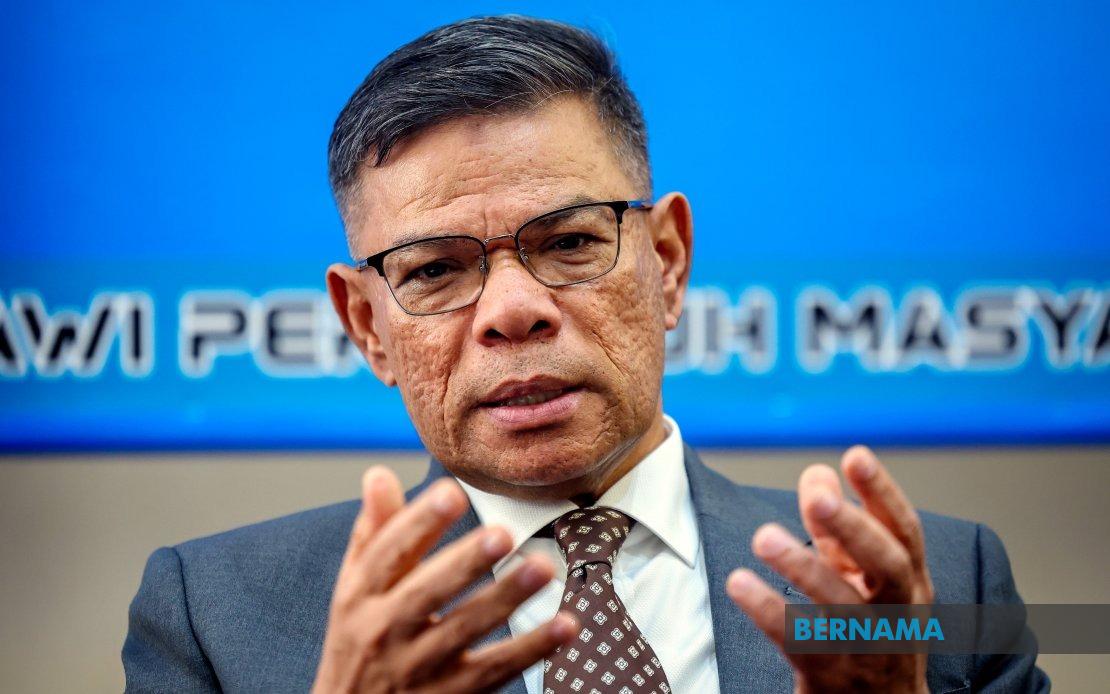
Border operations between Malaysia and Singapore proceeded without significant disruption on July 11 as approximately 2.6 million voters turned out for the 16th Johor state election. The Sultan Iskandar Building and Sultan Abu Bakar Complex, which serve as the primary land entry points between the two nations, maintained steady traffic throughout the morning, according to Home Minister Datuk Seri Saifuddin Nasution Ismail.
The positive assessment came via updates transmitted by the Malaysian Border Control and Protection Agency, which had prepared extensively for the anticipated surge in cross-border movement. Saifuddin Nasution documented the conditions through video evidence posted on social media, highlighting what he characterised as efficient management of the critical transport corridors by the agency's personnel.
Anticipating heavier-than-normal congestion as voters resident in Singapore returned to participate in the Johor polls, authorities had implemented a comprehensive set of operational enhancements. The AKPS activated maximum capacity protocols at both crossing points, creating dedicated vehicle lanes and introducing hybrid processing counters designed to expedite document verification. Contra-flow lanes were also deployed to optimise directional traffic distribution during peak movement hours.
These enhanced measures commenced on July 10, with special lanes operating on a round-the-clock basis. The intensive arrangements persisted into election day itself, with the dedicated infrastructure remaining operational from 12:01 am through 6 pm to accommodate voters travelling between Singapore and Johor constituencies. The 24-hour preliminary operation on July 10 allowed authorities to assess demand patterns and adjust resource allocation accordingly.
The election itself represented a substantial democratic exercise involving 172 candidates competing across 56 state assembly constituencies in Johor. Polling operations commenced at 8 am with 1,076 centres and 4,889 individual voting channels activated simultaneously to process the expected electorate. This parallel deployment of resources reflected sophisticated electoral logistics involving coordination between the Election Commission and state-level administration.
For Singaporean-resident Malaysians eligible to vote in Johor, the seamless border passage proved essential to participation rights. The constituency's geographic proximity to Singapore creates a significant commuter electorate, with many workers and long-term residents maintaining voter registration in their home constituencies. Facilitating their return journey without transportation barriers represents both a practical necessity and a democratic obligation.
The Election Commission had established a turnout projection of approximately 70 per cent among eligible voters, suggesting robust civic engagement ahead of ballot counting. Officials indicated that preliminary results could materialise as early as 10 pm, pending completion of counting procedures across all polling stations and the resolution of any disputed votes requiring adjudication by returning officers.
Successful management of the border infrastructure during election day carried broader implications for Malaysia-Singapore relations and the operational credibility of cross-border agencies. The two nations share extensive transportation networks and daily commuter populations numbering in the hundreds of thousands, making smooth border procedures essential to regional economic activity and social integration. Any significant congestion could disrupt not merely the electoral process but also regular commercial and employment patterns.
The performance reflected institutional investment in border technology and personnel training undertaken in preceding years. The AKPS, established to coordinate protection and movement management across Malaysia's international boundaries, demonstrated capacity for rapid scaling of operations during demand surges. Such capability extends beyond electoral contexts to emergency responses, seasonal migration patterns, and pandemic-related health screening protocols.
For Malaysian authorities, maintaining public confidence in electoral administration requires demonstrating competence across all operational dimensions, including logistical support for voters. The absence of reported congestion or bottlenecks allowed the electoral narrative to focus on participation rates and democratic engagement rather than administrative failures. This contributed to the broader presentation of the election as a well-organised democratic exercise reflecting institutional maturity.
The smooth border operations also underscored the importance of inter-agency coordination in Malaysia's public administration framework. Successful execution required harmonisation between the AKPS, state election officials, traffic management authorities, and security personnel, with clear communication lines and predetermined protocols. Such coordination mechanisms, when functioning effectively, enhance public service delivery across multiple governance domains beyond elections.
As Malaysia continues to strengthen its election infrastructure and cross-border management capabilities, the July 11 experience provided a practical demonstration of institutional capacity. For Southeast Asian democracies managing transnational electorates and complex border economies, such operational success contributes to political legitimacy and governance credibility among domestic and international observers.

