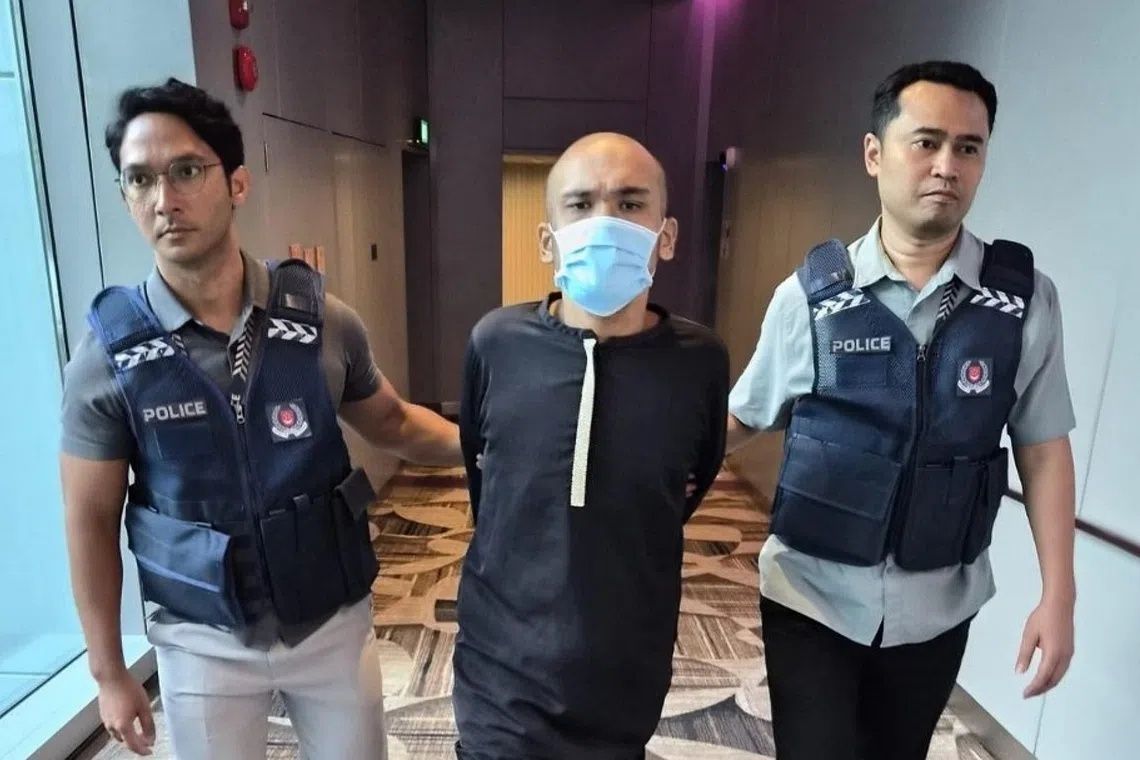
A 27-year-old man in Singapore is set to appear in court on Friday, August 7, to face charges relating to insulting and profane remarks he directed at the Muslim community through videos posted on social media in early 2026. The case marks another flashpoint in Singapore's ongoing efforts to maintain religious harmony in a multicultural city-state where tensions between faith communities can escalate quickly online. His prosecution also comes at a time when Southeast Asian authorities are grappling with how to police religious speech on digital platforms whilst protecting fundamental freedoms of expression.
Singapore's police force received complaints about the man's offensive social media posts on March 1, 2026, but investigations were hampered when it became clear that he had already departed the country before the report was officially registered. The suspect's whereabouts remained unknown to authorities until Malaysian law enforcement located him and facilitated his removal from Malaysian territory on August 6. He was detained by Singapore police immediately upon his arrival back in the city-state the same day, and was subsequently held pending court proceedings scheduled less than 24 hours later.
The Royal Malaysia Police's cooperation in this matter underscores the growing coordination between Southeast Asian law enforcement agencies on cases involving cross-border movement and digital crimes. Malaysia's willingness to deport a suspect to face charges in a neighbouring jurisdiction reflects broader regional agreements and understandings about combating offences that breach religious sensitivities. Such cooperation has become increasingly crucial as perpetrators of online hate speech or religious insults attempt to evade prosecution by fleeing across porous borders within the region.
Conviction in Singapore's courts could result in severe penalties. The relevant statute contemplates imprisonment of up to five years, financial penalties, or a combination of both sanctions. These maximum sentences reflect the seriousness with which Singapore's legal system treats conduct deemed threatening to interfaith relations and communal peace. The substantial prison terms available to judges signal that the city-state views religious insults not merely as matters of personal injury, but as potential catalysts for broader social instability.
Beyond the primary charges stemming from his insulting remarks, the suspect is also assisting authorities investigate a separate but closely related incident. A video circulating on social media depicts an individual stepping on a Quran, Islam's holiest text, in what police believe was filmed aboard a public bus in Singapore. Investigation has established that the person captured committing this act of desecration is the same 27-year-old now facing court. The video represents particularly egregious conduct, as it not only expresses contempt for Islam through words but manifests that contempt through deliberate physical desecration of a sacred object.
The dual nature of these cases—combining speech-based offences with actions targeting Muslim faith objects—suggests a pattern of escalating behaviour designed to provoke and antagonise the Muslim community. Authorities investigating the matter have examined the timeline and circumstantial evidence linking both incidents to the same individual. The public bus setting raises particular concerns about community safety, as such conduct in shared public spaces creates direct confrontation with citizens of the faith being insulted and can catalyse spontaneous hostile reactions from offended passengers.
Responding to the broader implications of these incidents, Singapore's police issued a formal statement on August 6 emphasising zero tolerance for religious provocations. The force noted that on March 7—just days after the initial complaint—they had submitted disabling requests to Meta, the technology conglomerate owning Facebook and Instagram, targeting five separate pieces of offending content. Meta's compliance in removing the videos from its Singapore user-facing platforms demonstrates how law enforcement increasingly relies on technology companies to enforce community standards and remove inflammatory religious content.
Singapore's approach reflects a delicate balancing act unique to its context. The city-state functions as a dense, multicultural hub where Chinese, Malay, and Indian communities coexist alongside substantial expatriate populations representing virtually every major world religion. Religious tensions in Singapore do not simply represent abstract civil liberties questions; they carry genuine risk of igniting street-level violence. The 1964 riots, in which religious and racial tensions sparked days of communal violence, remain seared into national memory and continue to inform official policy prioritising religious harmony above unqualified free speech rights.
For Malaysia, which shares Singapore's multiethnic and multireligious character but employs different legal frameworks governing religious speech, the case offers comparative perspective. Malaysian courts have also prosecuted cases involving insults to Islam, though Malaysian jurisprudence more strongly privileges Islamic subjects through constitutional protections. The fact that Malaysian authorities moved swiftly to deport the suspect to Singapore suggests pragmatic enforcement where each nation addresses offences occurring within its borders, rather than Malaysia insisting on trying the suspect domestically for conduct filmed in Singapore.
The case arrives amid broader regional conversations about regulating hate speech online. Southeast Asian governments increasingly adopt statutory frameworks criminalising religious insults, though implementation and scope vary significantly. Indonesia, for instance, employs the Information and Electronic Transaction Law to pursue similar offences, while Thailand's lèse-majesté laws additionally criminalise insults to religious figures in some interpretations. Singapore's approach, grounded in legislation specifically targeting speech causing intercommunal enmity, provides one model for balancing religious respect against expression rights.
Prosecution of this individual will likely influence how both Singaporean and Malaysian authorities approach future cases involving religious provocation on social media. Conviction would send powerful signalling to would-be perpetrators that such conduct, even when anonymously posted online, invites serious criminal consequences. The international coordination demonstrated in apprehending and deporting the suspect illustrates that geographical distance provides diminishing protection for offenders targeting Singapore's religious communities.
Police statements emphasised that any conduct causing enmity or hostility between religious groups would trigger swift and resolute legal responses. This firmness, whilst prioritising communal peace, also highlights ongoing tensions in Southeast Asian societies between protecting religious sentiments and preserving expansive free expression. How Singapore's courts ultimately rule and sentence this defendant may establish precedents influencing regional jurisprudence on religiously inflammatory speech delivered through social media platforms.

