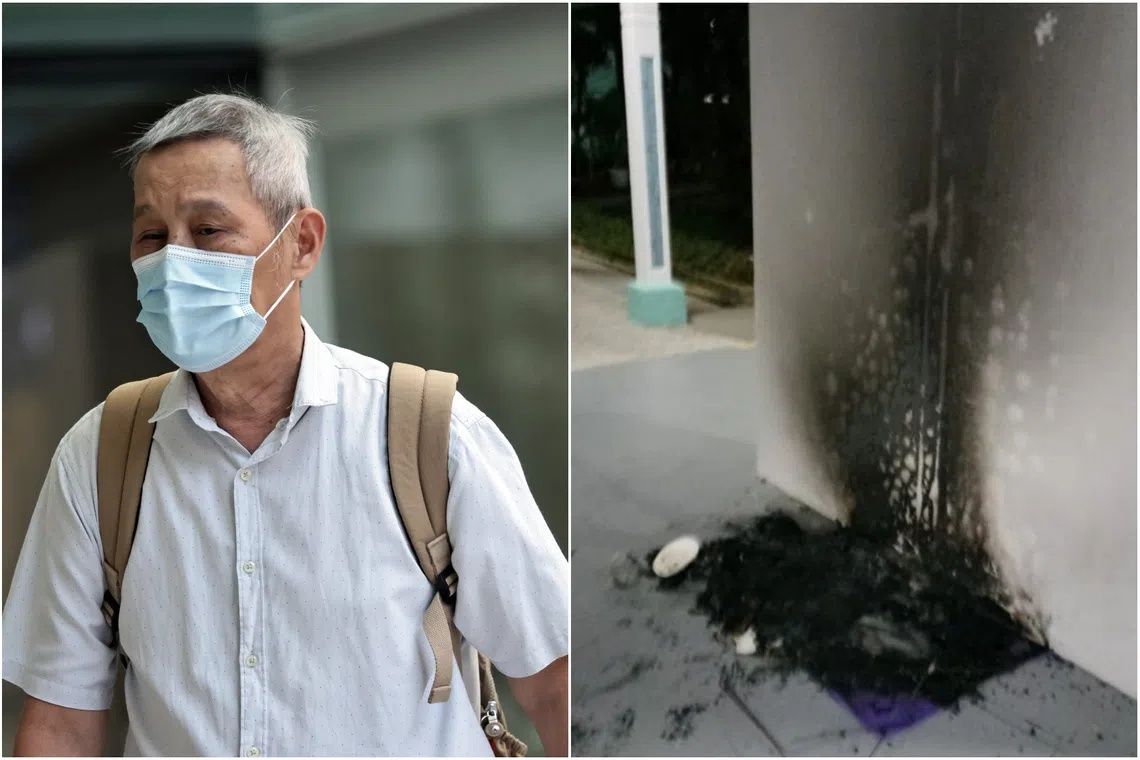
A Singapore court has handed down a three-month jail sentence to a retiree who took matters into his own hands after growing increasingly frustrated with community cat shelters installed near his residential block. Koh Teng Boo, 68, pleaded guilty to committing mischief by fire after multiple incidents at the Bukit Batok void deck in late 2025, culminating in his arrest following the second arson attack. The cases reveal the complexities of neighbourly disputes in Singapore's high-density housing environment, where communal spaces often become flashpoints for conflicting lifestyle choices and concerns.
Koh resided at Bukit Batok East Avenue 4 when cardboard structures designed to shelter stray cats first appeared around a pavilion and void deck near his block in September 2025. The shelters came equipped with supplies of food and water to sustain the resident feline population, part of a broader community effort to manage and care for Singapore's urban cat populations. According to the Deputy Public Prosecutor Stephen Yeo, Koh's opposition stemmed from practical concerns rather than outright hostility toward animals themselves—he worried that the cat houses would attract unwanted bird visitations and create pest problems in the residential area. Beyond hygiene considerations, Koh also observed that residents were disposing of litter directly into the cat shelters, compounding his frustrations with the initiative.
Seeking a formal resolution through proper channels, Koh escalated his concerns to his Member of Parliament, hoping that elected representatives might intervene and address what he perceived as a problematic practice. When no visible action materialised despite his initial appeal, Koh's patience gave way. In October 2025, he removed three of the cat houses and deposited them into an incense burner bin before setting them alight, destroying the structures and causing damage to the surrounding area. The incident might have served as a warning to others, but instead, more shelters were erected around his block within days—a development that only deepened Koh's sense of being ignored and powerless in his own residential community.
Frustrated afresh by what he perceived as a disregard for his legitimate concerns, Koh made a second attempt to resolve the situation through official channels. On November 17, he visited his MP again, reiterating his grievances and emphasising that his objections were directed at the practice itself rather than at feline welfare. He stressed concerns about hygiene standards and the continuation of littering behaviour by other residents. Yet again, the outcome proved unsatisfying from his perspective. Two days later, at approximately 1.30 am on November 19, while making his way home after consuming alcohol, Koh encountered another cat shelter. Acting on impulse, he ignited it using his lighter and departed the scene without ensuring the fire was properly extinguished. Authorities could not determine the exact circumstances under which the blaze was eventually extinguished.
Undeterred despite the escalation, Koh repeated the offence the very next day, setting fire to yet another cat house on November 20. This time, two bystanders discovered the burning structure and managed to extinguish it before it could spread further or cause additional property damage. Koh's arrest followed shortly thereafter. The cumulative destruction resulted in the Jurong-Clementi-Bukit Batok Town Council incurring repair costs of S$913 to restore damage to flooring and walls in the vicinity of the burnt shelters. Significantly, Koh subsequently made complete restitution for these expenses, demonstrating a degree of accountability for the material harm caused.
The sentencing outcome reflects the judiciary's assessment of the gravity of his actions within Singapore's legal framework. Those convicted of committing mischief by fire with intent to damage property face potential sentences of up to seven years' imprisonment and financial penalties. The three-month custodial sentence imposed on Koh represents a measured response that acknowledges both the seriousness of deliberately setting fires in residential settings and the contextual circumstances surrounding his repeated complaints through formal channels. The case underscores how unresolved community concerns, compounded by frustration with institutional responsiveness, can drive individuals toward destructive and illegal conduct.
For Malaysian observers of Singapore's regulatory environment, this incident offers instructive lessons about the management of competing rights and interests within dense urban neighbourhoods. Singapore's authorities must balance animal welfare initiatives and community activism with the legitimate concerns of residents who feel their living conditions are being compromised. The case also highlights the importance of responsive governance—when constituents raise issues through proper mechanisms, prolonged silence or inaction can fuel resentment and desperate measures. Similar tensions between animal advocates and residents sceptical of strays exist throughout Southeast Asian cities, making the outcome of this case potentially relevant to policymakers and community leaders across the region.
The incident also raises practical questions about how local councils and authorities should communicate with residents when implementing community-focused programmes in shared spaces. Had Koh's initial concerns been formally acknowledged, investigated, and addressed—whether through modifications to the cat shelter system, enhanced cleanliness protocols, or structured management arrangements—the escalating cycle of confrontation might have been prevented entirely. The S$913 in damage repair costs pale in comparison to the costs of prosecution, incarceration, and the broader community disruption created by repeated incidents. Effective urban governance requires anticipating such conflicts and establishing robust feedback mechanisms before frustration metastasises into illegal action.

