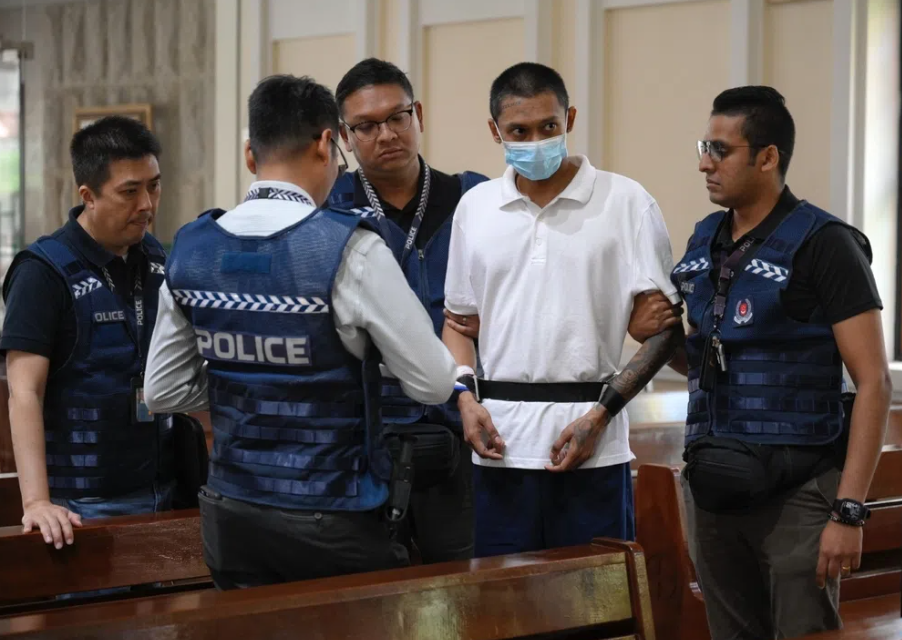
A 38-year-old man in Singapore has been handed a jail sentence of four years and three months, along with nine strokes of the cane, for his unprovoked knife attack on a Catholic priest during a crowded evening mass at St Joseph's Church. Basnayake Keith Spencer appeared in court via video link on Friday, August 21, to receive his sentence following a guilty plea to charges of voluntarily causing grievous hurt with a dangerous weapon and illegal weapon possession. The case has drawn significant attention across Southeast Asia, particularly among religious communities concerned about violence within places of worship.
The incident unfolded on November 9, 2024, when Basnayake attended the children's evening mass at the church, which attracted approximately 900 worshippers that evening. Court documents reveal that he arrived alone shortly before 5:30 p.m. and took multiple pills throughout the service to manage his state of mind—consuming two pills initially to maintain focus, then three more as he prepared himself for what he recognised was a children's mass. His behaviour during this pre-attack period suggests underlying mental disturbance, though the exact motivation for his actions remains unclear from available details.
During the communion segment of the service, when two priests stood before the congregation to administer the sacrament, Basnayake abandoned his position in one queue to position himself behind that of Reverend Christopher Lee. When his turn arrived, he produced a foldable knife measuring 23 centimetres in total length with a 10-centimetre blade and thrust it directly into the priest's mouth. The sudden violence sent shockwaves through the packed congregation, with Father Lee immediately sustaining profuse bleeding from the wound to the interior of his mouth.
The priest's immediate response demonstrated both presence of mind and concern for other congregants. Rather than seeking safety, Father Lee grabbed the rear pocket of Basnayake's jeans to immobilise him and prevent further attacks on other worshippers. This intervention proved crucial, as members of the congregation—including an off-duty police officer present at the service—quickly subdued Basnayake and held him until law enforcement arrived at the scene. His arrest came swiftly, though the psychological trauma inflicted on the congregation would prove longer-lasting.
Father Lee sustained severe injuries from the attack, requiring immediate hospitalisation. The stab wound produced an 8-centimetre laceration across his tongue, with additional cuts measuring 3 centimetres on his upper left lip and 4 centimetres at the corner of his mouth. He remained hospitalised for six days, discharged on November 15, 2024, but required extensive rehabilitation thereafter. Beyond the physical wounds, he needed 40 days of hospital leave and months of speech therapy to restore his ability to communicate clearly—a particularly significant consequence for someone whose profession depends on clear speech during religious services.
Investigations revealed that Basnayake carried multiple weapons beyond the knife used in the attack. Police recovered a 14.5-centimetre penknife, a flip knife, and a fishing gaff—a pole equipped with a sharp hook—from his possession, indicating a deliberate pattern of weapon carrying that suggested premeditation or at least chronic preparation for violence. This discovery reinforced prosecution arguments regarding his dangerousness and elevated the perceived threat he posed to the community.
District Judge Shaiffudin Saruwan emphasised the gravity of the offence in his sentencing remarks, noting that the assault was entirely unprovoked and inflicted severe physical trauma on a defenceless man. The judge highlighted the particularly egregious nature of the timing, observing that Basnayake struck while Father Lee was actively administering a sacred ritual at the moment of communion. This timing created what the court recognised as a genuine risk of mass panic and potential for additional injuries had congregants reacted with fear or aggression toward Basnayake.
The prosecution's case had argued for a sentence between four years and three months and four years and 11 months of imprisonment, along with nine strokes of the cane. Prosecutors acknowledged that Basnayake was intoxicated and in a drug-induced psychotic state at the time of the attack, yet contended he retained sufficient awareness of his actions to bear full responsibility for the violence he perpetrated. This distinction—between mental illness and criminal accountability—represents an ongoing tension in sentencing decisions across Southeast Asia, where courts must balance compassion for defendants with protection of vulnerable victims and the broader community.
Barclayake's defence counsel from the Public Defender's Office, Ashwin Ganapathy, had sought a more lenient sentence of less than four years imprisonment alongside nine strokes of the cane. The defence characterised his client as remorseful and ashamed, requesting that the court exercise proportionality in punishment. However, the judge's decision to accept the prosecution's recommendation suggested that remorse, while noted, could not substantially mitigate an attack characterised by randomness, violence, and the targeting of a defenceless religious figure in a place of worship.
Basnayake's criminal history demonstrates a troubling pattern of weapon-based violence. In 2019, he was convicted of voluntarily causing hurt with a dangerous weapon and sentenced to one year imprisonment after stabbing his then-girlfriend in the buttocks with a kitchen knife while under the influence of methamphetamine. The interval between this 2019 conviction and the 2024 church attack—coupled with what appears to be ongoing substance abuse—underscores the challenges that criminal justice systems across the region face in preventing repeat violent offences among offenders with entrenched patterns of drug use and weapon-based aggression.
During his remand period exceeding one year and nine months before sentencing, Basnayake was denied bail in December 2024 after the prosecution successfully argued that he presented a highly dangerous person with elevated risk of reoffending. This determination reflected the seriousness with which Singapore's courts treat violent crimes within religious spaces and the need to protect public safety pending adjudication. The extended remand period, while ensuring community protection, also represents significant time already served that would be credited against his four-year-three-month sentence.
The incident raises broader concerns across Southeast Asia regarding violence in religious spaces, where congregants traditionally expect sanctuary and safety. For Catholic communities in Singapore and throughout the region, the attack on Father Lee during the administration of the Eucharist—one of the most sacred moments in Catholic worship—represented a violation of space considered inviolable. The case underscores the vulnerability of religious workers and worshippers to unpredictable violence, even within what should be secure environments.
Moving forward, the case highlights the intersection of mental health, substance abuse, and criminal violence in urban Southeast Asia. Basnayake's apparent drug-induced psychosis and his history of weapon-carrying raise questions about intervention and treatment opportunities that might have prevented his assault on Father Lee. For Malaysian readers and Southeast Asian observers, the sentencing represents both a formal accountability process and a broader commentary on societal challenges in addressing the root causes of violent crime within densely populated metropolitan regions.

