Singapore's Parliament has endorsed an amended motion addressing the country's economic direction, marking a significant parliamentary debate on how the island nation should balance growth with worker welfare and local enterprise development. The discussion reflects broader regional concerns about the sustainability of economic models built primarily on attracting foreign multinational corporations, and raises questions relevant to Malaysia and other Southeast Asian economies navigating similar pressures.
Minister for Trade and Industry Tan See Leng articulated the government's position that Singapore's economic strategy has never pursued growth as an end in itself, but rather as a vehicle for improving living standards across society. He acknowledged that the government's responsibility extends beyond generating economic activity to ensuring the existing model continues functioning effectively as global conditions shift dramatically. This framing suggests recognition that the post-pandemic, geopolitically fractured world may require adjustments to long-standing approaches that have served Singapore well historically.
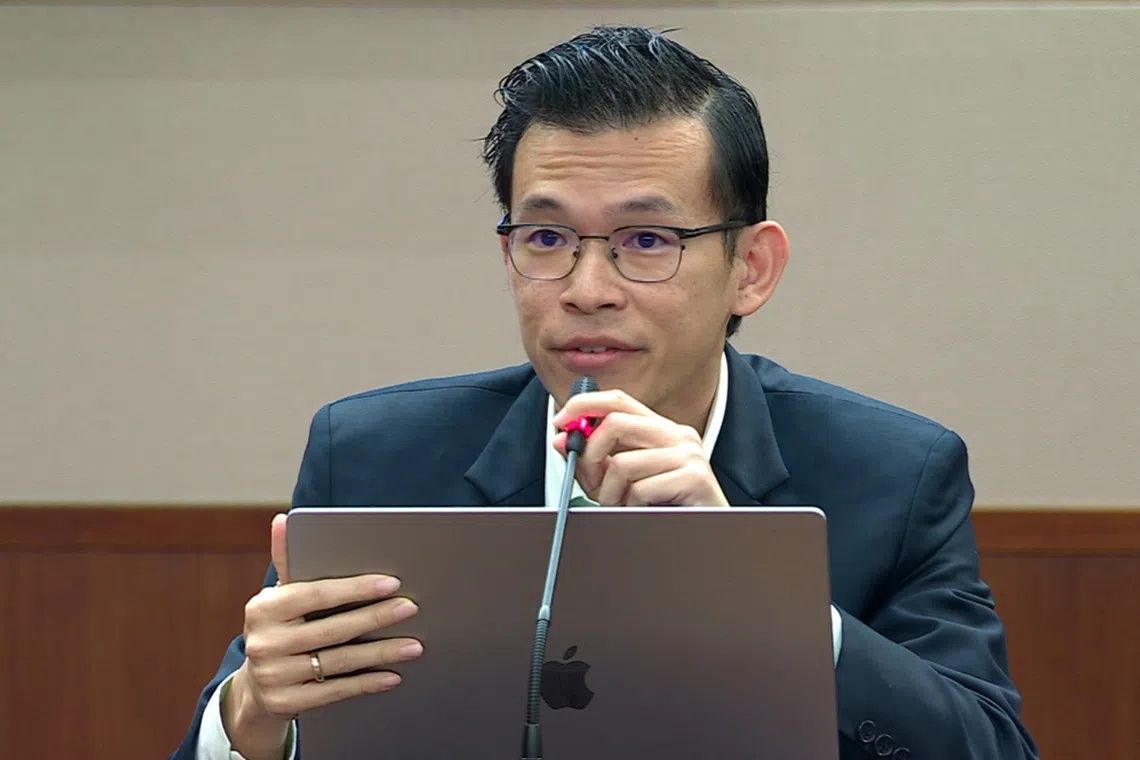
The Workers' Party, through MP Kenneth Tiong, challenged the foundations of Singapore's economic model, proposing that the country should shift toward building fair distribution mechanisms into growth trajectories rather than relying on post-growth redistribution through vouchers and rebates. Tiong's argument presents a fundamental philosophical difference: whether inequality should be addressed proactively through structural economic design or reactively through social transfers. For Malaysian policymakers observing this debate, the tension highlights ongoing questions about whether redistributive mechanisms adequately address income disparities or whether economic restructuring toward more balanced local participation is necessary.
Tiong articulated a competing vision centred on dynamic local enterprises, robust domestic demand, and outbound investment by Singaporean companies and capital. This perspective directly challenges the prevailing development model that has historically prioritized foreign direct investment and the presence of multinational corporations. His contention that this traditional approach now inadequately serves younger workers and has constrained local business development echoes concerns heard throughout the region, where developing nations question whether perpetual reliance on multinational investment delivers sufficient skilled employment and entrepreneurial opportunity for domestic populations.
The Workers' Party ultimately rejected the final amended motion and voted against it unanimously with all 12 MPs dissenting, indicating that the four amendments proposed by PAP MP Edward Chia did not address their core concerns about structural economic reform. This unanimous opposition suggests genuine substantive disagreement rather than political theatre, particularly given that the first amendment alone prompted rejection of the entire proposal. The specificity of their objection provides insight into the nature of proposed changes and which amendments the Workers' Party found most objectionable.
Parliament devoted nearly nine hours to debating mechanisms for nurturing small and medium enterprises, employment creation, and innovation promotion in an increasingly uncertain global environment. This extended discussion reflects the seriousness with which Singapore treats economic policy formulation, with 23 speakers contributing diverse perspectives before the minister's closing remarks. For Southeast Asian observers, the breadth of parliamentary engagement with economic fundamentals contrasts with legislative processes in some neighbouring jurisdictions and underscores Singapore's institutional approach to policy development.
Tan acknowledged substantial common ground across political divisions regarding employment quality, income sufficiency, and the development of globally competitive Singaporean enterprises. This recognition of shared objectives, despite disagreement on mechanisms, suggests that parliamentary divisions reflected methodology rather than ultimate goals. The minister's observation about convergence among 23 speakers indicates that even significant policy disagreements in Singapore's political context occur within relatively narrow bounds of shared national development objectives.
The minister articulated a circumscribed role for government, emphasizing that while authorities can establish conditions and provide support, entrepreneurs and workers ultimately bear responsibility for execution. Tan drew on his personal experience founding Healthway Medical Group, illustrating how multinational corporations can serve as reference customers and capability benchmarks rather than competitive threats. This narrative, however, sidesteps the Workers' Party's concern that over-reliance on MNCs might systematically disadvantage local entrepreneurs lacking such connections or lacking the scale to meet multinational standards initially.
Government policy interventions outlined by Tan address five identified capability gaps: aspiration to first venture, research to innovation, product to first customer, early traction to sustained scale, and domestic to global scale. Programmes such as Startup SG Founder, the Partnerships for Capability Transformation scheme, and Startup SG Equity represent targeted attempts to address bottlenecks in the entrepreneur pipeline. These initiatives suggest government recognition that market mechanisms alone may inadequately nurture local enterprise development, though they remain supplementary to rather than structural transformations of Singapore's economic orientation.
The Scale-Up programme's track record—with 80 companies generating S$2.5 billion in additional revenue over three years, including S$1 billion from overseas expansion—provides quantitative support for the government's approach. However, this data alone cannot resolve questions about whether such programmes reach sufficient breadth of entrepreneurs or whether they truly alter the fundamental structure of an economy shaped decades earlier around foreign investment attraction and multinational presence.
Tan's emphasis that most Singaporeans experience the economy through employment rather than entrepreneurship acknowledges an important demographic reality often obscured in business-focused economic discourse. This recognition aligns with the Workers' Party's underlying concern about employment quality and wage adequacy for ordinary workers, though the minister's statement does not directly address how policy should differ based on this reality.
The debate reflects regional tensions about inclusive growth, local enterprise development, and the appropriate balance between attracting foreign investment and nurturing domestic capability. For Malaysia, which similarly hosts significant multinational presence while grappling with SME competitiveness and employment quality, Singapore's parliamentary examination of these questions offers instructive parallels. The Workers' Party's insistence on structural reform rather than incremental adjustment challenges assumptions long accepted across Southeast Asia, potentially influencing regional policy conversations about whether existing economic models adequately serve contemporary populations and future prosperity.

