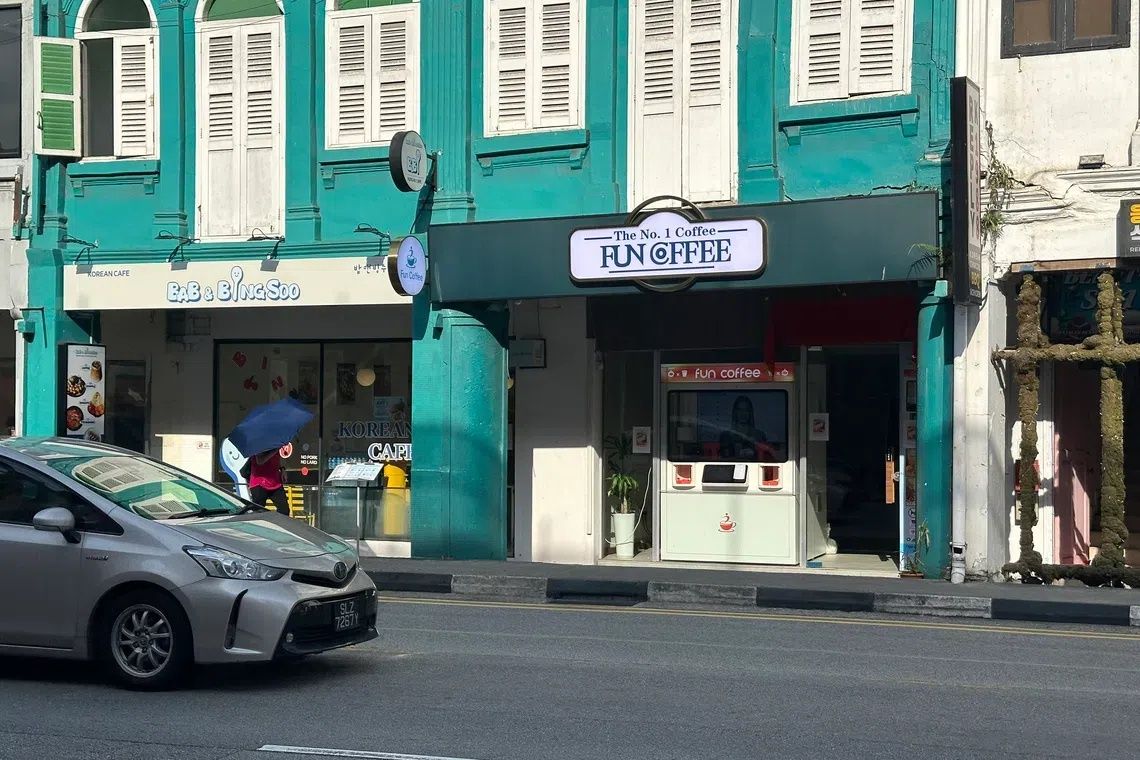
Law enforcement in Singapore has moved against a suspected investment fraud that has ensnared hundreds of victims across multiple Asian jurisdictions. On August 6, police detained a 49-year-old woman who played a central role in promoting and recruiting participants for the Fun Coffee platform, a scheme that combines cryptocurrency transactions with classic multi-level marketing mechanics to extract money from increasingly desperate investors across the region.
The mechanics of the scheme reveal a sophisticated deployment of modern financial technology married to age-old fraudulent structures. Prospective participants downloaded a mobile application and transferred Tether, a cryptocurrency stablecoin theoretically anchored to the value of the US dollar, into wallet addresses accessible through the app. The promise was seductive: remarkably high investment returns coupled with lucrative commissions for bringing new recruits into the system. This dual incentive structure—combining phantom profits from the fund itself with earnings from expansion—represents textbook pyramid scheme design, which explains the specific legal charge against the arrested woman under Singapore's Multi-Level Marketing and Pyramid Selling (Prohibition) Act.
The real-world consequences have been substantial and painful. Singapore participants discovered they could not retrieve their funds through the Fun Coffee application once they attempted withdrawals. One investor in Singapore reported losing approximately $400,000 with no prospect of recovery. This inability to access capital represents the critical moment when pyramid schemes typically collapse, as the ever-expanding pool of new recruits required to sustain payments to earlier investors becomes impossible to maintain, and the scheme operator simply prevents redemptions. Authorities in Hong Kong and Macau have similarly arrested eight individuals linked to the operation, with victims in those territories suffering losses totalling nearly HK$100 million, equivalent to approximately S$16.3 million.
The regulatory environment in Singapore means the arrest carries serious legal jeopardy for the accused. Conviction under the Multi-Level Marketing and Pyramid Selling (Prohibition) Act carries potential imprisonment up to five years, financial penalties reaching S$200,000, or both sanctions combined. This robust legal framework reflects Singapore's zero-tolerance approach to schemes that victimise retail investors and destabilise consumer confidence in financial products. The prosecution will likely demonstrate that the woman's active recruitment of new participants, coupled with promotion of unrealistic return promises, constitutes the core predicate acts of operating an illegal pyramid structure.
The physical infrastructure of Fun Coffee in Singapore provides revealing insight into how the scheme attempted to establish legitimacy. Registered at 202 Jalan Besar, the location housed a coffee vending machine at its entrance, complete with handwritten instructions directing customers to scan QR codes for payment. This veneer of operational normalcy—a functioning coffee business providing tangible products—served to obscure the actual revenue model, which derived entirely from new investor deposits rather than genuine commercial activity. The vending machine likely functioned as both cover story and additional transaction vector, allowing operators to claim legitimate business operations while processing cryptocurrency transfers.
Fun Coffee's stated positioning as a "lifestyle brand combining coffee, wellness and digital innovation into a community experience" exemplifies contemporary fraud marketing. By blending aspirational wellness narratives with technological language and the implicit credibility of a consumer product, the scheme created psychological distance between investors' perceptions of legitimate corporate participation and the mathematical reality of unsustainable ponzi mechanics. The company claims headquarters in Phu Quoc, Vietnam, and asserts assets exceeding US$1 billion with a team exceeding 5,000 members—figures that exist primarily in marketing materials rather than audited financial records.
The timing of Fun Coffee's Singapore entry sometime in 2025 suggests deliberate expansion into financial markets with both developed regulatory capacity and substantial retail investor populations willing to engage with cryptocurrency-based investment products. Singapore's position as a regional financial hub and cryptocurrency-friendly jurisdiction paradoxically makes it attractive to operators running schemes that exploit investor sophistication bias. Operators banking on the assumption that participation in a venture involving blockchain technology and cryptocurrency transfers confers some protective quality or advanced financial nature, when in fact the underlying economic model remains fundamentally fraudulent.
Singapore police warnings to the public directly address the operational tactics that enable such schemes to function. Authorities specifically flagged private PayNow QR codes, personal mobile numbers, and overseas account transfer requests as red flags indicating fraudulent operations. These payment mechanisms deliberately circumvent institutional banking infrastructure and regulatory oversight, allowing operators to maintain operational secrecy and complicate fund recovery. The warning implicitly acknowledges that victims receiving direct communication from individuals claiming legitimate business representation might be persuaded to make additional transfers, escalating losses in hopes of recovering initial investments—a common psychological tactic in fraud operations.
For Malaysian readers, the Fun Coffee case carries direct relevance as the scheme's cross-border operations and cryptocurrency facilitation mean it could plausibly target Malaysian investors with similar recruitment tactics and return promises. The case demonstrates how pyramid schemes increasingly exploit technological interfaces, particularly mobile applications and cryptocurrency systems, to obscure their fraudulent character from ordinary retail investors. The substantial losses in Hong Kong and Singapore, combined with the operational sophistication displayed in establishing physical commercial premises as cover, indicate an organised criminal operation with material resources and strategic reach across the region.

