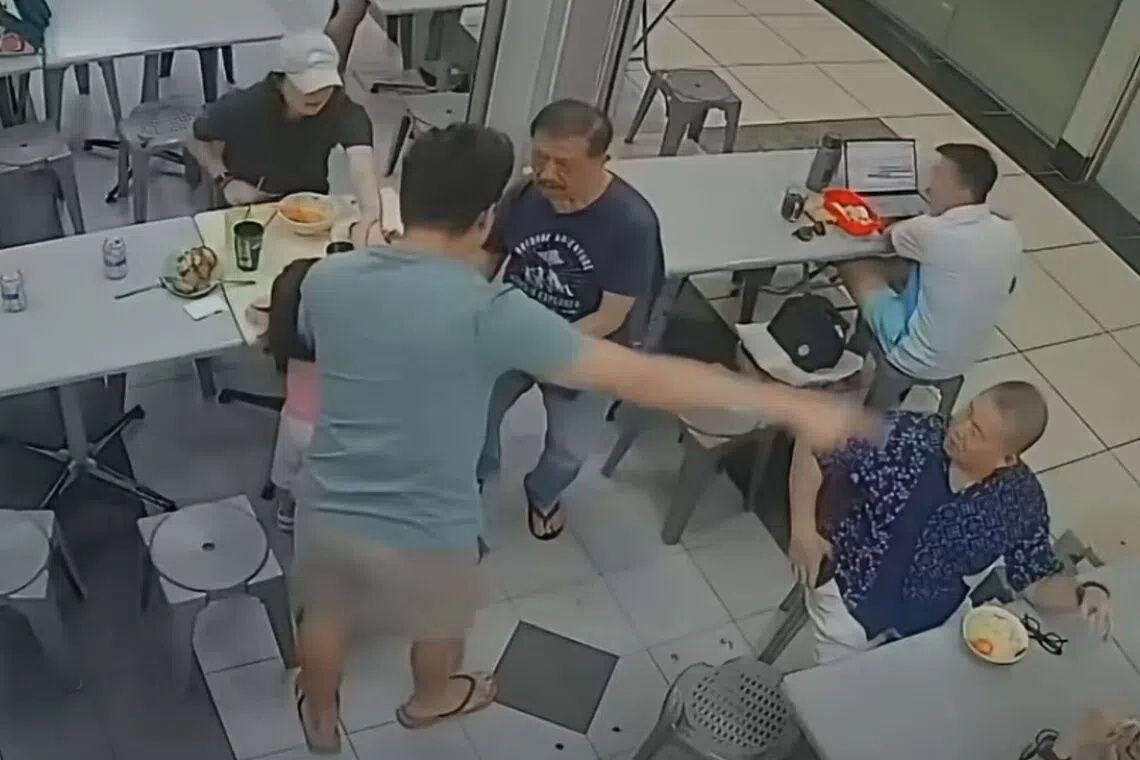
Singapore's police force has launched an investigation following an altercation at an East Coast coffee shop where an elderly man was allegedly knocked to the ground, an incident that has sparked broader conversations about consent, cultural norms, and proportionate responses in public spaces. The police confirmed on Sunday that a report was filed and inquiries remain active, following a Facebook post made on August 15 that detailed the encounter and appealed for the identity of the man involved.
The incident centres on a seemingly innocent gesture that escalated into physical confrontation. The elderly man, described as being in his 70s and experiencing mobility difficulties, was at the coffee shop where he assists at a stall. Security camera footage shows him moving through the establishment by holding onto tables for balance. As he passed a table where a young girl was seated, he reached out and patted her on the head—a gesture common in some Asian cultures as a sign of affection or friendliness toward children, though increasingly questioned in modern contexts regarding personal boundaries.
The response to this action was immediate and forceful. A woman seated at the same table as the girl attempted to deflect the elderly man's hand, signalling her disapproval of the contact. A man who had been at the table then left and quickly returned, verbally confronting the elderly man before physically pushing him to the ground. The severity of this response has become the focal point of public discussion, with many questioning whether the force used was proportionate to the initial action.
The elderly man's son, who goes by the Facebook account name Bei-ing Wanton Noodle, posted the security footage and narrative of events on August 15 at 7:14 pm, seeking identification of the man who pushed his father. The post highlighted his father's vulnerability—his advanced age, mobility challenges, and reliance on the support of tables and furniture to navigate the coffee shop environment. This context, the son argued, was relevant to assessing the situation, as the elderly man's physical frailty made him particularly susceptible to serious injury from being forcefully knocked down.
Following the fall, the son reported that his father suffered severe back pain, a particularly concerning injury for someone already experiencing age-related physical challenges. The incident raises significant questions about the vulnerability of elderly persons in public spaces and whether adequate care is taken to avoid unnecessary harm when responding to perceived boundary violations, especially when dealing with individuals who may be cognitively declining or operating under different cultural norms than younger generations.
Interestingly, the man who pushed the elderly person later approached to apologise and offered him a drink, suggesting some recognition of having overreacted or gone too far. This gesture, while appreciated, came after the physical damage had been inflicted. The son's subsequent Facebook post on August 16 at 9:55 am expressed gratitude to members of the online community who expressed concern and provided information, though he noted that he remained uncertain about the assailant's full identity despite these efforts.
The incident reflects broader tensions in multicultural Singapore regarding appropriate behaviour in public spaces, particularly concerning generational and cultural differences in how physical contact is interpreted. Older residents, particularly those from backgrounds where gentle affection toward children was standard and socially acceptable, may not immediately recognise that contemporary norms in urban settings increasingly require explicit consent before touching someone, especially a child who is not a family member.
For Malaysian readers, the incident carries particular relevance given the shared cultural heritage and similar coffee shop culture prevalent throughout Southeast Asia. Coffee shops remain central gathering spaces in Malaysian communities, and intergenerational interactions in these informal settings are common. The incident highlights how rapidly social norms are shifting across the region and how misunderstandings arising from generational or cultural differences can escalate into serious confrontations, sometimes resulting in physical harm to more vulnerable members of society.
The police investigation will likely examine whether the force used constituted an appropriate response to the situation, or whether it crossed into assault territory. The security camera footage, which clearly documents the sequence of events, will be crucial in determining the legal framework applicable to the case. Questions about duty of care toward elderly patrons in commercial establishments may also emerge as the investigation progresses.
This incident serves as a reminder that public spaces require careful navigation by all parties involved. While protecting personal boundaries, particularly for children, remains important, the responsibility also falls on community members to assess situations proportionately and to consider the vulnerability and intent of others before resorting to physical force. For elderly individuals, the incident underscores the importance of understanding evolving social norms and how gestures once considered harmless may now be perceived as violations requiring intervention.
As Singapore's police continue their investigation, the case will likely influence broader conversations about community responsibility, appropriate responses to boundary violations, and the protection of vulnerable populations in public spaces. The outcome may set precedents for how similar situations are handled across Southeast Asia, where rapid social change is often outpacing generational understanding.

