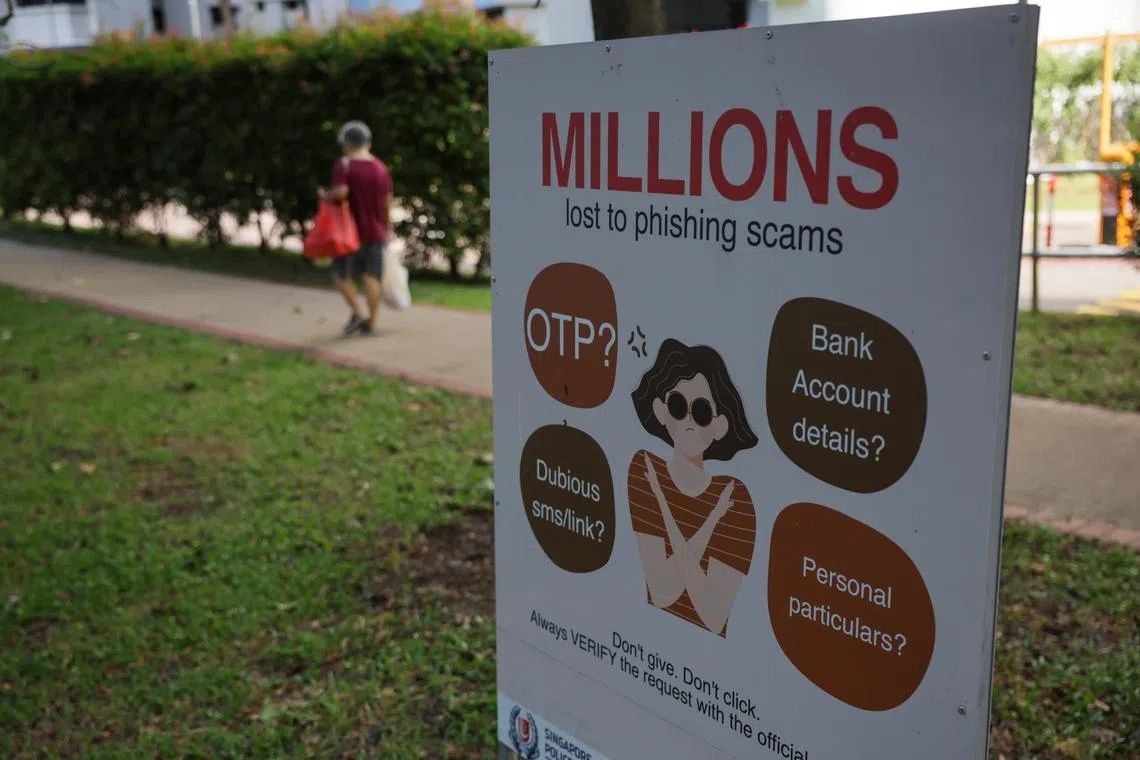
Singapore's police force has widened its net significantly in tackling organised cybercrime, with authorities investigating 230 suspects ranging from a minor to a septuagenarian following an intensive two-week enforcement drive completed on July 1. The coordinated operation, which ran from June 18 through the first of July, has uncovered involvement across more than 713 separate scam incidents, demonstrating the expansive reach of organised fraud networks operating across the island nation. The sheer scale of the investigation underscores the persistent challenge that digital scams pose to consumer confidence and financial security throughout Singapore and the broader Southeast Asian region.
The suspects under investigation comprise 159 men and 71 women, with authorities indicating they occupied various roles within scam ecosystems. Some functioned as primary orchestrators and perpetrators of fraud schemes, whilst others served as money mules—individuals who facilitate the movement and conversion of illicitly obtained funds through personal bank accounts and mobile services. This division of labour within scam operations reflects the increasingly sophisticated and compartmentalised nature of contemporary cybercriminal enterprises, with each participant insulated from direct knowledge of the full operation's scope. The Commercial Affairs Department coordinated the investigation with Singapore's seven police land divisions, indicating a structured, island-wide approach to disrupting these criminal networks.
The sophistication of the scam varieties apprehended reflects evolving criminal tactics that exploit technological advancement and human vulnerability. Perpetrators deployed e-commerce deception, fabricating online retail scenarios to harvest payments. Friend impersonation scams leveraged compromised social media accounts or spoofed communications to manipulate victims into transferring money to fraudsters posing as acquaintances. Employment-related scams dangled lucrative job opportunities before financially vulnerable individuals, whilst government impersonation schemes exploited public trust in official institutions. Investment scams promised unrealistic returns to entice capital from aspiring investors, and rental fraud targeted housing-stressed populations seeking affordable accommodation. This diversified approach enables scammers to cast wide nets across demographically varied victim populations, maximising their extraction of vulnerable cohorts.
The legal consequences facing convicted perpetrators reflect Singapore's hardline stance toward organised fraud. Those found guilty of cheating face imprisonment up to ten years alongside monetary penalties, whilst money laundering convictions carry equivalent custodial terms plus fines reaching S$500,000. Unlicensed payment service provision incurs up to three years imprisonment and S$125,000 in fines. More distinctively, Singapore law mandates corporal punishment for serious scam participation: primary perpetrators and syndicate members face six to twenty-four strokes of the cane, whilst money mules and credential providers receive up to twelve strokes. Additionally, convicted individuals may face restrictions on banking services and mobile subscriptions, preventing them from facilitating future criminality through these essential financial channels.
The broader scam landscape in Singapore reveals a mixed picture of enforcement effectiveness and persistent vulnerability. Police statistics released in February 2026 indicated that reported scam cases decreased from over fifty thousand in 2024 to 37,308 incidents during 2025—a twenty-five percent reduction suggesting that awareness campaigns and enforcement operations are gaining traction. Financial losses similarly declined from S$1.1 billion to S$913.1 million, representing an approximate seventeen percent decrease in aggregate victim impact. Nevertheless, the continued loss of nearly a billion dollars annually demonstrates that scams remain a significant drain on consumer wealth and a persistent criminal enterprise despite increased official attention.
E-commerce fraud emerged as the most prevalent scam category in 2025, accounting for 6,703 reported cases with aggregate losses of S$16.7 million. This prevalence reflects the exponential growth of online shopping throughout Southeast Asia, where digital platforms have become essential to daily commerce. Criminals systematically exploit the anonymity and speed of online transactions, establishing fraudulent storefronts or intercepting legitimate commercial communication to redirect payments to criminal accounts. The relatively modest loss figure per e-commerce case compared to other categories suggests that whilst these scams affect numerous individuals, orchestrated investment or rental fraud schemes often yield substantially higher per-victim extraction.
For Malaysian and Southeast Asian observers, Singapore's experience carries important implications for regional cybercrime management. As financial systems across the Association of Southeast Asian Nations become increasingly integrated, particularly through initiatives like cross-border payment infrastructure development, scammer mobility escalates. Singapore's enforcement approach—combining coordinated surveillance, substantial criminal penalties, and financial restrictions on convicted offenders—represents a model that neighbouring jurisdictions including Malaysia examine when calibrating their own fraud-fighting strategies. The prevalence of money mule recruitment suggests that organised crime networks actively recruit participants across borders, with Singapore serving as a financial hub through which illicit funds flow and are laundered.
The involvement of a sixteen-year-old among the suspects raises concerning questions about the recruitment and radicalisation of minors into organised cybercrime. Young individuals with technological sophistication but limited financial resources often become prime targets for scam syndicate recruiters offering seemingly easy money. This age inclusion demonstrates that law enforcement agencies must increasingly address youth vulnerability to criminal recruitment, working alongside educational institutions and parents to build digital literacy and ethical awareness. The investigation's scale suggests that scam syndicates operate with surprising institutional depth, employing dozens of perpetrators and mules in coordinated campaigns rather than operating as isolated opportunistic fraudsters.
Singapore's reporting mechanisms, including the ScamShield helpline and online reporting portal, provide avenues for public participation in combating fraud networks. The police statement's emphasis on confidentiality represents an attempt to encourage victim and witness reporting without fear of exposure. However, comparative analysis across Southeast Asian jurisdictions reveals significant variation in public trust toward law enforcement reporting, with victims in some countries fearing retaliation or legal complications for having engaged with fraudsters. Singapore's commitment to strict information confidentiality attempts to overcome these barriers, though the broader regional context suggests that cultural factors and institutional reputation significantly influence reporting propensity.
The operation's success in identifying 230 suspects simultaneously demonstrates technological advances in financial monitoring and digital forensics that enable rapid identification of scam networks. Bank transaction analysis, mobile phone metadata investigation, and social media tracking allow authorities to map connections between perpetrators and accomplices, accelerating investigation timelines compared to traditional police methods. Nevertheless, the persistence of scams despite these capabilities indicates that scammers continuously develop counter-measures, including cryptocurrency utilisation, layered money movement through multiple jurisdictions, and increasingly sophisticated social engineering. The enforcement-evasion cycle perpetuates, with criminal innovation often outpacing regulatory response despite substantial government investment in cybercrime investigation.
Moving forward, Singapore's focus on restricting banking and mobile services for convicted money mules represents an innovative approach to disrupting scam infrastructure. By preventing future access to the payment systems that these individuals previously exploited, authorities aim to increase the operational friction that scam syndicates experience when recruiting accomplices. This strategy targets the enablement side of crime rather than focusing exclusively on primary perpetrators. For Malaysian policymakers and regional law enforcement agencies, this approach offers a model for thinking beyond traditional incapacitation through imprisonment toward preventive measures that restrict criminals' instrumental access to essential services that facilitate their operations.

