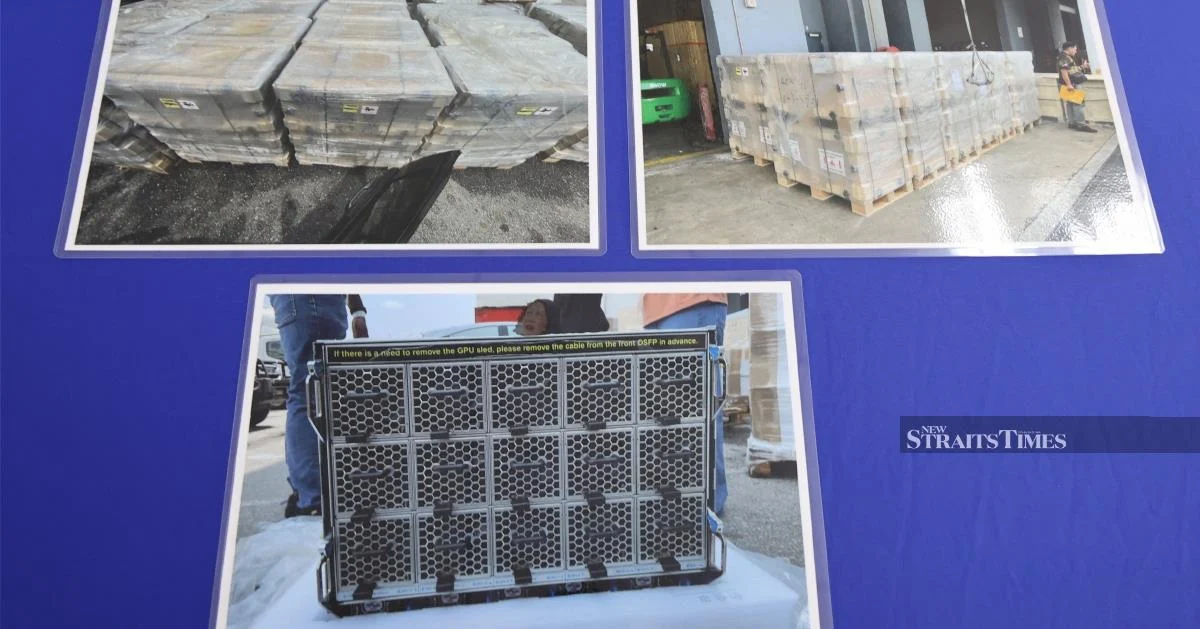
Singapore's law enforcement authorities announced on Wednesday that they had taken control of a high-value residential property as part of a widening fraud investigation centred on the suspected unauthorised movement of advanced artificial intelligence semiconductors across international borders in violation of stringent United States export restrictions.
The seized bungalow, valued at more than US$40 million, represents a significant asset recovery in what appears to be a complex case involving potential breaches of American technology export controls. The property seizure underscores the serious nature of the allegations and suggests that authorities believe proceeds from the suspected illegal transactions may have been channelled into legitimate real estate investments in Singapore's competitive luxury property market.
The investigation touches on one of the most sensitive areas in contemporary global trade relations: the export and re-export of cutting-edge semiconductors used in artificial intelligence applications. These chips are subject to increasingly restrictive controls imposed by the United States government, which has made limiting China's access to advanced computing technology a cornerstone of its strategic competition with Beijing. Any breach of these controls can trigger significant diplomatic and legal consequences for individuals and entities involved.
Singapore has positioned itself as a global financial and technology hub, but the city-state has also become increasingly vigilant about ensuring that its territory is not used to circumvent international sanctions and export control regimes. The seizure of the bungalow demonstrates that Singapore's authorities are willing to take decisive action against alleged violations of foreign export control laws, even when they involve substantial local assets held by what may be prominent individuals or connected parties.
The investigation raises broader questions about the vulnerability of global supply chains for advanced semiconductors to diversion schemes and grey-market operations. As the competition for AI chip access intensifies and American export controls tighten, forensic investigators across the Asia-Pacific region have become increasingly attuned to the methods used to circumvent these restrictions. The alleged scheme in Singapore may involve complex trade documentation, shell companies, or transshipment through intermediary jurisdictions to obscure the true origin or destination of the chips.
For Malaysia and other Southeast Asian countries, this case serves as a reminder of the risks associated with becoming unwittingly complicit in sanctions evasion networks. The region's strategic location, relatively open business environment, and established ports and logistics infrastructure can inadvertently make it attractive to those seeking to bypass export controls. Malaysian authorities will likely be monitoring this investigation closely to assess whether similar activities may be occurring within their own borders.
The seizure also highlights the extraterritorial reach of United States export control enforcement. American authorities routinely coordinate with partner nations including Singapore to investigate alleged violations of the Export Administration Regulations and other control regimes. Such cooperation has intensified as Washington seeks to prevent the leakage of advanced technologies to entities or countries that it deems pose national security risks.
Assets seized in such investigations are typically held while legal proceedings advance. If authorities establish probable cause of violations, seized property may eventually be forfeited, with proceeds potentially divided between the government agencies involved in the investigation and prosecution. However, asset forfeiture cases can be lengthy and complex, particularly when substantial values are involved and when defendants or asset claimants mount legal challenges.
The investigation also underscores the compliance challenges faced by legitimate businesses operating in Singapore's financial services, technology, and trade sectors. Companies engaged in semiconductor trading or logistics must now contend with an increasingly complex web of export control regulations emanating from multiple jurisdictions, each with its own definitions, exemptions, and enforcement priorities. The burden of ensuring compliance falls heavily on businesses themselves, and the consequences of inadvertent violations can be severe.
For investors in Singapore's property market, this case may trigger renewed scrutiny of due diligence practices surrounding the sources of large capital inflows into luxury real estate. While Singapore has relatively robust anti-money laundering and know-your-customer frameworks, the sheer volume of international capital seeking safe-haven investment in Singapore's property sector means that regulatory vigilance remains essential.
The investigation is also likely to prompt discussions within Singapore's government and regulatory agencies about the country's role in global technology trade and the balance between facilitating legitimate commerce and preventing sanctions evasion. Singapore's reputation as a trusted financial centre depends in part on its willingness to enforce international norms and cooperate with partner nations in preventing illegal technology transfers.
As investigations proceed, questions may emerge about whether the bungalow was purchased by an individual directly involved in the alleged chip transfers or acquired by a proxy on behalf of someone else. The structure and timing of the property purchase relative to the suspected illegal transactions could prove significant in determining culpability and the scope of the criminal enterprise being investigated.

