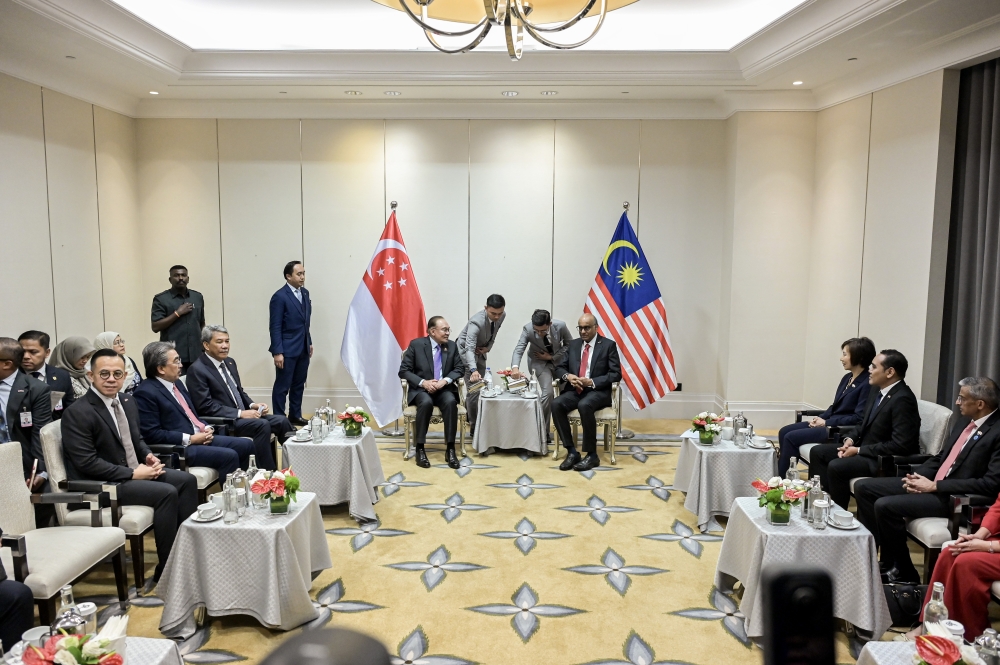
Singapore President Thalif Shahbaz and Malaysian Prime Minister Datuk Seri Anwar Ibrahim met for 40 minutes on Monday in Kuala Lumpur, demonstrating the ongoing importance both nations place on bilateral engagement at the highest levels. The courtesy call, held during the President's official state visit to Malaysia, provided an opportunity for the two leaders to discuss matters of mutual concern affecting the region and their respective countries.
During the meeting, the President and Prime Minister covered a range of topics reflective of the deep interconnections between Singapore and Malaysia. Their discussion touched on bilateral relations, which encompass trade, investment, and people-to-people connections that form the bedrock of the two nations' partnership. The 40-minute duration of their talks suggested substantive engagement rather than a merely ceremonial encounter, indicative of the substantive issues on their shared agenda.
Singapore and Malaysia share one of the region's most complex relationships, characterised by historical ties, economic integration, and occasional friction over boundary matters and resource sharing. The state visit itself underscores the diplomatic importance Malaysia places on hosting the Singapore head of state, with such visits typically reserved for leaders of strategically significant nations. This formal protocol reflects the mutual recognition of each country's importance to regional stability and prosperity.
The bilateral relationship between the two nations extends across multiple sectors. Trade between Singapore and Malaysia remains substantial, with both nations serving as important markets and investment destinations for each other. Singapore's strategic location as a global financial hub and Malaysia's growing economic influence in Southeast Asia create complementary economic interests. Both countries are members of regional organisations including the Association of Southeast Asian Nations (ASEAN), where coordinated policies often determine the bloc's effectiveness on regional matters.
Regional security and stability would likely have featured prominently in discussions between leaders responsible for maintaining peace in one of the world's busiest maritime zones. The Straits of Malacca, which separates the two nations and serves as one of the world's most critical shipping lanes, remains a shared concern regarding piracy, environmental protection, and freedom of navigation. Cooperation on maritime safety and security represents a practical area where both countries have vested interests.
The timing of this state visit carries significance given the evolving geopolitical landscape in Southeast Asia. With great power competition intensifying in the region, smaller nations like Singapore and Malaysia must carefully navigate their relationships with major powers while maintaining their own sovereignty and regional influence. High-level diplomatic engagement between neighbouring ASEAN members sends important signals about stability and cooperation within the bloc.
Singapore's President represents not just ceremonial authority but also carries substantive diplomatic weight in Singapore's governance structure. President Thalif Shahbaz's visit to Malaysia, where he would have been received with full state honours, reflects the formal diplomatic protocol extended to heads of state. Such visits typically include meetings with not only the Prime Minister but also other senior government officials, providing multiple channels for dialogue.
For Malaysia's government under PM Anwar Ibrahim, receiving a high-profile state visit demonstrates the nation's continued engagement with regional partners despite any domestic political challenges. The meeting provides an opportunity to discuss issues affecting Malaysian citizens and businesses in Singapore, as well as the approximately two million Malaysians who work or reside in the city-state. These human dimensions of the relationship often receive less attention in formal diplomatic discussions but substantially affect the lived experiences of citizens on both sides of the border.
The bilateral agenda would likely include discussions on cross-border infrastructure projects, water agreements, and other shared resource management issues. Malaysia supplies water to Singapore through long-standing agreements, while Singapore provides important services and investment to Malaysian economic zones. These practical, day-to-day aspects of the relationship require ongoing dialogue to ensure smooth operations and prevent misunderstandings.
Education and cultural exchanges also constitute important components of the Singapore-Malaysia relationship. Both nations benefit from student mobility, with thousands of Malaysian students attending schools and universities in Singapore, while Singaporean students pursue education opportunities in Malaysia. These exchanges foster understanding and create networks that strengthen societal bonds beyond government-to-government relations.
The state visit and bilateral meeting also signal to the international community that Singapore and Malaysia remain committed to constructive engagement and regional cooperation. In an era of global uncertainty, the demonstrated willingness of neighbouring countries to maintain high-level dialogue reassures investors and international partners that the region provides a stable operating environment.
Looking forward, such visits typically result in agreements or joint statements outlining shared priorities and cooperation frameworks. While the specific outcomes of this meeting have not been detailed, the meeting itself represents the kind of regular diplomatic engagement necessary for managing a complex bilateral relationship. The 40-minute duration suggests both leaders dedicated meaningful time to substantive discussion, rather than rushing through perfunctory exchanges.
Ultimately, the President's state visit and meeting with PM Anwar exemplifies the mature diplomatic relationship Singapore and Malaysia have developed despite historical complexities. Both nations have much to gain from continued cooperation on regional challenges including economic growth, security, and sustainable development, making regular high-level engagement essential to their shared future.

