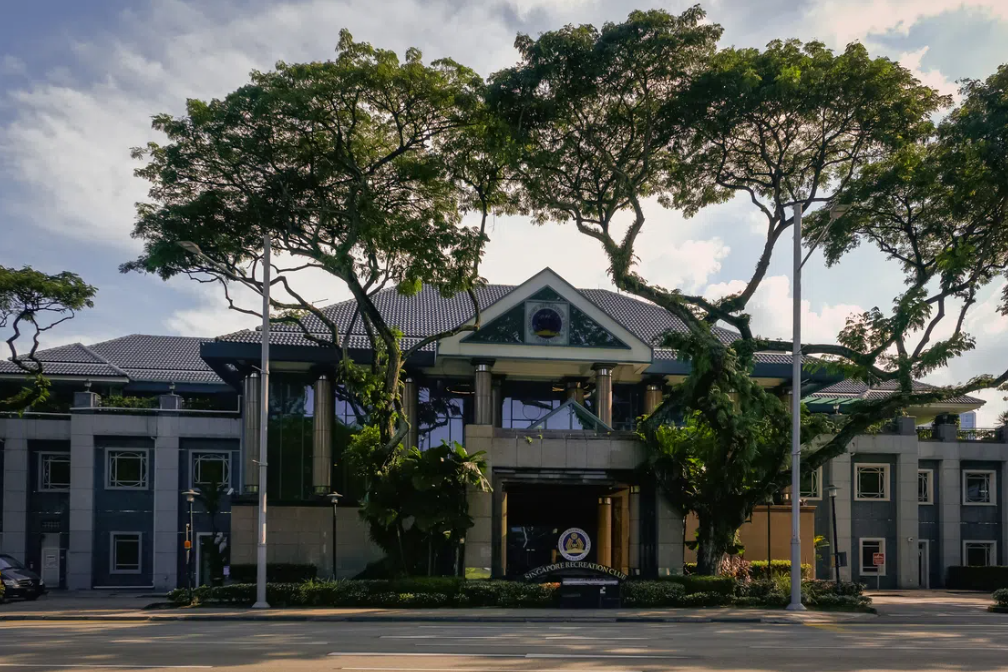
The Singapore Recreation Club (SRC) faces a legal showdown over a transformation plan that could reshape one of the island's oldest social institutions. A High Court judge has ruled there are sufficient grounds for a full trial to determine the validity of a resolution passed in October 2025 that would convert the club's billiards room into a co-working space, backing two member challengers who question the legitimacy of the voting process.
Senior Judge Chan Seng Onn's decision, released on August 26, represents a victory for Sean Kerwin Mathews and Mu Yee Shyong, billiards section members who have contested the resolution since filing suit in November 2025. The judge reversed an earlier decision by an assistant registrar who had attempted to dismiss their case entirely, finding instead that the dispute raises several genuine legal questions requiring judicial resolution at trial.
At the heart of the disagreement lies a fundamental question about what constitutes a valid majority under the club's Constitution. Mathews and Mu argue that the resolution required approval from a majority of the 559 members physically present at the October 18 extraordinary general meeting—meaning at least 280 votes in favour. Since only 151 members voted to support the resolution, the challengers maintain it failed this threshold. The club's management committee contends that the resolution passed with 54.7 per cent of valid votes cast, meeting the simple majority requirement under their interpretation of the rules.
The voting confusion stems from a complex ballot structure the management committee devised for the meeting. Members received two voting slips, each addressing different paths forward for the transformation plan. The first asked whether members approved relocating the billiards room and paying $4.9 million in land betterment charges—charges that had ballooned from an originally budgeted $1.5 million. Members who voted "yes" on this first slip were instructed that the second slip did not apply to them. The second slip presented two alternative options: either convert the billiards room into a co-working space, or integrate it within an expanded co-working facility.
The voting mathematics reveal why Judge Chan identified potential constitutional violations. Of the 514 votes cast, 151 supported the second resolution, 125 opposed it, 183 were spoilt, and 55 were blank. The management committee counted only the 151 favourable votes against the 125 opposing votes, ignoring the 55 blank ballots entirely. Mathews and Mu contend that under the Constitution's rules, those blank votes should be treated as abstentions or rejections, swinging the count to 180 against and 151 in favour—reversing the outcome.
Judge Chan identified what he termed a "peculiar case" involving conflicting voting instructions and constrained member rights. Because the voting structure prevented members from simultaneously rejecting both alternative resolutions, the judge found grounds to question whether the management committee had inadvertently violated members' fundamental voting entitlements. When voters are given conflicting instructions and denied the opportunity to reject all options presented, the legitimacy of the voting process itself comes into question. This insight reflects sophisticated jurisprudence about procedural fairness in member-based organisations.
The club's representatives argued that invalidating the resolution would serve no practical purpose and would leave the institution in stalemate. Judge Chan rejected this reasoning, noting that a fresh vote properly conducted could resolve the impasse. The judge emphasised that the claimants were not seeking to block the transformation indefinitely but merely to ensure a fair and constitutionally compliant voting process. This distinction proved pivotal in his decision to allow the trial to proceed.
Understanding the SRC's predicament requires context about its ambitious plans. In March 2024, club members initially approved a $16.6 million transformation initiative to relocate the billiards room from level 2 to basement 2 and construct a co-working space on the vacated level 2 space. However, when the land betterment charges nearly tripled from the budgeted $1.5 million to $4.9 million, the management committee reassessed financial viability. Rather than returning to members with a simple request to approve the increased costs, the committee structured an extraordinary general meeting presenting multiple alternative futures, which inadvertently created the voting complications now before the courts.
For the broader Malaysian and Southeast Asian context, this dispute illustrates governance challenges endemic to established social clubs and member-based organisations across the region. As these institutions modernise their physical plants and adapt to contemporary business models like co-working spaces, tensions frequently arise between member rights, management prerogatives, and constitutional compliance. The SRC case provides important jurisprudence about when voting procedures might be sufficiently compromised to warrant legal intervention, even when procedural technicalities appear secondary to substantive business decisions.
The trial will also explore whether spoilt votes carry legal significance that the management committee overlooked. While blank and spoilt votes typically register neither support nor opposition, Judge Chan identified circumstances where their treatment becomes crucial—particularly when members are given conflicting voting instructions or denied meaningful choice. This reasoning could extend beyond the SRC to other governance contexts where voting procedures deserve careful scrutiny.
The SRC, with approximately 7,000 members, represents one of Singapore's most established recreational institutions. That such a significant social club now confronts litigation over basic voting procedures underscores how easily well-intentioned governance can stumble when procedures are not meticulously observed. The trial will ultimately determine whether the management committee's interpretation of the Constitution proves correct, or whether a fresh vote becomes necessary.
For the club's membership and leadership, the stakes extend beyond the immediate billiards room question. A trial decision could reshape how SRC conducts future votes on significant matters, potentially requiring clearer constitutional amendments regarding voting majorities, blank ballot treatment, and the circumstances under which multiple resolutions can be presented simultaneously. The judgment may also influence governance practices at comparable institutions throughout the region, establishing useful precedents for balancing modernisation imperatives against member protection principles.

