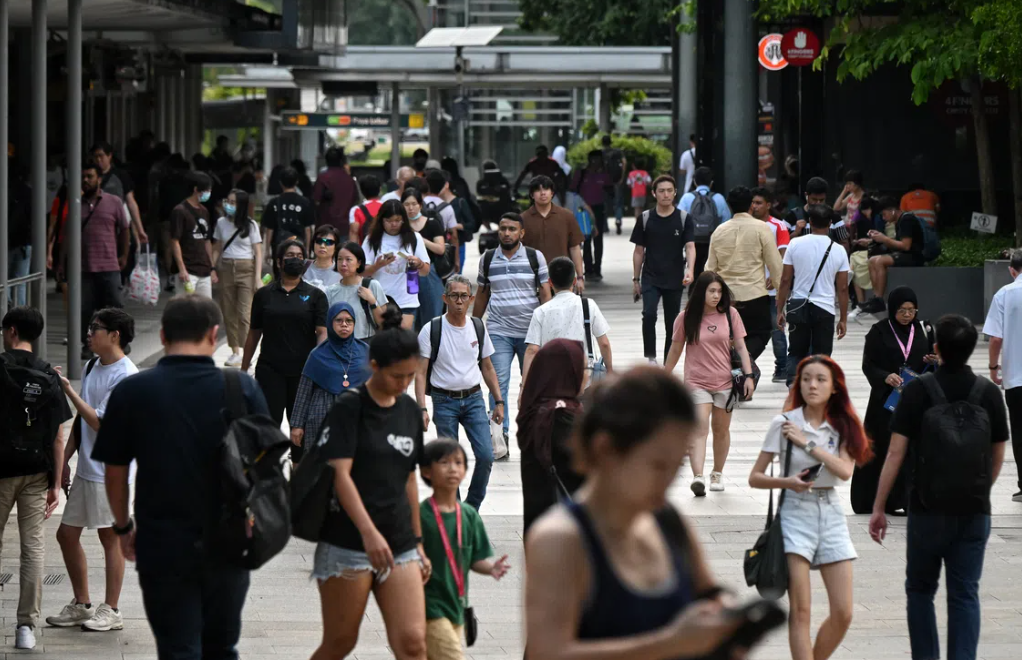
Singapore's Ministry of Finance announced on Thursday that over 2.4 million eligible adults will receive a special cash payment ranging from S$400 to S$600 beginning September 9, marking the government's targeted response to persistent inflation pressures affecting household budgets. This Cost-of-Living Special Payment, which was first introduced in Parliament in April, forms a cornerstone of an ambitious S$1 billion assistance programme designed to alleviate the financial strain on citizens most vulnerable to price escalation across essential goods and services.
The eligibility framework reflects a carefully calibrated approach to means-testing, requiring applicants to hold Singapore citizenship, maintain resident status, and be at least 21 years old as of 2026. Crucially, prospective recipients must demonstrate an assessable income not exceeding S$100,000 for the year of assessment 2025, while simultaneously owning no more than a single property. These dual conditions aim to concentrate government support among middle and lower-income segments of the population, though the relatively high income threshold suggests coverage extends beyond traditional welfare categories.
The tiered payment structure introduces differentiation based on the annual value of a recipient's residential property as recorded on their National Registration Identity Card as of December 31, 2025. This design philosophy explicitly prioritizes households with limited property assets, acknowledging that home ownership value serves as a proxy for overall economic capacity. An adult Singaporean residing in a property valued above S$31,000 annually will receive the lower tier of S$400, while those in homes valued at S$15,000 or less with assessable income up to S$22,000 qualify for the maximum S$600 payment. This sliding scale suggests the government recognizes significant variation in housing circumstances among eligible populations, from public housing residents to those in modest private accommodation.
For Malaysian observers monitoring regional economic management, Singapore's approach offers instructive contrasts to domestic social assistance frameworks. The integration of property valuation data with income thresholds represents a sophisticated targeting mechanism unavailable in many regional contexts, leveraging existing identification infrastructure for efficient benefit distribution. The reliance on automated systems—particularly the govbenefits portal accessible via Singpass digital authentication—demonstrates technological integration that streamlines administrative burden while reducing fraud risk. Such infrastructure sophistication remains aspirational in many Southeast Asian economies still grappling with legacy payment systems and incomplete digital identity coverage.
The distribution mechanism itself reflects operational complexity, utilizing multiple channels to accommodate varying technological adoption rates among beneficiaries. Citizens who establish PayNow linkages to their NRIC before August 30 will receive expedited payments from September 9, providing immediate liquidity relief during the critical back-to-school and mid-year expense period. Those relying on traditional banking infrastructure will receive funds via GIRO by September 17, while unbanked populations can access payments through the GovCash system by September 24. This multi-track approach acknowledges demographic heterogeneity, ensuring that digital exclusion does not prevent vulnerable populations from accessing assistance.
Security considerations embedded within the payment notification protocol reflect heightened vigilance against fraud, particularly given rising concerns about digital scams targeting older and less digitally-literate populations. The Ministry of Finance explicitly stipulated that SMS notifications from the "gov.sg" sender will only provide informational updates, with recipients never required to provide personal information, click embedded links, or respond to messages. Government officials will similarly never solicit bank transfers or login credentials via telephone, warnings that underscore the sophistication of contemporary fraud operations targeting benefit distribution schemes. For regional authorities implementing similar programmes, these security protocols offer template provisions addressing vulnerability vectors emerging across Southeast Asia's cashless transition.
This payment initiative functions within the context of the government's broader S$155 billion Budget 2026, described as Singapore's most expansive fiscal commitment on record. The Cost-of-Living Special Payment thus represents one component within a comprehensive strategy encompassing multiple constituencies and policy objectives. The budgetary envelope reflects recognition that inflationary pressures require multi-layered policy responses rather than single-instrument solutions, suggesting economic management sophistication distinct from crisis-response rhetoric often accompanying social assistance announcements.
The timing of this intervention merits contextual examination within regional geopolitical and energy market dynamics. Earlier assistance programmes specifically targeted platform workers, private-hire drivers, and taxi operators with S$200 payments, responding to earnings compression following sharp fuel price escalation after military strikes on Iran. This sequenced deployment of relief measures suggests policymakers view cost-of-living challenges as dynamic phenomena requiring calibrated interventions matching evolving economic conditions rather than static predetermined allocations. The interconnection between Middle East geopolitical uncertainty and Singapore's domestic social policy reflects the economy's pronounced exposure to global energy markets and supply chain vulnerabilities.
Parallel support mechanisms demonstrate comprehensive coverage philosophy transcending cash transfers. In June, the government accelerated distribution of S$500 in CDC vouchers to approximately 1.38 million households, effectively providing six months of advance relief for everyday expenditures. Subsequently, on July 29, Second Minister for Finance Jeffrey Siow announced an additional S$900 million support package addressing sustained energy price elevation, including S$300 supplementary CDC vouchers for every household alongside utility bill rebates scheduled for October 2026 and January 2027. This compounding assistance structure suggests government assessment that inflationary headwinds will persist beyond immediate quarters, necessitating extended support architecture.
From a Southeast Asian perspective, Singapore's deployment of comprehensive social protection amid economic headwinds presents both aspirational model and concerning indication of cost-of-living severity. Few regional economies command fiscal resources enabling such expansive support packages, raising questions about medium-term sustainability and distributional adequacy. Malaysian policymakers contemplating comparable programmes must evaluate whether existing budgetary flexibility permits similar commitment levels while maintaining fiscal consolidation objectives and infrastructure investment priorities. The Singaporean experience simultaneously illustrates integration possibilities between digital identity infrastructure, banking systems, and social assistance delivery, technological coupling increasingly essential as regional economies navigate inflation management and inclusive growth imperatives.

