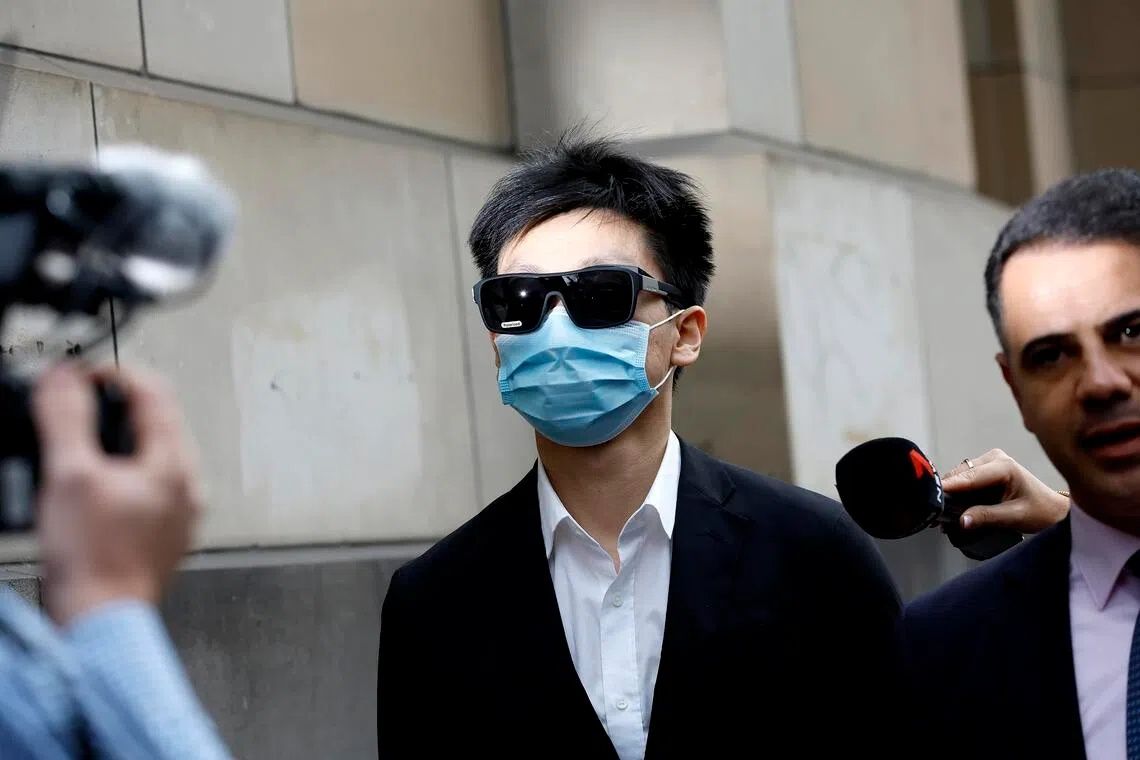
A 28-year-old trainee doctor from Singapore entered guilty pleas on Thursday to charges stemming from an extensive hidden camera operation targeting colleagues at three of Melbourne's largest hospitals. Ryan Cho acknowledged 13 criminal charges in the Melbourne Magistrates Court, including stalking, installing concealed recording devices and producing intimate images without consent. His actions violated the privacy and safety of more than 500 colleagues over a four-year period while he worked at the Austin Hospital, Royal Melbourne Hospital and the Peter MacCallum Cancer Centre between 2021 and 2025.
The discovery of Cho's activities came after staff at the Austin Hospital stumbled upon a mobile phone concealed in a mesh bag inside a staff toilet in July 2025. That breakthrough triggered a comprehensive police investigation that would expose the true scale of his misconduct. Detectives who searched his home seized multiple electronic devices, including a laptop, hard drive and mobile phone, which collectively contained more than 10,000 video and photograph files documenting his victims. The volume of material and breadth of his offending behaviour became apparent when Victorian police laid 910 individual charges, though prosecutors and defence counsel subsequently consolidated these into the 13 counts to which Cho pleaded guilty.
The case carries profound implications for institutional accountability in Australian healthcare. Around 100 victims, predominantly women, have lodged human rights complaints against the three hospitals, alleging not only inadequate security measures that allowed such behaviour to persist undetected but also workplace sexual harassment and discrimination in how the institutions responded to the violations. Legal representatives assisting affected staff members have signalled that additional hospital employees are expected to join proceedings filed with the Australian Human Rights Commission, suggesting this singular criminal matter may cascade into broader institutional liability for the hospitals involved.
Cho's background provides context for understanding how such misconduct evaded detection for so long. He arrived in Australia in 2017 and completed medical training at Monash University before commencing work in hospital settings. His permanent residency was granted just months before his arrest, in April 2025. Throughout his employment, colleagues appear to have had no inkling of his activities. His barrister, Julian McMahon, characterised him as a "complicated young professional man" harbouring "complex psychological issues," suggesting factors beyond straightforward criminality may have motivated his behaviour, though such observations remain preliminary and speculative pending psychological assessment.
The procedural handling of Cho's case demonstrates both the seriousness with which courts are treating the offences and the recognition that numerous victims require formal acknowledgment of harm. Magistrate Michelle Mykytowycz specifically acknowledged victims present in the courtroom and those observing proceedings via video link during Thursday's brief 30-minute hearing. This attention to victim presence reflects growing judicial recognition that court processes must validate survivor experiences alongside punishment of perpetrators. Cho was subsequently remanded on stringent bail conditions, with his next appearance scheduled for November 23, marking the commencement of a three-day pre-sentence hearing in the County Court where victim impact statements will feature prominently.
The bail arrangement itself underscores the seriousness of the matter whilst acknowledging Cho's lack of prior criminal history. His parents have personally guaranteed his bail through a A$50,000 surety lodged in 2025, and they have committed to remaining in Melbourne throughout legal proceedings to ensure their son's compliance with conditions. The restrictions placed upon him are comprehensive: Cho must report to police three times weekly, maintain complete silence regarding all witnesses and potential witnesses, refrain from entering hospital premises except during genuine medical emergencies with prior police authorisation, surrender all access to photographic and recording devices beyond his residence, and undergo mandatory psychological treatment. His passport has already been surrendered to authorities.
For Malaysian healthcare professionals and institutions, this case offers cautionary lessons about workplace safety infrastructure and the vulnerability of shared facilities in hospital environments. Many Southeast Asian medical facilities operate under resource constraints that may limit investment in comprehensive security systems across staff bathrooms and shower facilities. The Singaporean connection adds particular resonance for Malaysian medical professionals who may train in Australian institutions or who interact with Australian-trained colleagues. The scale of Cho's undetected operation—spanning four years, three major hospitals and over 500 victims—suggests that even well-resourced Western institutions with robust regulatory frameworks can be vulnerable to determined perpetrators operating covertly.
The case also highlights the regulatory mechanisms that ultimately functioned as intended, albeit after considerable damage had occurred. The Australian Health Practitioner Regulation Agency suspended Cho's medical registration in 2025 upon discovery of the criminal investigation, effectively preventing him from practising medicine and ensuring the protection of future patients. This swift regulatory intervention contrasts with the delayed discovery of his criminal behaviour, emphasising that institutional oversight of individual practitioners operates on different timelines and through different mechanisms than workplace security protocols.
Cho's sentencing, scheduled for late November, will carry significance beyond the individual defendant. Judicial guidance on appropriate sentences for this category of offending—technologically-enabled sexual exploitation of large numbers of colleagues—remains relatively sparse in Australian jurisprudence. The courts will balance the unprecedented scale of his misconduct, the number of identifiable victims, his lack of prior criminality, his psychological vulnerabilities, and community expectations regarding protection of vulnerable workers in institutional settings. The sentencing decision may well establish precedent for similar cases involving hidden cameras or covert recording in shared facilities.
The broader workplace culture implications warrant sustained attention. The discovery that such systematic predation could occur within three major hospitals without colleague detection raises uncomfortable questions about workplace awareness, duty-of-care obligations, and collective responsibility for safety. Whether hospitals implement enhanced security measures, mandate staff training on identifying suspicious behaviour, or establish clearer reporting mechanisms for safety concerns will determine whether this case catalyses meaningful institutional reform or remains an isolated aberration. For Malaysian institutions observing these proceedings, the critical lesson involves understanding that sophisticated perpetrators may exploit common vulnerabilities in even well-established organisations, necessitating proactive security design and vigilant workplace culture.

