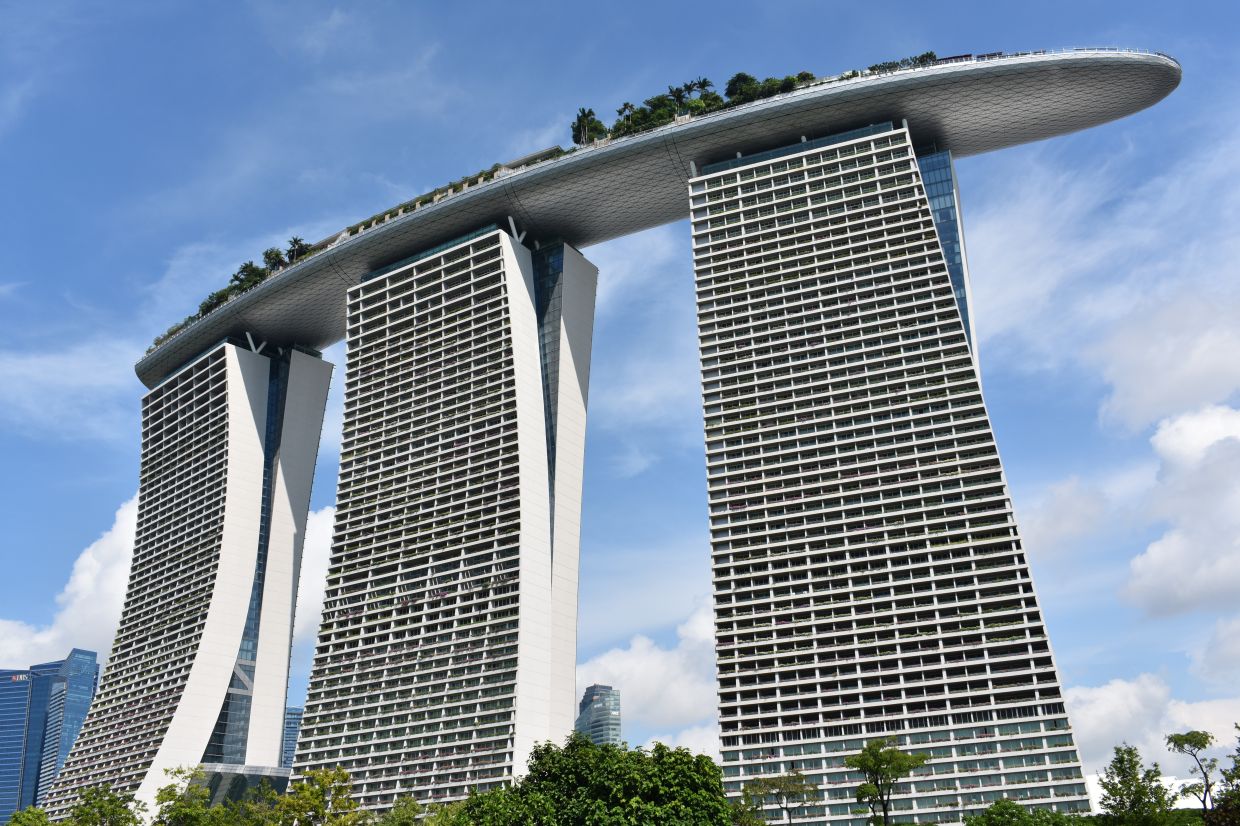
Singapore's two casinos have drifted increasingly apart in performance, creating a stark contrast in their ability to attract the world's wealthiest gamblers. At Resorts World Sentosa's recent Lunar New Year promotion, high rollers competed for a bottle of Martell Cognac, while their counterparts at Marina Bay Sands received considerably more prestigious rewards, including luxury vehicles worth substantially more. These seemingly small gestures reveal a deeper competitive imbalance that has come to define the island's gaming landscape, with implications extending across the region's gambling hierarchy.
The financial disparity between Singapore's two casino operators has become pronounced. During the first half of 2026, Marina Bay Sands, operated by Las Vegas Sands Corp., generated casino revenues exceeding $2.1 billion, dwarfing Resorts World Sentosa's take-home, which represented less than a third of that figure. This gap reflects not merely different operational scales but a fundamental shift in how high-value customers—the segment that drives disproportionate profits for gaming venues—distribute their spending across the two properties. Genting Singapore Ltd., which runs Resorts World Sentosa and is controlled by Malaysian conglomerate Genting Group, finds itself in an increasingly precarious position within its home region's most competitive gaming market.
Singapore's gaming regulator has taken notice of the performance disparity. In November 2024, the Gambling Regulatory Authority characterized Resorts World Sentosa's tourism performance as "unsatisfactory," a pointed assessment that led to the casino receiving a shorter two-year license renewal—granted in February 2025—rather than the standard three-year term awarded to its rival. This decision effectively signals regulatory concern about the property's trajectory and sets a conditional framework for its future. The regulator is currently evaluating the resort's latest renewal application and will announce its determination before the license expires in February 2027, with the full integrated resort's performance factoring into the assessment. Marina Bay Sands received an unqualified three-year license extension during the same period, underscoring the regulator's confidence differential between the two operators.
Analysts interpret the shorter license as a calibrated form of pressure rather than an existential threat. Zheng Feng Chee, a consumer analyst at DBS Group Holdings, characterizes it as "a soft threat" designed to incentivize operational improvements. However, the realities of Singapore's competitive gaming landscape limit the practical options for intervention. Few casino operators possess sufficient financial resources to acquire or replace an underperforming property, effectively leaving Resorts World Sentosa as the only realistic alternative for maintaining the jurisdictional duopoly. This structural reality constrains the regulator's enforcement options while simultaneously protecting Genting's long-term operational continuity, even as near-term performance metrics deteriorate.
The competitive disadvantage reflects broader patterns in how wealthy international gamblers—particularly high rollers from China and Southeast Asia—evaluate gaming destinations. Resorts World Sentosa's marketing efforts and promotional offerings have failed to match Marina Bay Sands' positioning as a luxury experience. The VIP customer base, which contributes outsized revenues despite representing a small fraction of overall gaming volume, has increasingly gravitated toward Marina Bay Sands' premium offerings. During the first quarter of this year, Resorts World Sentosa's share of the VIP market had contracted to approximately 20 percent, though it recovered modestly to 36 percent more recently, according to DBS research. This volatility suggests fragile loyalty among high-value customers, with their patronage responsive to perceptions of relative quality and attentiveness.
Complainants among Resorts World Sentosa's VIP club members have articulated specific grievances that extend beyond prize offerings. Members have reported concerns regarding aging infrastructure, slow responsiveness to customer feedback, and operational inefficiencies in fundamental processes such as cash-and-chip exchanges. By contrast, Marina Bay Sands' premium clientele enjoy suite accommodations featuring butler service, complimentary entertainment tickets, and exclusive dining privileges within an integrated resort that has been purpose-built for affluent travelers. The three 57-story hotel towers, rooftop boat structure, art museum, and shopping facilities represent a holistic luxury proposition that transcends mere gaming amenities. Resorts World Sentosa's more fragmented facilities and aging infrastructure create a perception disadvantage that premium pricing alone cannot overcome.
Singapore's appeal as a gaming destination has been significantly enhanced by regional factors that favor the city-state over traditional competitors. The post-Covid rebound in tourist arrivals, coupled with visa-free entry for mainland Chinese visitors, has created a lucrative customer base concerned about data privacy and government surveillance in Macau. Chinese regulatory crackdowns on casino junkets and illegal money-exchange operations have further accelerated capital flight to Singapore, positioning the island as a more discreet alternative for high-net-worth individuals seeking to protect their financial activities from scrutiny. This structural advantage has accrued disproportionately to Marina Bay Sands, which has leveraged its premium brand positioning and established relationships with international VIP networks more effectively than its competitor.
Genting Singapore has acknowledged the competitive challenges through strategic initiatives designed to address the performance gap. The company confirmed in April that it maintains close engagement with regulatory authorities and positions itself as well-equipped for the forthcoming assessment cycle. The integrated resort has added new attractions and experiences over the preceding eighteen months while enhancing its gaming and hospitality offerings. Management has articulated a vision of positioning the property for sustainable growth through 2030. Nevertheless, industry analysts express skepticism about whether these incremental improvements sufficiently address the fundamental competitive positioning challenges. Ben Lee, managing partner of IGamiX consulting, has suggested that Resorts World Sentosa is "losing the battle" for market share, unable to match the luxuriated experience that has become Marina Bay Sands' signature differentiation among the most coveted customer segments.
Both casinos are undertaking substantial capital investments that will reshape Singapore's gaming landscape through the remainder of this decade. Resorts World Sentosa is executing a S$6.8 billion comprehensive revamp scheduled for completion by 2030, which includes constructing an all-suite luxury hotel, expanding its oceanarium, and incorporating Super Nintendo World into its Universal Studios Singapore franchise. Marina Bay Sands, meanwhile, is pursuing an $8 billion expansion and modernization program featuring an additional 55-story hotel tower and a live entertainment arena. These parallel investments suggest management conviction that Singapore's gaming market possesses sufficient demand to sustain both properties at elevated investment scales. However, the expansion projects also underscore the fundamental challenge: Marina Bay Sands possesses the operational credibility and financial momentum to execute its capital program while consolidating market share, whereas Resorts World Sentosa must simultaneously refurbish its aging asset base and prove its competitive viability to increasingly skeptical regulators and high-value customers.
The regulatory framework governing casino access in Singapore has historically favored foreign gamblers while creating friction for local participation. Singapore citizens and permanent residents face a S$150 daily entry fee—approximately $117.19—to access either casino, a cost structure designed to discourage casual local participation while accommodating international tourists who enter without restriction upon presenting passports. This policy framework has made both casinos structurally dependent on foreign revenue streams, a vulnerability magnified for Resorts World Sentosa given its declining share of international high-roller patronage. The concentration of gaming revenues among foreign customers amplifies the importance of competing effectively within China-sourced and regional-sourced VIP segments, domains in which Resorts World Sentosa has demonstrably lost competitive position.
The unfolding competitive dynamics within Singapore's gaming duopoly carry implications extending beyond the immediate financial interests of the two operators. The regulatory decision to impose conditional licensing on Resorts World Sentosa, coupled with the apparent preference among high-value international customers for Marina Bay Sands, represents a market-driven consolidation of gaming revenue within a single dominant operator. This concentration raises questions about regulatory capacity to maintain competitive discipline within the sector and whether Singapore's policy objective of sustaining genuine competition in gaming has been undermined by Marina Bay Sands' institutional and brand advantages. For Malaysian stakeholders with interests in Genting Singapore's performance, the mounting competitive pressure from a Las Vegas-listed competitor operating with superior capital resources and premium market positioning creates a strategic challenge that extends beyond typical operational improvement cycles. The February 2027 licensing decision will likely determine whether Genting can reverse the competitive trajectory or must accept a diminished role within Singapore's gaming hierarchy.

