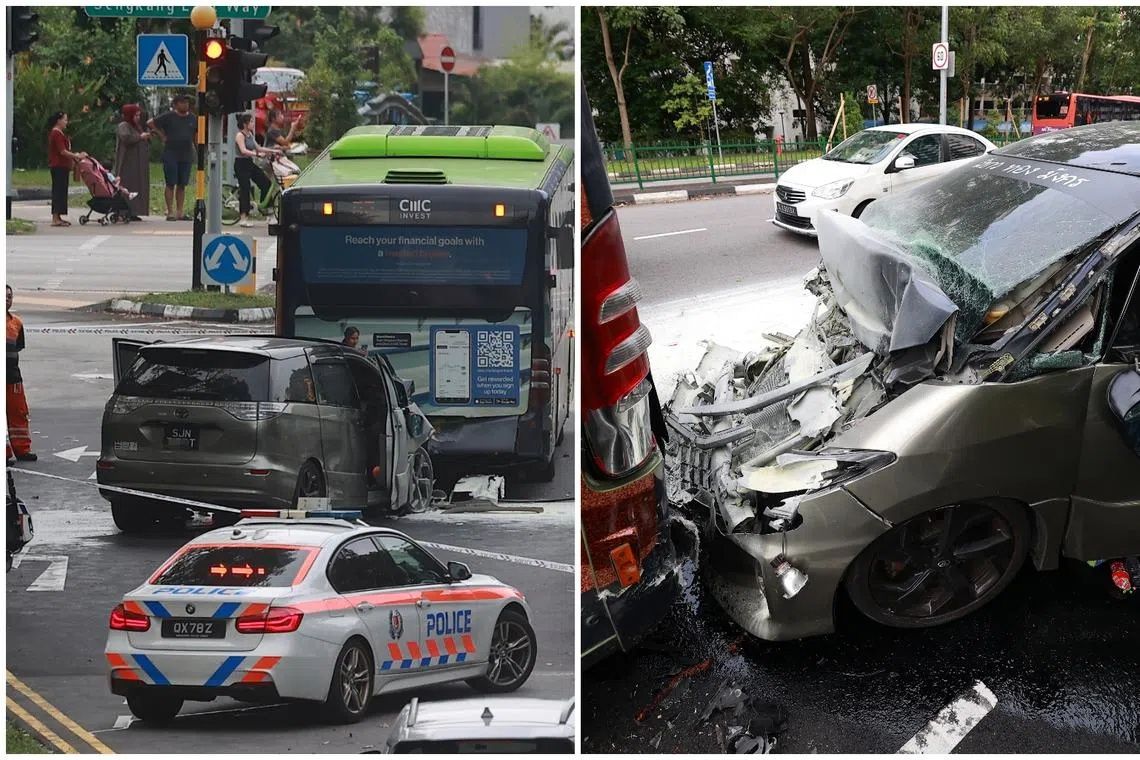
Singapore is confronting a troubling new public safety challenge as drug-impaired driving emerges as a significant contributor to serious road accidents and fatalities. Over a compressed 12-day period in June alone, three separate motorists faced charges for operating vehicles under the influence of controlled substances—each detected only after causing collisions. Two of these individuals had allegedly consumed methamphetamine, colloquially known as Ice, whilst the third operated his vehicle whilst affected by etomidate, an anaesthetic compound increasingly appearing in e-vaporiser products marketed as Kpods.
The involvement of etomidate in road accidents represents a particularly concerning development that medical professionals are now flagging urgently. Jonathan Tang, a clinical toxicologist at the National University Hospital's Emergency Medicine Department, has begun observing a troubling pattern: patients arriving with traumatic injuries sustained in traffic collisions where etomidate-laden vaping preceded the crash. His clinical experience underscores a fundamental danger that parallels conventional alcohol intoxication—the drug substantially undermines both cognitive function and motor control necessary for safe vehicle operation, placing not only the impaired driver at grave risk but also passengers, pedestrians, and other motorists sharing the road.
The scale of the problem became starkly apparent in parliamentary disclosures earlier this year. Coordinating Minister for National Security K. Shanmugam revealed that between 2023 and 2025, Singapore recorded 38 traffic accidents directly linked to drug and etomidate use, resulting in 19 fatalities. The trajectory is deeply alarming: whilst previous years showed problematic patterns, 2025 alone accounts for 29 of those 38 accidents—an acceleration suggesting the phenomenon is intensifying rather than stabilizing. Among these, 18 incidents specifically involved etomidate use, with seven involving combinations of both drugs and the anaesthetic substance.
For Malaysian and wider Southeast Asian readers, Singapore's experience carries sobering implications. The emergence of etomidate-containing Kpods as a consumption method suggests a sophisticated drug trend transcending Singapore's borders, potentially migrating through regional drug networks. The substance's integration into seemingly innocuous vaping devices creates a concealment challenge for law enforcement across the region, whilst its anaesthetic properties produce impairment patterns that standard roadside detection protocols may initially miss. This mirrors broader regional challenges where designer drugs and novel psychoactive substances continue outpacing regulatory frameworks.
The specific accidents providing the starkest illustration of etomidate's dangers reveal the cascading human consequences of such impairment. A May 13, 2025, collision in Punggol involved a vehicle driven by a man and carrying a female passenger that struck a bus; police subsequently discovered 42 vapes and over 1,200 pods within the vehicle, several containing etomidate. The 28-year-old female passenger died from injuries sustained in the crash, with toxicological analysis confirming etomidate presence in both the driver's and victim's blood. This incident exemplifies how drug-impaired driving creates fatalities extending beyond the offender to innocent third parties.
Tang's clinical assessment identifies the specific mechanisms through which etomidate compromises driving capability. The substance induces delayed reaction times, severely impairs hazard perception, and precipitates loss of vehicle control—a pharmacological profile creating compounding layers of danger. Beyond these direct cognitive and motor effects, emerging evidence suggests etomidate use triggers psychiatric symptoms including depressed mood, heightened aggression, and impulsivity, sometimes progressing to suicide attempts. These psychological manifestations represent additional safety concerns when individuals experiencing such states attempt driving, potentially leading to deliberate or semi-deliberate collisions.
Parliamentary accountability mechanisms have begun responding to the crisis. Member of Parliament Valerie Lee (Pasir Ris-Changi GRC) raised the matter in February, specifically questioning whether Traffic Police incorporated drug and etomidate screening into their standard accident investigation protocols. Shanmugam's response confirmed that following reported collisions, Traffic Police assess for impaired driving indicators and conduct blood tests where drug or etomidate use is suspected, with conviction potentially resulting in driving-whilst-under-the-influence charges. Nevertheless, detection depends upon initial suspicion—a threshold potentially missed when etomidate users lack the obvious visibility markers of alcohol intoxication.
Three recent prosecutions exemplify the range of incidents now being addressed through the courts. Mohamed Firdouz Mohamed Akram, 36, faced multiple charges in June after a collision with a taxi in Kallang injured both the taxi driver and a passenger; he subsequently abandoned his vehicle and fled the scene before apprehension, with Ice consumption confirmed through testing and drugs plus weaponry discovered in his vehicle. Puah Zhe Cong, 34, was charged with seven offences including dangerous driving causing death and failing to render assistance after an accident; he allegedly consumed etomidate and caused one fatality and two injuries whilst driving. Sivakandesh, 32, faced charges following his methamphetamine-impaired Mercedes-Benz crashing into a rubbish chute in Yishun Street 11, striking bollards and parked vehicles before stopping, with registration plates subsequently removed.
Singapore's legislative framework provides penalties intended to deter such conduct. First-time offenders face imprisonment up to one year, fines reaching S$10,000, or both penalties combined; repeat offenders confront sentences up to two years and fines reaching S$20,000. Yet statutory penalties may prove insufficient where substance abuse patterns involve regular users for whom existing legal consequences have proven ineffective as deterrents. The emphasis on prosecution without corresponding treatment infrastructure suggests Singapore's response remains reactive rather than preventive, addressing behaviours after harm occurs rather than interrupting the cycle of addiction fueling repeated infractions.
The broader road safety crisis contextualizing these drug-related accidents demands attention. Singapore experienced 149 traffic deaths in 2025, the highest toll in a decade, against 141 deaths recorded in 2016 and 142 in 2024—indicating deteriorating trends despite decades of safety investment. Injured persons rose from 9,342 in 2024 to 9,955 in 2025, suggesting collisions themselves are increasing in frequency or severity. These aggregate statistics incorporate but extend beyond etomidate and drug-impaired incidents, reflecting a complex safety environment where multiple risk factors—infrastructure, vehicle design, enforcement intensity, and driver behaviour—interact to produce accumulating harm.
For Southeast Asian policymakers and road safety advocates, Singapore's emerging drug-driving problem illuminates a growing vulnerability in regional road systems. The integration of impairment-inducing substances into seemingly ordinary consumer products creates novel enforcement challenges requiring specialist toxicological capacity most smaller jurisdictions lack. The rapid escalation evident in 2025 figures suggests early intervention windows may be closing; delaying coordinated regional responses risks normalizing these driving patterns before detection and enforcement mechanisms mature sufficiently to address them effectively. Investment in rapid, accessible drug testing infrastructure at accident scenes, combined with public education campaigns specifically targeting etomidate and novel psychoactive substances in vehicular contexts, represents necessary complements to traditional enforcement approaches.
%22%2F%3E%3C%2Fpattern%3E%3C%2Fdefs%3E%3Crect%20width%3D%22100%25%22%20height%3D%22100%25%22%20fill%3D%22url(%23ph33f18g)%22%2F%3E%3Crect%20width%3D%22100%25%22%20height%3D%22100%25%22%20fill%3D%22url(%23ph33f18p)%22%2F%3E%3Ctext%20x%3D%2250%25%22%20y%3D%2250%25%22%20text-anchor%3D%22middle%22%20dominant-baseline%3D%22central%22%20fill%3D%22rgba(255%2C255%2C255%2C0.95)%22%20font-family%3D%22Georgia%2C%20'Times%20New%20Roman'%2C%20serif%22%20font-weight%3D%22700%22%20font-size%3D%22272%22%20letter-spacing%3D%22-0.02em%22%3EISTAF%3C%2Ftext%3E%3C%2Fsvg%3E)