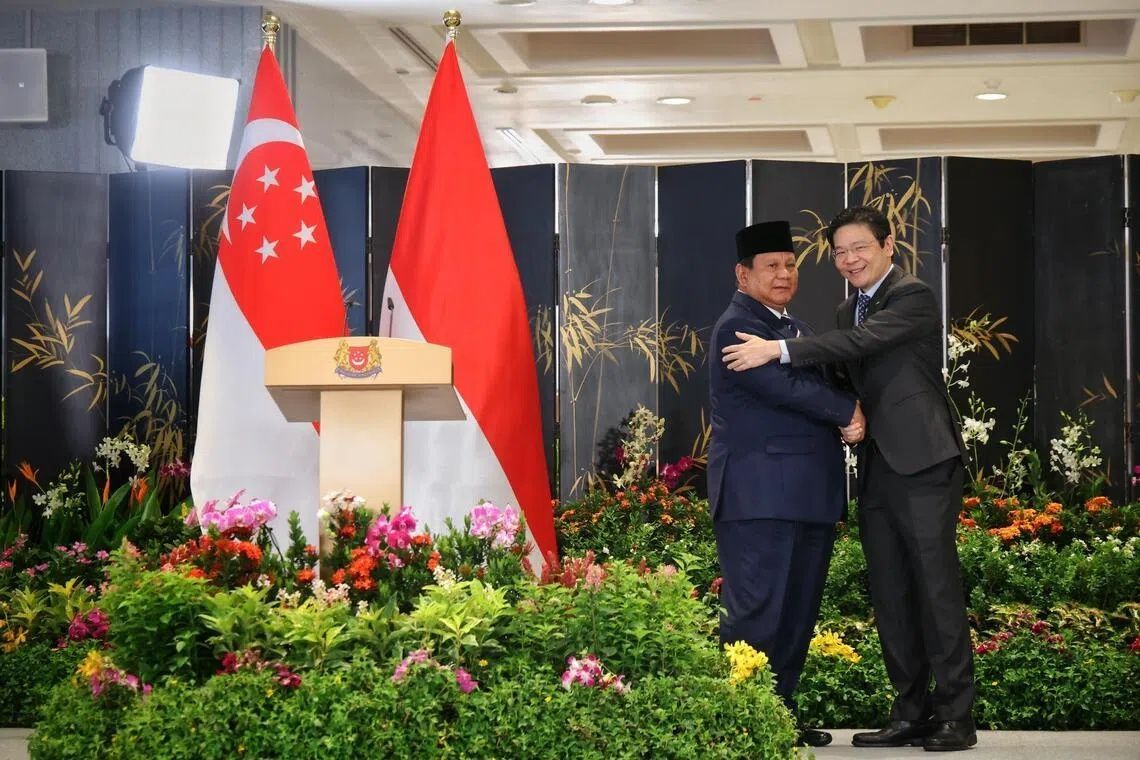
Prime Minister Lawrence Wong will head to Jakarta on Monday, July 6, for the Singapore-Indonesia Leaders' Retreat, marking a significant diplomatic engagement between the two neighbouring nations. The gathering, hosted by President Prabowo Subianto, represents the second iteration of this high-level bilateral forum and underscores the commitment both governments place on maintaining and advancing their relationship. According to the Prime Minister's Office, the retreat serves as the premier platform for bilateral dialogue, bringing together the two leaders alongside senior cabinet ministers to review and chart the course of cooperation across numerous sectors.
The timing of this retreat comes at a pivotal moment for Southeast Asia. Indonesia, as the region's largest economy and most populous nation, holds considerable strategic significance for Singapore's long-term prosperity and security. The previous Leaders' Retreat took place in Singapore in June 2025, establishing a rhythm of alternating venues that reflects the balanced and reciprocal nature of the partnership. The preceding retreat in April 2024, held at Bogor Presidential Palace, saw then Prime Minister Lee Hsien Loong meet with then President Joko Widodo, while Wong and Prabowo, who was president-elect at the time, also participated in those discussions.
The scope of bilateral collaboration between Singapore and Indonesia has expanded substantially beyond conventional domains. Traditionally, the relationship centred on trade, investment, and defence cooperation, areas where both nations have built considerable momentum. However, in recent years, the partnership has evolved to encompass emerging sectors that reflect changing global priorities. Green economy initiatives, cross-border electricity trade arrangements, carbon capture and storage technologies, artificial intelligence applications, and digital connectivity infrastructure now feature prominently on the bilateral agenda, signalling both countries' recognition that future economic competitiveness and environmental sustainability are intertwined.
Investment flows underscore the depth of the economic relationship. In 2025, Singapore remained Indonesia's top source of foreign direct investment, channelling US$17.4 billion—equivalent to approximately S$22.4 billion—into the archipelago's economy. This substantial capital inflow reflects Singapore's confidence in Indonesia's investment climate and growth potential, while simultaneously highlighting the mutual benefits that accrue to both parties through this economic interdependence. For Malaysian observers, such figures illustrate the scale of economic integration achievable within Southeast Asia when political will and institutional frameworks align.
During the retreat, both leaders will assess progress on bilateral projects initiated since their last meeting, providing a concrete measure of implementation capacity and the effectiveness of existing cooperation frameworks. Beyond reviewing established initiatives, they are expected to exchange perspectives on broader regional and global developments, demonstrating how bilateral relationships increasingly serve as forums for discussing issues transcending national boundaries. This aspect of the retreat reflects the interconnected nature of contemporary governance, where leaders must coordinate on matters ranging from supply chain resilience to pandemic preparedness and geopolitical shifts.
The delegation accompanying PM Wong reflects the comprehensive nature of the partnership. Deputy Prime Minister Gan Kim Yong, responsible for trade and industry portfolios, brings expertise in economic cooperation frameworks. Coordinating Minister Chan Chun Sing, overseeing public services and defence, signals the continued importance of security cooperation. Foreign Minister Vivian Balakrishnan will contribute regional diplomatic perspectives, while ministers responsible for social development, manpower, energy, and science and technology indicate the breadth of engagement across multiple policy domains. This multi-ministerial approach ensures that substantive discussions can occur at appropriate technical and political levels.
For Malaysia and other ASEAN members, the Singapore-Indonesia relationship holds importance extending beyond bilateral concerns. These two nations, representing different economic models and geopolitical positions within Southeast Asia, function as anchor states within the region. Singapore's status as a global financial centre and Indonesia's role as the largest ASEAN economy mean that their coordination on regional matters influences the broader ASEAN agenda. Closer Singapore-Indonesia ties can facilitate regional consensus-building on issues from maritime security to economic integration, benefiting the entire community.
The retreat also reflects institutional maturity in bilateral relations. Annual high-level meetings between heads of government, rather than ad hoc summits, create predictability and establish sustained momentum for cooperation. This regularised engagement permits long-term planning and strategic alignment on issues requiring patient diplomatic effort. The establishment of such structured dialogue mechanisms serves as a model for other bilateral relationships within ASEAN, where institutionalised engagement can help prevent misunderstandings and facilitate proactive cooperation.
During Wong's absence from Singapore, Coordinating Minister K. Shanmugam will assume acting prime ministerial responsibilities, ensuring continuity of governance. This arrangement allows the delegation to operate without compromising Singapore's domestic administration, reflecting the maturity of the city-state's institutional frameworks. The deployment of multiple senior ministers to Jakarta simultaneously demonstrates the significance attached to the retreat while maintaining adequate leadership presence in Singapore.
Looking forward, the retreat will likely establish priorities for the remainder of 2025 and beyond. The expansion into green economy collaboration carries particular significance given both nations' vulnerability to climate impacts and their economic dependence on regional stability. Cross-border electricity initiatives could enhance energy security across the region, while advances in artificial intelligence and digital connectivity align with global technological trends that will increasingly shape competitiveness. These forward-looking areas suggest that Singapore and Indonesia are positioning their relationship as a vehicle for addressing 21st-century challenges rather than merely managing traditional concerns.
The Leaders' Retreat exemplifies how bilateral relationships within ASEAN serve multiple functions simultaneously—managing established cooperation, monitoring implementation, addressing emerging challenges, and positioning both nations advantageously within regional and global contexts. For Singapore and Indonesia specifically, these retreats help manage the complexities inherent in any relationship between a small, wealthy city-state and a vast, developing archipelago nation. The commitment to annual meetings signals that despite inevitable frictions and different development trajectories, both leaderships recognise fundamental mutual interests that transcend short-term disagreements, setting a precedent for sustained cooperation in an uncertain regional environment.

