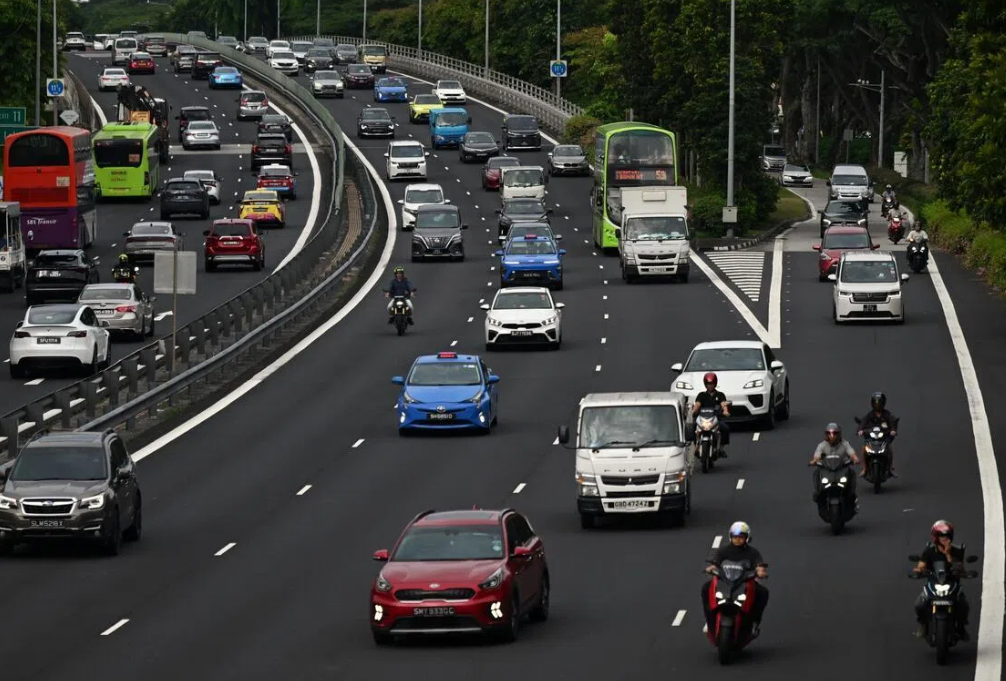
Singapore's largest taxi operator ComfortDelGro alongside ride-hailing platforms Grab, Gojek and Tada have committed to maintaining their driver surcharges through September 30, offering continued financial relief to drivers grappling with persistently elevated operating costs. The decision represents a practical acknowledgement that the transportation sector continues facing genuine economic pressures, even as some earlier emergency measures have begun to normalise.
The National Private Hire Vehicles Association, which represents private-hire drivers and maintains affiliation with Singapore's union federation NTUC, announced the extension through a Facebook statement on July 22. The association framed the extension as a necessary outcome of sustained discussions with platform operators regarding driver expenses, signalling that these fees are not temporary expedients but rather structural adjustments responding to fundamental changes in the operating environment.
ComfortDelGro's fee structure illustrates how platforms have calibrated their surcharges to reflect trip economics. The operator charges an additional $0.50 for journeys with base fares below $15, increasing to $0.80 for higher-value trips. These charges apply across app-booked rides, cross-border services, premium limousine options and hourly rentals. Beyond the per-trip surcharge, ComfortDelGro has also retained a $0.01 increase in per-distance rates, meaning passengers booking a standard four-kilometre journey in a Toyota Prius will pay slightly more for that incremental distance travelled.
Ride-hailing competitors have adopted different approaches reflecting their distinct market positioning. Grab and Gojek both introduced a $0.90 driver fee in April, while Tada implemented a marginally higher $1.20 surcharge specifically for trips exceeding $18. These variations suggest platform operators have customised their support mechanisms based on trip-value distributions and driver demographics within their respective user bases, rather than applying uniform increases across the sector.
The genesis of these fees traces to 2022, when platforms first introduced surcharges to help drivers navigate the shock of rising fuel costs. The NPHVA emphasised that these fees are passed entirely to drivers without platform commissions extracted, distinguishing them from standard service charges and positioning them explicitly as driver welfare measures rather than corporate profit mechanisms. This structural clarity matters significantly for public perception and regulatory scrutiny of the measures.
Fuel price movements provide the underlying rationale for extended surcharges. In March 2024, when ComfortDelGro introduced its initial surcharge, 95-octane petrol cost between $2.91 and $2.92 per litre across Singapore's major stations. By late July, prices had climbed substantially to $3.36 or $3.37, representing roughly a 15 per cent increase over four months. This persistent elevation reflects geopolitical tensions following United States and Israeli military actions against Iran on February 28, which triggered the closure of the Strait of Hormuz—a critical chokepoint through which approximately one-third of global maritime petroleum trade flows.
The regional implications of this energy pricing shock extend beyond Singapore's borders. Malaysia and other Southeast Asian economies similarly depend on stable petrol pricing to maintain transportation affordability and competitive logistics costs. The extended surcharge strategy adopted by Singapore's platforms offers a case study in how market mechanisms can respond to external shocks, though it also highlights the vulnerability of ride-hailing drivers to global commodity fluctuations they cannot control.
Interestingly, not all fuel retailers have experienced identical price increases. Mainstream operators including Caltex, Shell, Esso, Singapore Petroleum Company and Sinopec charged $3.36-$3.37 per litre for 95-octane fuel as of late July, while alternative retailers Cnergy and Smart Energy maintained comparatively lower prices of $2.54 and $2.62 respectively. This 30-cent differential between premium and budget suppliers suggests that price-sensitive drivers may eventually migrate toward cheaper fuel sources, though many may remain locked into loyalty programmes or convenient station networks.
The NPHVA's commitment to ongoing engagement with platform operators signals an expectation that economic conditions will continue requiring monitoring and potential adjustment. Unlike fixed regulatory price caps, the surcharge mechanism allows platforms and drivers to respond dynamically to commodity price movements, avoiding the political friction that sometimes accompanies official tariff adjustments. However, this flexibility cuts both directions—surcharges can be extended as easily as they can be withdrawn, creating uncertainty for both drivers planning household budgets and passengers evaluating transport affordability.
For Malaysian readers, Singapore's approach offers instructive parallels. The city-state's ride-hailing ecosystem demonstrates how platforms can function as shock absorbers for driver welfare without direct government subsidy, though ultimately passengers bear the adjustment costs through higher fares. The extended timeline through September suggests platform operators expect fuel prices to remain elevated through the northern hemisphere summer, a period when global energy demand traditionally peaks and geopolitical risk premiums remain embedded in crude oil prices.
The broader question this extension raises concerns the sustainability of current pricing structures. If Hormuz tensions persist or new supply disruptions emerge, platforms may face pressure to increase surcharges further or implement other cost-control measures. Conversely, if oil markets stabilise and petrol prices decline, the NPHVA will likely face driver demands to maintain surcharges while passengers push for reductions, creating political tension within the operating framework.
Ultimately, Singapore's extended surcharge regime reflects the reality that transportation networks operate within global commodity markets and geopolitical systems beyond their direct control. By September 30, when these surcharges are scheduled to lapse, the platforms and their drivers will once again confront whether fuel prices have moderated sufficiently to justify withdrawal, or whether economic conditions demand continued adjustment. The answer will significantly influence transportation accessibility and logistics competitiveness throughout the region.

